
From Lab to Shelf: How Capital Drives the Expansion of Food Tech Startups
Food tech moving from the lab to consumer markets faces capital as a key bottleneck. Based on an analysis of funding cases from companies such as Upside Foods and Perfect Day, as well as industry experts' insights into pilot-scale costs and commercialization timelines, this article reveals the core role and potential risks of capital in the expansion of food tech.
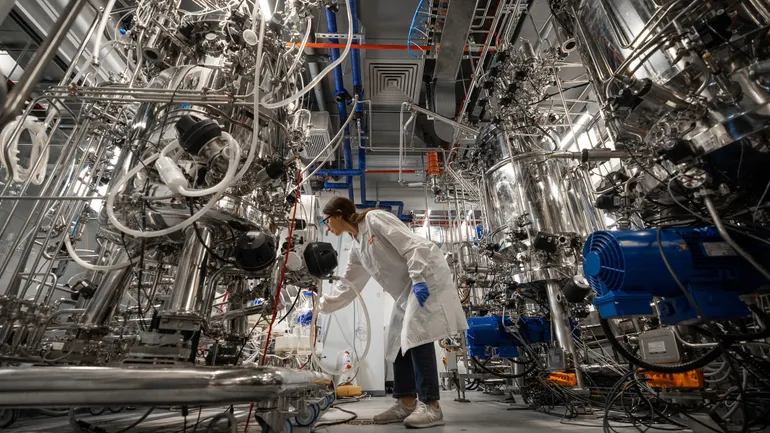
Food technology is born from the soil of scientific concepts and innovative ideas. However, if companies want to grow and expand, capital quickly becomes an indispensable condition—and certainly not just a few million dollars. For food tech companies to achieve scale, they often need to build high-tech equipment that has never existed before.
Over the past two years, several large-scale financings in the food sector have gone to companies that have not yet launched finished products but urgently need to expand production. The highest fundraising in this category currently is Upside Foods, a cultivated meat producer, which completed a$400 million Series C round this spring. Future Meat Technologies, also engaged in cultivated meat, completed a$347 million Series B round at the end of last year; and Good Meat, the cultivated meat division of Eat Just—currently the only company approved to produce consumer-grade cultivated meat products—cumulatively raised$267 million last year。
The fermentation sector has also seen no shortage of large capital inflows. Last year, Perfect Day, which produces milk proteins through precision fermentation, and Nature's Fynd, which manufactures proteins using fungi discovered in geothermal springs in Yellowstone National Park, each completed$350 million financing rounds。
The capital flowing into this sector reflects a profound shift in market perception of food technology in recent years. As Morgan LeConey, head of food and beverage at financial services firm Nomura Greentech, said at theFuture Food-Tech conference this June: "Today, every investor views alternative proteins as a mainstream track."
However, how to properly handle the financing process remains one of the biggest potential pitfalls in scaling up. Laine Clark, innovation and entrepreneurship manager at the nonprofit Good Food Institute, points out that food tech companies face financing challenges similar to startups in other industries: they need enough operating capital and financial runway to support the next stage of development, but they cannot simply stop at fundraising.
But the nature of food tech companies' business makes this challenge particularly daunting. In areas such as cultivated meat and precision fermentation, the capital expenditure required to design and build production systems can be staggeringly high. As the economic environment tightens, investor capital no longer flows as generously as it once did.
However, regardless of the macroeconomic situation, capital is still available in the market. Clark says some investors are now spending more time assessing whether alternative protein investments carry too much risk.
"Companies seeking financing now may need to bring more to the table," Clark says. "For example, they may need to come to negotiations with life cycle analysis reports, which might not have been required in the past. In short, investors will apply more scrutiny and demand more evidence that the technology can scale, reach the market within a reasonable timeframe, and perform well on taste."

Avoiding the 'Valley of Death' for Startups
Mark Warner, a scaling expert and CEO of Liberation Labs, says financial barriers are an especially difficult obstacle for food tech companies to overcome during expansion. He notes that there are currently very few ready-made facilities available for technology-driven food production. According to estimates Warner presented in a 2020 demonstration through GFI, the cost of building a pilot-scale facility ranges from $25 million to $50 million—a stage that is critical for validating technology and processes and for figuring out how to increase capacity in larger bioreactors.
But Warner emphasizes that at pilot scale, companies cannot produce enough product to sell and become profitable. Products made through fermentation can be brought to market as long as they receive "Generally Recognized as Safe" (GRAS) certification from the U.S. Food and Drug Administration (FDA). However, for categories such as cultivated meat, the vast majority of companies cannot sell products in any market due to a lack of government regulatory approval.
"Looking at the 'valley of death' for many startups, problems are mostly concentrated at the pilot-scale stage, because that stage is the most costly but typically generates almost no revenue," Warner says.
Larger-scale commercial plants are where companies can sell enough product to start making money. But achieving that is equally difficult: such plants take years to design and build, not to mention the enormous capital required—according to Warner's 2020 estimates, roughly $150 million to $400 million. Additionally, staffing these plants with the talent needed—from highly skilled scientists who fine-tune equipment designs, to experts who understand the processes, to engineers who ensure equipment runs properly, and frontline production workers—also requires significant investment in the form of salaries.
Food tech companies have cumulatively raised tens of millions of dollars during the scaling process
Therefore, food tech companies essentially need to inject large amounts of cash before they approach profitability. Warner points out that it then takes a considerable amount of time to reach breakeven. Ordinary consumer packaged goods (CPG) companies that produce their own products using common ingredients can get to market and sell faster, while companies using technology to manufacture ingredients must traverse a much longer path. Even in the most ideal scenario, after a technology-enhanced ingredient product is developed, it still takes 12 to 18 months to achieve mass production and reach store shelves.
Of course, this is only for products that have already received FDA approval. For cultivated meat, dairy, or plant-based products, the regulatory pathway remains largely unknown. Many companies in this field have been working with federal regulators for years, but there is still no clear timeline for when products will actually be able to come to market.
"Looking at the 'valley of death' for many startups, problems are mostly concentrated at the pilot-scale stage, because that stage is the most costly but typically generates almost no revenue."

Mark Warner
Former advisor, CEO of Liberation Labs
Warner believes companies must clearly understand the time allocation for each stage and honestly communicate this to investors. While some investors are already quite familiar with the food tech sector and how it operates, others do not truly understand the field. If companies continually signal to investors that they will reach breakeven within one to two years, investors will form that expectation—even if the timeline is unrealistic.
GFI's Clark also notes that companies in this field often misjudge their profitability timelines. She says some companies believe that once they achieve scale and sell large volumes of product, they will turn profitable. This mindset can seriously hinder sound financial planning—many startups may fail because they run out of capital, so they must learn to set realistic timelines.
"Typically, companies have to wait until after their first commercialization to actually begin generating revenue, let alone profits," Clark says. "So if you don't financially plan for that period of transitioning from R&D to manufacturing—securing the necessary certifications, ensuring everything is compliant—that can be a fairly long process. For some companies in this space, it could take three and a half to four years."
Preparing 'Shovels and Picks' for Investors
As the economy slows, financing channels still exist, and companies can still complete large funding rounds. "For entrepreneurial projects with clear plans and reasonable probabilities of success, there is no shortage of money in the market," Warner says.
Today's food tech startups are using new types of equipment and technology variants to do things no one has done before—they are 'blazing a trail' for those who come later. A unique problem these companies face is that venture investors often hold a mindset of 'not investing in assets and infrastructure unless absolutely necessary.'
"I think many investors have finally realized that we have reached the stage where we must invest in infrastructure," Warner says.
However, GFI's Clark points out that capital needs can place enormous pressure on startups. While startups are known for their agility, they also need to focus on their operations and potential technological breakthroughs. She says that when founders work overtime to attract investors, it can actually hinder the company's progress on the scientific R&D front.
Funders determine what companies can do, but Warner notes that there are different types of capital in the market, each focusing on different technology directions or different stages of development. Food tech companies also face additional challenges during the scaling process. Clark says they must prove they meet standards in taste, appearance, convenience, and nutrition, while also addressing the entire scientific dimension. Unless investors are experts in cultivated meat or fermentation, it is difficult for them to understand the details of the industry or how the technology they are investing in actually works.
"This is still quite magical work, and it is a major advancement that was hard to imagine not long ago," Clark says. "So I think there is an educational component—if investors don't understand what they are investing in, they are less likely to invest, because it looks very risky."
"This is still quite magical work, and it is a major advancement that was hard to imagine not long ago. So I think there is an educational component—if investors don't understand what they are investing in, they are less likely to invest."
Laine Clark
Innovation and Entrepreneurship Manager at the Good Food Institute
Clark says she hopes food tech can learn from the scaling path of renewable energy. That sector has seen both substantial capital investment and widespread adoption by individual consumers as well as large government and utility institutions. "Seeing it successfully achieved at a larger scale before gives us tremendous hope," Clark says. "We haven't reached that stage yet, but look at the progress from 2012 to now—it's quite remarkable."
Warner says funders are now also deepening their understanding of how the sector operates and are less inclined to expect companies to reach the mass market and profitability within two to three years. There is growing recognition that companies may need five to six years to reach corresponding production capacity and significantly reduce costs. But he also notes that for some companies, investors have reason to expect products to launch and generate cash flow within the next few years.
"At some point, some investors must start seeing returns, or they will stop investing," Warner says. "It almost sounds ridiculous to say, but there really is a massive amount of capital flowing into this sector that has not yet seen sufficient returns."