
From Lab to Consumer Goods: How Food Tech Companies Grow into Future Food Manufacturers
Food tech companies are undergoing a transition from laboratory R&D to scaled-up production. Companies represented by Finless Foods and Eat Just, while expanding capacity, need to address challenges such as facility bottlenecks, organizational culture shifts, and food safety regulation. Experts point out that this process is not only a technical issue but also an organizational and psychological leap.
This is the first of five articles about the scaling challenges of food technology companies.
In late March, Finless Foods' office was almost empty. The company name no longer appeared on the glass door, and only a few scientists remained working in the laboratory—the place where the first breakthrough in cultivating bluefin tuna cells had occurred. CEO and co-founder Michael Selden greeted visitors, saying, "I think you are the last member of the public to see this office."
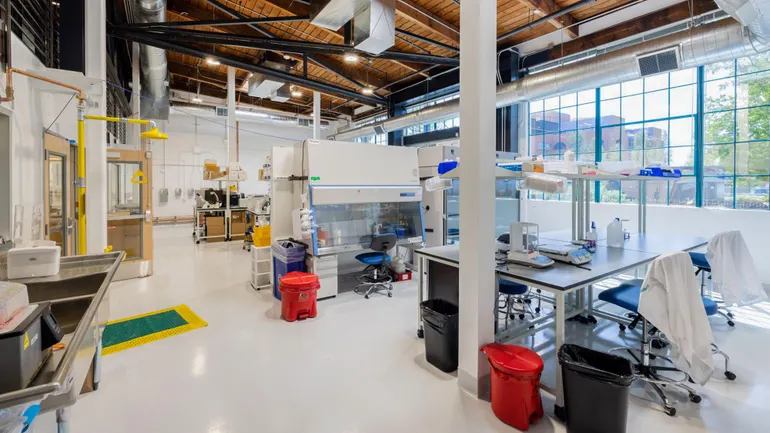
Finless Foods was preparing to move to a larger nearby space to expand its cultivated seafood production capacity. Cell culture experiments were still ongoing in the old laboratory, but all on a small scale—cells grew in dishes, and small shake flasks gently agitated to promote proliferation. The lab's largest bioreactor (50 liters in capacity) was about to be shut down for the move. Inside the lab, refrigerated tanks and incubators held several shake flasks, small glass dishes, and experimental liquids, occupying an area equivalent to a standard home kitchen.
In about five years, Finless Foods had outgrown its original laboratory and office space.
The new laboratory is much larger, equipped with a 250-liter bioreactor. Selden said that once fully operational, it will be able to produce enough bluefin tuna to supply the first few restaurants and provide the company with critical opportunities to scale up its science, equipment, and processes. More importantly, Chief Strategy Officer Shannon Cosentino-Roush noted that the new lab enables the company to set up bioreactors and manufacturing safety processes in accordance with FDA regulatory requirements to gain approval to sell bluefin tuna and other future seafood products.
The new food science laboratory can accommodate about 12 people working, and also features an investor tasting kitchen. Selden said that in the past, they often gave investors samples in the employee work environment. "Investors seemed to love it," Selden said. "They would say 'I feel like this is a real startup,' and we would say 'It certainly is.'"
Over the past six months, Finless Foods has moved into a new location, 11,000 square feet, about 10 blocks from its original site. The company has also grown: the food science team has tripled in size, and the bioprocess team has quadrupled. The prototype products are also closer to the form the company hopes to bring to market after receiving FDA approval.
"I think we have made significant strides in how we become a real company and move away from being a small workshop-style startup," Selden said in August.
Finless Foods is not the only food technology company expanding. As science advances and funding pours in, many startups are transitioning from small R&D organizations with just a few scientists into true food companies.
Cultivated meat companies such as Eat Just, Upside Foods, Future Meat Technologies, Aleph Farms, Steakholder Foods, and SuperMeat are planning their first industrial-scale facilities. Precision fermentation dairy company Perfect Day has moved into a larger R&D lab and office in Berkeley, California, and established hubs in Salt Lake City and India, while also spinning out a corporate biotech-as-a-service business called nth Bio. Earlier this year, cultivated fat producer Mission Barns moved into a 32,000-square-foot office and lab space in San Francisco that previously belonged to e-cigarette giant Juul Labs.
Mark Warner, a former consultant to food technology companies and now CEO of Liberation Labs, specializes in helping businesses transition from R&D to manufacturing. Over the past seven years, he estimates he has worked with at least half of the companies producing cellular products or novel proteins and has witnessed the scaling process, having helped companies like TerraVia (formerly Solazyme) and Impossible Foods advance.
Scaling a company requires a lot of work: facilities are needed, science and processes must be proven reliable, and products produced at scale must be viable, consistent, and safe. But Warner points out that when organizations shift from R&D to commercial production, the most difficult transition is often not technical. "It's partly organizational and psychological," he said. "If you've only done R&D, moving to a manufacturing environment can be hard for these organizations."
More, more, more
Every food starts with an idea. If that idea comes from someone outside a large food company, it may take years to fully develop and bring to market. When the idea requires advanced science to realize, the path is even longer, especially for unprecedented products. The process begins with scientists creating the food or ingredient on a small scale in the lab. If successful and the product concept is good, the company and R&D begin to grow slowly.
More scientists join, experiments are repeated to verify reproducibility, and then the scale of experiments increases to test whether production can be done at a larger scale. When feasible, the cycle continues: more science, more experts, more experiments, more products, larger scale, and with it, more facilities and funding.
Laine Clark has worked for over a year at the international nonprofit Good Food Institute (GFI) as an innovation and entrepreneurship manager, providing advice and resources to help companies scale. She notes that many food technology projects face the challenge of finding larger facilities when transitioning into companies. For example, producing less than a pound of cultivated meat in the lab (i.e., "bench scale") is a good start, but to further establish the company and prove it can eventually produce millions of pounds of meat in dedicated facilities, it needs to reach "pilot scale," which can produce hundreds of pounds of meat. Clark says she often sees this bottleneck because pilot facilities are expensive and suitable sites are hard to find.
"Many companies are currently facing bottlenecks, even needing pilot plants. From bench to scale, the first pilot step is crucial to allow time for the product to be tasted, ensure the taste is right, set pricing, and so on."
"This is different from the mindset of many people with science backgrounds. I'm not disparaging or defending; I'm a pragmatist: if you're going to make food, you have to understand it." —Mark Warner, former consultant, CEO of Liberation Labs
Company building is another challenge Clark often discusses with companies. Being able to use science to create entirely new products (such as producing animal proteins through fermentation) is one thing, but once the technology is validated, funding is secured, and the industry takes notice, the company must actually operate. Suddenly, it's not just science; you need sales and distribution people, an HR department, and a marketing team.
"Many solutions are obviously highly technical," Clark said. "The team that came up with the concept has PhD backgrounds, but then they find they have to think about market strategy, they don't know what's valuable, so they bring in people who can help."
Warner points out that because the end product is food, scaling adds another layer of complexity: the USDA and FDA have strict food safety regulations for manufacturing facilities. Many food companies hire experts to ensure compliance, and manufacturing facilities are subject to inspections to prevent violations. These regulations are unique to food manufacturing and differ greatly from standard laboratory procedures or how similar products are made in the pharmaceutical and medical industries.
"This is different from the mindset of many people with science backgrounds," Warner said. "I'm not disparaging or defending; I'm a pragmatist: if you're going to make food, you have to understand it."
You're not shooting hoops alone in a gym
Josh Tetrick founded Eat Just (then called Hampton Creek) in 2011. Since then, the company has expanded into multiple product lines: first plant-based mayonnaise and condiments, then plant-based eggs. Now, it is the only company in the world that can produce cultivated meat for everyday consumers. At the end of 2020, Singapore approved Eat Just's cell-based chicken bites (produced under the Good Meat brand) for sale.
Tetrick says the long-term goal for the Good Meat cell-based meat line is to produce tens of millions of pounds of cultivated chicken, beef, and pork by the end of 2030 at a cost equal to or lower than conventional meat. But it's not just about production—the products must gain regulatory approval and be accepted by consumers. Therefore, everything the company produces must be scalable, stable, safe, and popular.
Eat Just is building large-scale cultivated meat capacity. In May, the company announced an exclusive partnership with bioprocess engineering company ABEC to build ten 250,000-liter bioreactors for meat cultivation. These reactors will be the largest equipment ever for cultivating bird or mammal cells, with the factory capable of producing up to 30 million pounds of meat annually. The company is currently selecting a site in the United States, and Tetrick says the facility will be located somewhere in the U.S.
Tetrick says selling Good Meat cultivated chicken in Singapore has shifted consumer perception of bioreactor-grown meat from science fiction to lunch. "However—and it's a big however—this is different from scaling. They are two different things," Tetrick said. "Sometimes it's easy to confuse them, but selling is not scaling."
Tetrick defines scaling as being able to produce millions of pounds of cultivated meat and sell it at a cost equal to or lower than conventional meat, which is Eat Just's current core focus. The company's condiments line has been gradually phased out, shifting production to Just Egg. Made from mung bean protein, Just Egg is the absolute leader in the U.S. egg alternative category, and the product is also sold in Canada, Singapore, South Korea, South Africa, Hong Kong, and China, with entry into Europe expected by the end of this year. As of August, Eat Just had sold the equivalent of 300 million eggs.
In North America, Just Egg is available in more than 48,000 retail stores and over 2,200 restaurants. According to Nielsen data provided by the company, from December 2021 to May, Just Egg was the second-fastest-growing egg brand in the U.S.
Tetrick's company is one of the oldest players in the food technology field, and he admits to learning tough lessons early on. The biggest lesson: just because something works at lab scale doesn't guarantee it works at scale. He shared an analogy from an engineer: if you're shooting hoops alone in a gym, you might easily hit three-pointers; but in a game, the shooting motion is the same, yet the environment is completely different—the gym might be packed with players whose movements change the air temperature and pressure, someone might block you, and you're more fatigued from the competition. The conclusion: it's a completely different game.
"Just because you can easily hit a three-pointer alone doesn't mean you can do it in an NBA game. Similarly, being able to make an egg in the lab doesn't mean you can scale it up," Tetrick said.
He said what companies need is an understanding of the differences that arise when equipment gets bigger, and how to control the final product and maintain consistency. The right engineers can spot problems and make necessary adjustments.
Tetrick said that setbacks during the scaling of Just Egg were disappointing. It took time and team collaboration to get the proprietary protein removal process running smoothly in larger manufacturing facilities. Now, he focuses more on what is scalable rather than just the technology's promise.
Tetrick said Eat Just's biggest early mistake was not consulting people with scaling experience. Now he understands he should have paid more attention to scaling performance; if someone had warned him eight years ago, the company would be further along. But going through the rocky scaling of plant-based eggs has its benefits: all the lessons from Just Egg have been directly applied to building Good Meat.
"I often think, if I had done meat first, or done both at the same time... without the egg experience, we would be two or three years behind," Tetrick said. "We wouldn't be selling in Singapore, we wouldn't have the ABEC partnership, we'd just be celebrating the latest sample we made in the lab."


