
2023 Outlook: How FMCG Companies Can Navigate Ongoing Volatility
In 2023, the FMCG industry is expected to continue facing multiple challenges including supply chain issues, inflation, and geopolitical tensions. Companies such as Vita Coco, Del Monte Foods, and Kodiak Cakes have taken measures including price increases, automation investments, and SKU rationalization to respond. Experts note that the food industry is relatively stable, but companies need to be vigilant about recession risks and adjust strategies flexibly.
Editor's Note:This article is part of the "2023 Food and Beverage Industry Trends" series.
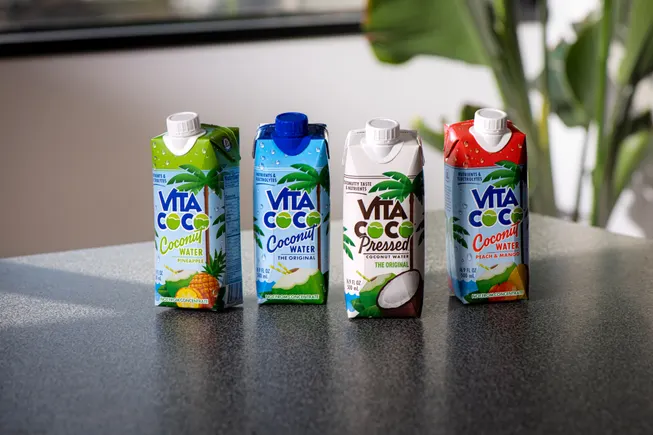
For Mike Kirban, co-founder and executive chairman of coconut products giant Vita Coco Company, uncertainty has always been a constant in business. The company traces its origins to a cold winter night at a bar in New York City in 2003, when it had to convince consumers to buy its products early on, and then had to deal with capacity pressures from surging demand.
In the past few years, the industry has faced new challenges: industry-wide shipping costs soared from $2,000 per container two years ago to over $10,000 at last summer's peak, and container availability severely constrained product supply. Market conditions led to shortages of pineapple and mango puree, affecting the availability of some flavored coconut waters on retail shelves last summer. For products that were in stock, shipping time from factory to warehouse once stretched from the usual two weeks to three months. High costs nearly halved Vita Coco's gross margin last year and prompted it to raise prices twice.
"That's the beauty of these businesses—there's always a new challenge," Kirban said with a laugh at the company's New York headquarters. "We've learned a lot and become better in many ways, enabling us to weather the difficult environment of the past few years." He said that although labor, packaging, and shipping costs remain high, costs have begun to stabilize. The past few years have prompted Vita Coco to overhaul its business model in areas such as sales, marketing, sampling strategy, and innovation.
Volatility remains the main theme
However, growing evidence suggests that the challenges facing Vita Coco and other consumer packaged goods companies will persist in 2023 and may force further changes at companies already hit repeatedly. Supply chain issues, inflation, the ongoing Russia-Ukraine conflict, and soaring input costs have tested even the most seasoned industry executives. Corporate leaders must now plan future strategy without historical experience or a blueprint to guide them.

Krishnakumar Davey, president of client engagement at IRI, recently discussed sourcing and supply chain issues with top consumer packaged goods executives and was surprised by their outlook for this year. "They said '2023 will be as volatile as last year and the past few years,' and I was quite shocked," Davey recalled. Neil Saunders, managing director at Global Data, agreed, saying most food and beverage manufacturers expect 2023 "to be a fairly tough year because consumers remain under significant pressure."
Greg Longstreet, CEO of Del Monte Foods, a manufacturer of canned fruits and vegetables whose brands include Contadina tomato products and College Inn broth, said the company will implement what may be its final round of price increases for the near term in February. But he noted that with packaging, ingredient, and transportation costs still high, Del Monte Foods continues to seek ways to cut expenses across the supply chain and make its products more appealing to consumers. To that end, it has introduced more products at price points that appeal to value- and convenience-seeking shoppers, such as multi-pack fruit cups and canned vegetables; meanwhile, its spending at factories has more than doubled over the past four years to improve speed and efficiency. "To compete... we have to be highly automated, high-speed, and efficient to deliver these products to consumers at a better value," Longstreet said.
More layoffs to come?
For many companies, the biggest variable is whether the U.S. economy enters a recession and, if so, how severe it will be. A recession would further pressure consumers, who already face higher borrowing costs due to a series of Federal Reserve interest rate hikes, as well as rising prices for everything from food and clothing to healthcare and travel. Economists noted that last month's reports that PepsiCo, seen as a bellwether for the industry, plans to cut several hundred corporate jobs in North America could be a precursor to further belt-tightening at other food and beverage consumer packaged goods companies—which have so far largely been insulated from the wave of layoffs affecting other industries. This may signal that, although price increases have helped offset rising costs, companies recognize they need to do more to control expenses.
"Compared with other industries, the food industry has historically performed relatively well. In terms of total value, demand still exists. People have to eat."

Marcel Koks
Director of Industry and Solution Strategy, Infor
This contrasts sharply with the economic environment during the pandemic—when food manufacturers expanded their workforces due to high demand as homebound consumers cut back on dining out, travel, or office work. Although workers involved in manufacturing products should be largely protected in the coming months, white-collar corporate roles may not be spared. "The pandemic was quite favorable for most food and beverage companies because consumer spending surged and people hired very casually," Saunders said. "Now the tables have turned, and people are saying 'we need to consolidate, look at whether these roles are necessary, and reassess forecasts.'"
"People have to eat"
Inflation data released by the U.S. government last month revealed the dilemma facing consumer packaged goods executives. The Labor Department estimated that prices for food consumed at home rose 0.2% month over month in December and 11.8% year over year; overall inflation for the full basket of goods fell 0.1% month over month, the largest decline in nearly three years. Even as inflation retreats from multi-year highs, prices are expected to remain above pre-pandemic levels. Further price increases may still work in some categories, but most consumers are unlikely to absorb even larger hikes on top of those already implemented in 2022.
Valerie Oswalt, a former Campbell Soup executive, became CEO of Kodiak Cakes in November; the company makes high-protein whole-grain pancakes, waffles, energy bars, and baking mixes. She said the company is closely monitoring metrics ranging from private-label demand to how often consumers dine out, and is tracking product volumes while working closely with suppliers and its procurement team to improve efficiency. "Our top priority is really driving productivity to offset inflationary headwinds," Oswalt said. "Pricing has to be very careful" to avoid pushing consumers to other brands.

Davey said consumer packaged goods companies may cut costs by reducing SKUs to simplify production, trimming inputs (such as buying fewer bottle caps to improve efficiency), reducing advertising or marketing spending, and engaging in "shrinkflation" (reducing package sizes while keeping prices the same). He also noted that food manufacturers may substitute or reformulate with cheaper or more stable ingredients while incorporating more automation and artificial intelligence into their operations. "There are always plenty of opportunities... consumer packaged goods companies are just getting started. There's still a lot of opportunity," Davey said. "Over the past two years, because consumer packaged goods and food industries saw strong growth, they haven't cut costs significantly."
Because food and beverages are consumer necessities, people may choose to find ways to save money within the category. Saunders said those choices may include shopping more at discount stores, cutting out certain non-essential items, or trading down to cheaper products. Private labels, which have thrived in recent years, will continue to see demand. Meanwhile, premium products are expected to remain popular, as consumers use money saved from dining out to buy them and remain willing to pay a premium for higher-quality items with distinctive attributes.
Despite ongoing uncertainty in the food and beverage industry, economists point out that the category remains relatively stable compared with other industries such as technology, manufacturing, or retail. Marcel Koks, director of industry and solution strategy at Infor, whose work involves helping companies adapt to the market, said that although "disruption has become the new normal," the food industry overall "has been a fairly stable industry." He cited its resilience after the 2001 and 2008 recessions. "Compared with other industries, the food industry has historically performed relatively well," Koks said. "In terms of total value, demand still exists. People have to eat."