
Food companies claim they can reduce emissions this year, experts are skeptical
Food and beverage giants claim they will advance emission reduction goals in 2023, but experts and activists remain skeptical, suggesting current efforts may be mere 'greenwashing.' The industry faces multiple challenges, including supply chain transformation, the reliability of carbon offsets, and the effectiveness of regenerative agriculture.
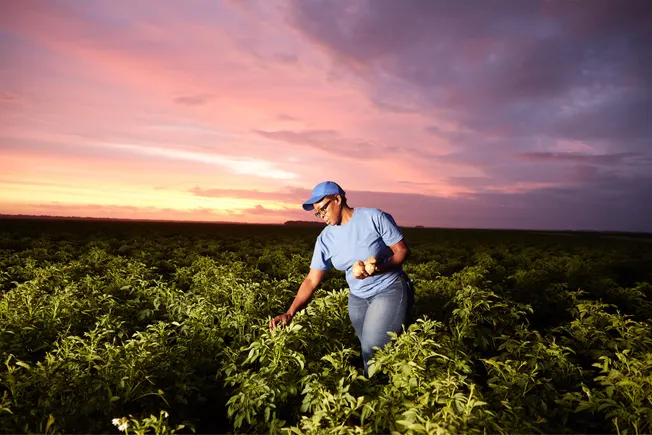
Editor's note:This article is part of the "2023 Food and Beverage Industry Trends" series.
Last fall, ahead of the UN COP27 climate conference, beverage giant Coca-Cola was announced as a conference sponsor, which immediately sparked strong backlash.
Sustainability activists accused the UN of "greenwashing" because Coca-Cola contributes significantly to plastic pollution. According to data from the Organisation for Economic Co-operation and Development (OECD), plastic pollution accounts for 3.4% of global emissions. A petition signed by 240,000 people called for Coca-Cola's sponsorship to be revoked, but ultimately failed.
In an open letter, at least 60 public health organizations called for an end to "corporate capture" by polluting companies in climate negotiations. Coca-Cola told PBS that its participation precisely highlighted the company's commitment to reducing emissions.
The petition and the attention it generated brought to the spotlight the deep rift between activists warning of imminent climate collapse and the food industry.
In response to growing pressure from sustainability advocates and consumers, food and beverage companies have developed plans aimed at reducing greenhouse gas emissions from their supply chains over the next decade. However, experts point out that whether these companies can make real progress is a major question.
Some companies, such as Mars, demonstrate their commitment by linking executive compensation to achieving emission targets. The three major consumer goods giants—Mars, PepsiCo, and Nestlé—all told Food Dive that they are on track to meet their respective emission reduction targets and plan to make substantial progress in 2023.
Although some experts believe that consumer goods companies' efforts so far are a step in the right direction, they doubt whether the industry can meet its time-based commitments in the coming years. This could intensify pressure from activists, who blame food and beverage producers for a large part of the climate change crisis. According to UN data, the food industry accounts for one-third of global greenhouse gas emissions.
Jim Walsh, policy director at the sustainability advocacy group "Food & Water Watch," said the industry's current efforts will not produce meaningful results in curbing emissions. "This is really big agriculture running a marketing campaign to greenwash the destructive global food system."

Consumer goods giants target carbon sequestration
According to emissions measurement company Net0, at least 110 countries have agreed to achieve net-zero emissions by 2050—meaning achieving a balance between emissions produced and emissions removed from the atmosphere. This will require large-scale reforms in how countries, businesses, and consumers approach food production and consumption.
Marketing and new product development have become important parts of how consumer goods companies communicate their carbon reduction ambitions to consumers. Some brands—whether traditional products like Bud Light or market newcomers like Neutral Milk—have launched carbon-neutral products, claiming these products offset all greenhouse gases emitted during production. This often involves companies purchasing carbon credits or investing in carbon offset projects, such as replanting trees in areas affected by deforestation.
Sean Hiatt, associate professor at the University of Southern California's Marshall School of Business, said reliance on carbon offset credits could prove to be an ineffective measure and put their credibility in question. "I think they're creating a reputational threat for themselves because people can call it greenwashing," Hiatt said. "This area is under-regulated, so the risk is higher."
Companies are also embracing carbon "insetting" projects—such as restoring forests and agricultural land—which do not involve purchasing carbon credits but are about "doing more good rather than less bad," according to the World Economic Forum.

Betting on regenerative agriculture
The industry distinguishes between Scope 1 and Scope 2 emissions—those from a company's own operations and facilities—and Scope 3 emissions, which come from indirect sources such as its suppliers' production and product transportation. According to sustainability nonprofit Ceres, Scope 3 emissions account for 90% of food companies' emissions.
In most food companies' emission reduction targets, "regenerative agriculture" takes center stage as a key solution. These practices are a set of agricultural techniques farmers use to restore the soil and water used in production. According to the Chesapeake Bay Foundation, these practices include cover crops, continuous no-till, and crop rotation. According to Colorado State University, tillage erodes microorganisms in the soil, harming its biodiversity and overall health.
But not all agricultural experts agree with this approach. According to Walsh of Food & Water Watch, no-till farming requires large amounts of pesticides and chemical fertilizers, making it do more harm than good. "These companies are touting regenerative agriculture everywhere because it is largely undefined, which allows them to justify absurd and harmful practices that provide almost no climate benefit," Walsh said.
While some practices under "regenerative agriculture" may be beneficial, Tara Chandrasekaran, senior ESG analyst at sustainability investor group FAIRR, said companies must be more transparent about how much they believe regenerative practices can reduce emissions. She said Nestlé is a company that was fully candid in detailing how its practices would reduce emissions in a lengthy "Net Zero Roadmap" document published in 2021.
"For these actions to be robust and credible, companies must both measure and disclose the extent to which these practices can mitigate emissions," Chandrasekaran said. "The main concern with soil carbon sequestration is the extent to which it can adequately sequester carbon, which may vary by region and soil type."
Nestlé, the world's largest food company, said it has adopted a combination of technologies to achieve its goal of halving absolute emissions by 2030. These measures include regenerative agriculture practices and insetting projects. The consumer goods giant said individual brands in its portfolio can offset their emissions by purchasing carbon credits.
In an email statement to Food Dive, Nestlé said one of its brands embracing reduced tillage is pumpkin producer Libby's. The company said it is working with third-party organization Sustainable Environmental Consultants to collect and measure agricultural data to assess its emissions.
"By adopting sustainable reduced tillage practices, compared to conventional tillage, Libby's farmers saved the equivalent of about 43 dump trucks of soil—694 tons of soil per year—from being lost to erosion in the first year of data collection," Nestlé said. "We are leveraging our scale and global reach to find innovations and new approaches, utilizing farmers' unique expertise in the field, and partnering with third-party experts and industry leaders to ensure our efforts are effective."
"For reduced tillage of row crops, there is no definitive conclusion yet on whether it can achieve carbon storage as often claimed."

Jason Hill
Environmental expert and professor at the University of Minnesota
Candy giant Mars Wrigley—which has committed to achieving company-wide net-zero emissions by 2050—said it is on track to meet its goal of reducing total operational emissions by 42% by the end of 2025, based on its work in eliminating deforestation and embracing "climate-smart" agricultural practices, particularly in cocoa.
"We have many future-oriented projects, such as our farm-level cocoa projects at Mars La Chola in Ecuador and Bacao Farm in Colombia, where we optimize inputs like fertilizer and water use, use renewable energy, and harness the power of trees to sequester carbon in soil and biomass," Chief Sustainability Officer Alastair Child said in an email statement to Food Dive.
Soda and snack giant PepsiCo views its regenerative agriculture approach as key to transforming its supply chain and achieving its goal of net-zero emissions by 2040. Roberta Barbieri, the company's vice president of sustainability, said in an email statement that the company believes it has a solid foundation in 2023 to further reduce emissions.
Some of the new initiatives the company has adopted include a project to decarbonize a snack factory in the Netherlands by storing and converting renewable energy, and installing a biodigester—equipment that breaks down substances like fats and oils—at a PepsiCo plant in Portugal.
But Barbieri said there are difficulties in getting partners in the supply chain to deploy new technologies, which requires greater investment. Another challenge between the company and its climate goals is managing data on project progress, which she said has room for improvement.
"Beyond some of our larger suppliers, there is a need for broader education and capacity building to address climate change," Barbieri said. "Small and medium-sized suppliers also face staffing issues in leading the scale of change needed."

Skeptics raise questions
While companies focus on these goals, experts doubt whether companies can achieve them within the expected timeframes, as global supply chains require significant and costly reforms.
Jason Hill, environmental expert and professor at the University of Minnesota, said some practices under the "regenerative agriculture" umbrella are questionable. First, the term itself has drawn greenwashing accusations from some activists due to its lack of a clear definition. Additionally, there are questions about whether farming methods can reduce emissions as significantly as the industry claims.
"For reduced tillage of row crops, there is no definitive conclusion yet on whether it can achieve carbon storage as often claimed," Hill said.
According to the UN Food and Agriculture Organization, the meat and dairy industry accounts for 14.5% of anthropogenic emissions. The industry faces particular scrutiny for producing methane, a greenhouse gas that, according to the Environmental Protection Agency, is at least 25 times more potent than carbon dioxide.
FAIRR, a sustainability investor group that tracks emissions from livestock companies, said meat giant Tyson will fail to meet its goal of reducing emissions by 30% by 2030. FAIRR said the target is already outdated compared to its peers, and its operational emissions have increased by 7% over its baseline target. Tyson said in a 2021 statement that it aims to update the baseline of its emissions targets by the end of 2023.
To track emissions, many companies rely on third-party organizations to get an accurate picture of their carbon output.
Climate Trace, a nonprofit that tracks emissions from livestock companies, said companies find it difficult to determine their progress toward emission goals due to a lack of accurate data sources to determine whether companies are successful. The nonprofit estimates emissions by calculating methane produced on farms—through cattle burps and manure, rice cultivation, and synthetic fertilizer use.
"The EPA does not regulate or monitor greenhouse gas emissions from animal feeding operations; in fact, it doesn't even have a complete list of feedlots nationwide," said Lika Sridhar, partnerships manager at Climate Trace. "We apply satellites, other remote sensing technologies, and artificial intelligence to provide independent observations of global emissions, in as much detail as possible."
Can policymakers and investors force industry action?
While consumer goods companies express confidence in their ability to curb their own emissions, sustainability groups believe this is not enough. These groups strongly advocate for US lawmakers to regulate the carbon footprints of large food companies.
New Jersey Democratic Senator Cory Booker introduced a bill in 2021 aimed at reforming the farm system to improve its sustainability.
Walsh said passing Booker's bill is Congress's primary initiative to both reduce industry emissions and increase the structural security of the supply chain during a crisis—especially regarding the factory farm system.
"Factory farms are creating a food system that is unsustainable and less resilient to various supply chain shocks," Walsh said. "When there are massive agricultural entities and large food giants, a problem within one of these institutions can have ripple effects around the world."
FAIRR and its network of investors representing $70 trillion in assets believe its reporting on supply chain carbon emissions can be used by investors as a tool to pressure companies to set stronger emission reduction targets, said Talia Wronacki, senior manager of research and engagement at FAIRR. "We have this information, and investors can use these datasets as part of their individual engagements."