
Reshaping Social Media Strategy for Food and Beverage Brands: Opportunities and Boundaries of Influencer Marketing
2024 is regarded as a pivotal turning point for influencer marketing. Food and beverage companies are shifting from traditional advertising to deep collaborations with content creators, building brand loyalty through authentic and heartfelt storytelling. This article reviews the successful practices of brands such as Poppi and Olipop, analyzes the controversies and risks in cases like Chobani and Bud Light, and explores how brands can balance creative marketing with compliance boundaries amid stricter FTC regulation.
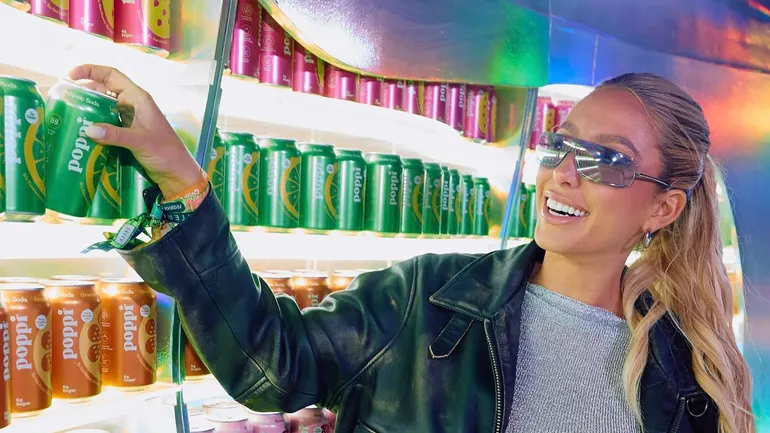
In 2024, the industry is seen as entering the "year of influencer marketing." Since the pandemic, many food and beverage companies have been forced to transform into e-commerce brands overnight. Influencers, with their relentless social media activity and deep understanding of their influence over followers, have begun to dominate the marketing landscape. With a daily flood of paid marketing campaigns on platforms like Instagram and TikTok, influencers have become an indispensable part of the industry.
"I do think 2024 is going to be a year of shift in how brands show up on social, especially large enterprise brands," said Marie La France, vice president of growth at global influencer marketing agency Billion Dollar Boy, in an interview with Food Dive. "People naturally gravitate toward getting information from trusted sources, like through word of mouth. And this year, I think a lot of companies are really realizing that."
Winners and losers in food and beverage social media strategies
Steven Vigilante, director of growth and partnerships at Olipop, a soda brand focused on health, noted that the boom in social media and influencers began with the pandemic in 2020. "Everyone had to become an e-commerce brand overnight. No one could do tastings, events, or promotions, so everyone had to figure out paid social influencer strategies across different channels," he said in an interview with Food Dive.
Another health-focused soft drink company, Poppi, has shown the industry how to succeed through its grassroots marketing approach. Allison Ellsworth's company started at farmers markets and has now become the number one soft drink on Amazon. According to Forbes, the company's organic social and influencer marketing strategy in 2023 accumulated 204 million impressions and 2.3 million interactions. This helped Poppi reach 5 million new monthly households in 2024 and turned its consumers into loyal fans.
Ellsworth said she invested in the company's TikTok presence years ago, using strategies like sending influencers unexpected gifts such as sweatsuits and bathrobes, which kept the brand far ahead of trends. The power of viral content is immense. Poppi's strategy of associating the brand name with people and things unrelated to soda is working. "There are a lot of benefits to thinking outside the box when marketing a food brand. It doesn't just have to be—here's a recipe," La France said.

La France believes that it is these unexpected moments that can cause a product to go viral quickly. Olipop, on the other hand, tried to create such moments by establishing a position designed to trigger viral social media content. "I've worked in the food and beverage industry for over a decade and have never seen a fan base as passionate as ours," Vigilante said. "We thought, what if we actually hired superfans to join our team and travel around the country with us to create content?" And so, the brand's Senior Soda Advisor position was born.
He said the company didn't just send influencers a sweatshirt but wanted to bring consumers who already loved Olipop onto its payroll. This strategy worked. "This role effectively showcased our brand spirit of bringing people together. Through heartwarming storytelling and relatable moments of sharing a can of soda, Olipop connected emotionally with the audience, reinforcing the idea that 'memorable moments with friends are made more special,'" Vigilante said. "This approach positioned Olipop not just as a beverage choice but as a companion for creating cherished memories."
The company received over 2,000 job applications for the position and gained over 650 million impressions on social media, as well as 200 media mentions including Travel + Leisure, USA Today, Fox Business, Time Out Magazine, and others. "The industry tends to move in one direction," Vigilante said. "So we thought, what can we do that's completely different but not too far out there, while also providing consumer insights?"
"In the past, companies like Coca-Cola would just stand there handing out vitaminwater, but that doesn't work anymore." However, when using influencers to promote products rather than just company ethos, brands can sometimes overstep. For example, Chobani recently sent a large shipment of cold brew coffee and creamer products to "Acquired Style," an influencer known for viral hairstyling tips, after the content creator began posting her daily coffee creations. The comments section of the post revealed a common theme—why send free products to someone who earns more from a single TikTok post than some consumers earn in a month? This left some consumers feeling disgruntled.

On the other side of the debate, Waterboy, a hydration supplement company offering products for "weekend recovery" and "workout hydration," decided to invite its real customers on an all-expenses-paid brand trip instead of influencers with online reach. "As an early subscriber and owner of Waterboy merchandise, I appreciate their focus on real customers rather than influencers!" one comment read.

Although the two companies took different approaches, they both achieved the same goal: sparking consumer discussion. "The point here is that social strategies are often seen as one-size-fits-all, and a lot is missed in the interpretation of this topic," said Adam Melonas, CEO and founder of Chew, a Boston-based food innovation lab for consumer packaged goods. Melonas also has extensive experience guiding brand strategy for food startups. "The devil is in the details—where the brand wants to go, who it's with, and where it focuses its efforts," he said. "It's not a formula of 'popular influencer + any brand = success.' If you go in the wrong direction, it can actually backfire."
For example, Anheuser-Busch InBev's Bud Light sent transgender influencer Dylan Mulvaney a personalized Bud Light can with her face on it to celebrate the one-year anniversary of her gender transition. Mulvaney shared the collaboration on Instagram on April 1, 2023, and it immediately sparked controversy. As a result, the company put two marketing executives, Alissa Heinerscheid and Daniel Blake, on leave. In July 2023, Modelo replaced Bud Light as the best-selling beer in the United States.
Influencer or content creator? The details make the difference
Melonas believes that no matter how effective or targeted a social media strategy is, it ultimately comes down to the product itself. "If the product is bad but has big-name backing, you'll get an initial frenzy with high trial rates, but repeat purchase rates will be terrible because the trial was driven by the influencer."
When planning a social media strategy, Melonas emphasized the importance of distinguishing between influencers, content creators, and celebrities. "Suppose Bradley Cooper can drive movie ticket sales, but he might struggle to sell snacks. It's not that I don't think he can resonate with snacks, but he doesn't have specific influence and domain credibility in that particular area," Melonas said. "Whereas someone like Logan Paul, who has a megaphone to speak to tens of millions or even hundreds of millions of active followers daily, can bring credibility to what he talks about in a certain way, while leveraging the credibility of his name, image, and likeness."
Paul, a YouTube star and professional wrestler, saw his Prime hydration drink line surpass $1.2 billion in sales in 2023. Plant-based pioneer Beyond Meat appointed Kim Kardashian as its "chief taste officer" in 2022. Despite Kardashian having over 363 million followers on Instagram, the media personality turned entrepreneur is better known for her skincare brand SKKN and shapewear company Skims than for cooking or plant-based foods.
Meati Foods took a different approach, partnering with sports figures Aly Raisman and Chris Paul in December 2023. Although the Olympic gold medalist and NBA champion have fewer Instagram followers than Kardashian, their audiences are more likely to adopt their advice about nourishing foods for the body. "There's a difference between driving brand awareness and trying to drive sales," Melonas said. "If you're going for awareness, then you can find the loudest, noisiest, most-viewed person. But that won't drive sales. Sales will come from that authenticity."
High rewards come with high risks
Over the past three or four years, there has been a sharp decline in the return on investment for digital advertising spending of any kind. Brands are trying to counter this trend by focusing on product placement in any creative way, he said. In November 2023, the U.S. Federal Trade Commission sent warning letters to two industry trade groups—the American Beverage Association and the Canadian Sugar Institute—as well as to 12 nutrition and dietetics influencers. The agency said these group-paid influencers failed to properly disclose their payments when promoting the safety of the sweetener aspartame on TikTok and Instagram. This action may make the industry more cautious in conducting similar campaigns in the future.
There is a fine line between being authentic to your audience, trusting influencers to promote products, and engaging in deceptive advertising. Poppi, the health brand that has generated hundreds of millions in sales through influencer partnerships and grassroots marketing, is now facing a class-action lawsuit over false advertising. According to the complaint filed on May 29, lead plaintiff Kristin Cobbs alleges the brand claims "prebiotic" benefits despite being "basically sugar water." The complaint also alleges that consumers would need to drink more than four cans of Poppi soda daily to achieve any potential health benefits from its prebiotic fiber. Cobb claims she purchased the product after seeing Poppi marketed as "prebiotic soda" and "for a healthy gut." Cobb said the promotions she saw led her to believe the product would have certain benefits, but it did not. Poppi has since removed the "gut health" claim from all its marketing.
"Staying up to date with FTC guidelines and knowing the latest developments is crucial," La France said. Meanwhile, overly scripted content can come across as inauthentic and negatively affect the audience. "We see viral videos go viral because they feel unique and authentic to the creator themselves. So I think trusting creators is very important. These people have built their followings for a reason," La France said.
Brand ambassador programs are another example of how brands can create authenticity without over-managing and vetting every piece of content. "They don't have to be celebrities," La France said. "You can get the same trust, engagement, and proper understanding of product benefits by building longer-term relationships with influencers of any size. I mean, this can happen with nano or micro influencers, and if you do that, it could have an even bigger impact on their lives."
Experts say it's crucial for brands to find a model that fits their scale in influencer marketing and social media strategy. This trend is not going away. Specifically in the food sector, what you consume becomes part of your identity, and consumers will always follow the crowd when making purchasing decisions.