
Candy giants double down on the gummy track: strong growth momentum, category innovation becomes key
The gummy category is becoming a growth engine that candy giants are vying to deploy. Companies such as Hershey, Mars Wrigley, and Ferrara are driving the continued expansion of the gummy market through capacity expansion, brand collaborations, and flavor innovation. However, some industry insiders also caution that the gummy craze may carry cyclical risks.
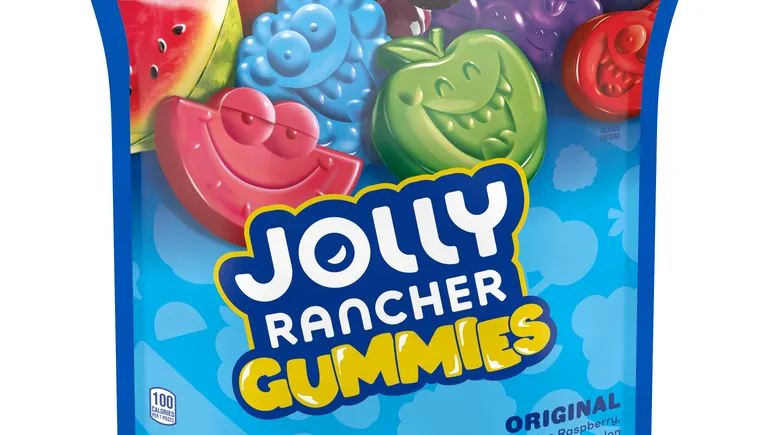
For snack giant Hershey, known for Reese's and Kisses, one of its most promising growth opportunities comes from a candy that contains neither peanut butter nor chocolate: gummies. Over the past several years, the Pennsylvania-based company has invested heavily to strengthen its position in the fast-growing gummy category.
"We expect gummies and chewy candies to continue to outperform the category average growth rate, which is a huge opportunity for us," said Dan Mohnshine, vice president of U.S. confection, grocery, and protein snacks marketing at Hershey, in an interview. "When we look at strategies to expand shelf presence and broaden consumption occasions, it's very different from what we do in chocolate."
Mohnshine noted that demand for gummies, driven mainly by its fruit-flavored Jolly Rancher brand, was already rising before the COVID-19 pandemic and surged further during the pandemic as at-home snacking increased. Demand has not receded since, continuing to grow at a "mid-to-high single-digit" rate.
Mohnshine said gummies offer multiple advantages that chocolate cannot easily or at all replicate: a bag can hold multiple flavors, they are easy to share, cost-effective, resistant to melting, and are seen as a more "indulgent" snack. These traits help candies like Jolly Rancher attract consumers by offering more choices and meeting new consumption occasions.
The surge in demand during the pandemic prompted Hershey to invest millions of dollars to boost gummy production capacity, which is expected to grow by 50% in 2024. The sweet-and-salty snack maker now has greater flexibility in innovation, promotional investment, and adding new SKUs at retail.
Jolly Rancher recently launched Awesome Reds, a sour gummy mix featuring flavors like cherry, pomegranate, watermelon, and fruit punch. Hershey CEO Michele Buck told analysts in February that the company also plans to launch a new gummy in 2024 through a partnership with basketball star Shaquille O'Neal.
"We'll combine his strong connection with consumers, especially younger, diverse consumer groups, which are key target segments for us in gummies," Buck said. "There's a huge opportunity in bringing gummies to market."

"How High Is the Ceiling"
The popularity of gummies comes amid growing interest in snacking among consumers of all ages, with candy becoming one way to meet that demand. According to Market Growth Report data, the gummy market is expected to grow from $495 million this year to $750 million by 2032, a compound annual growth rate of 6.4%.
Mike Gilroy, vice president of trade development and sponsorships at Mars Wrigley, said gummies offer candy makers nearly limitless room for innovation. Manufacturers can use different flavors (spicy, sour, sweet), shapes (ropes, worms, rounds, or chewy bites), layered structures or flavors, and different textures.
"The question is, how high is the ceiling for what gummies can do," Gilroy said. "There's so much to offer. The key to gummies is experimentation."
For established candy companies, gummies provide a way to reach new consumers by leveraging the equity of mature, highly recognized brands in the market. Mars Wrigley has applied this to its hard candy brands, including Life Savers, Skittles, and Starburst.
Gilroy noted that gummy growth remains on a "strong trajectory," driven largely by the rising purchasing power of Gen Z consumers. Gummies satisfy existing shoppers while also attracting long-term users to brands by getting consumers to start with gummies and then transition to traditional hard candies. Gilroy mentioned that nearly 60% of Gen Z consumers choose gummies, compared with about half of millennials.
"The question is, how high is the ceiling for what gummies can do. There's so much to offer."

Mike Gilroy
Vice President of Trade Development and Sponsorships, Mars Wrigley
Mike Kostyo, vice president of consulting firm Menu Matters, said gummies have qualities that appeal to both adult and younger consumers. Many older people, especially millennials, grew up eating worm-shaped or gummy bear candies. Now as adults, their nostalgia has risen, and they turn to snacks that evoke memories. It's no coincidence that adult vitamins often come in gummy form, Kostyo said.
For Gen Z and younger groups, gummies are appealing because of their bright colors and soft texture, offering a food that can be played with and eaten.
Still, Kostyo is skeptical about whether gummies can maintain their current momentum. While gummies are unlikely to disappear, the candy space tends to innovate quickly, introducing new forms and flavors. Inevitably, different products will emerge in the future, leading many consumers away from gummies.
"This is more of a fad than a true trend," Kostyo predicted. "In five to ten years, the candy industry will move on to the next hottest, greatest thing."

A New Life for Decades-Old Brands
Despite the uncertain outlook, candy makers of all sizes are actively pouring resources into gummies—and it's paying off.
For much of its nearly 80-year history, Frankford Candy dominated the market with seasonal items like chocolate bunnies and Santas. But in the 1990s, after Hershey, Mars, and Nestlé entered the space, the Philadelphia company turned more to gummies to diversify its business. Its gummy efforts began in 2003 with Krabby Patties. Nearly two decades later, Frankford expanded its gummy business further through a licensing agreement with Kraft Heinz.
Since then, Frankford has developed gummy products for several of Kraft Heinz's popular brands, including Kraft Macaroni & Cheese, Claussen Pickles, and Oscar Mayer hot dogs. Molly Jacobson, director of business development at Frankford, said gummies have now become its fastest-growing business segment, "far surpassing" its chocolate business.
"We spend a lot of time thinking about how to drive growth for Krabby Patties and Kraft Heinz brands in the gummy category, constantly pushing the limits," Jacobson said. "Gummies have become as important to Frankford as chocolate—or arguably, they've surpassed chocolate in importance and growth."
For Frankford, one major advantage of gummies is that, unlike chocolate, flavor development is not complicated. Instead, packaging and graphic design play a key role in making the candy resonate with consumers. That's why Frankford can bring innovative gummy products to market in about 12 months, while chocolate typically takes about twice as long.
For some brands, gummies play a crucial role in boosting sales and maintaining consumer relevance, especially in a market with many choices.
Ferrara Candy's chief marketing officer, Gregory Guidotti, said more Gen Z consumers today know the Nerds brand through its popular 2020 product, Gummy Clusters—gummies coated in tiny Nerds pieces—rather than the two-flavor rectangular box candy their parents grew up with.
Clusters sales are growing at 40%, while traditional Nerds are only in the low single digits. Guidotti noted that without gummies, Nerds would have annual sales close to $100 million, but now it generates $600 million a year.
"It has broadened the relevance of the business," Guidotti said. "Clusters changed the landscape and trajectory of the entire category."
Even before Clusters launched, Ferrara had decades of gummy experience through smaller brands like Black Forest and Trolli. However, the Illinois-based company, despite having the technical capability and often producing gummy products for others, lacked brands that could significantly deepen its own category presence.
That changed in 2018 when Nestlé sold its U.S. candy business for $2.8 billion. Ferrara inherited several brands in the deal, including SweeTarts in addition to Nerds, giving it two well-known products to use for gummy innovation.
Guidotti said that while gummies are hot, not every brand should enter the category. Of Ferrara's more than 30 brands, only a few have ventured into gummies.
"You have to understand consumer demand and whether your brand can extend into that space," Guidotti added. "Ferrara's advantage is that we have many brands, so we can choose based on brand positioning and market commitments, without having to roll out across the entire portfolio. We can be very selective about which brands are right for gummies."