
From Obscurity to Category Giant: The Evolution of Celsius Energy Drinks
Celsius Holdings has grown from an industry unknown with a market value of $5 million in 2012 to an energy drink giant with annual revenue exceeding $1.3 billion and a market share of about 11%. Its success stems from health-oriented positioning, unique flavor combinations, precise marketing, and category expansion dividends. However, recent data shows that declining consumer purchase intent, slowing category growth, and lack of innovation are now testing the company.
In 2012, when John Fieldly joined Celsius Holdings as Chief Financial Officer, the startup was virtually unknown in the energy drink sector dominated by Monster and Red Bull. At that time, Celsius had nearly zero market share, its products struggled to gain mainstream acceptance, and the company's market value was only $5 million.
More than a decade later, Celsius's annual revenue has surpassed $1.3 billion, and it has risen to stand alongside the competitors it once looked up to, being mentioned equally by the market.
In the$19 billion energy drink market, Celsius's market share has climbed to approximately 11%, and its products are nearly ubiquitous—from gyms and Dunkin' Donuts to Walmart and 7-Eleven. Wall Street currently values the company at $9 billion.
"I don't think you can replicate a Celsius," said Fieldly, who became CEO in April 2018. "There are so many external forces that brought us here, and so many internal decisions and team members that helped us get to where we are and guide us in the future."

"The right product, at the right time"
Celsius's rise to become a category giant capable of disrupting the duopoly in the energy drink market is a combination of carefully crafted strategy and a bit of luck.
Energy drinks have long been viewed as high-caffeine beverages, consumed mostly by construction workers needing a pick-me-up or college students cramming for exams. In recent years, the category has gradually become associated with health, fitness, refreshing fruit flavors, and a broader range of consumption occasions, thereby increasing its appeal to the masses. Arguably, no other energy drink brand has benefited as much from these changes as Celsius.
The 20-year-old Florida company is maturing against a backdrop of rising consumer interest in healthier, functional products—a trend further intensified during the pandemic. Celsius fits squarely into this category: its products are sugar-free and zero-calorie, yet packed with ingredients purported to provide exercise and energy benefits without the "crash."
"I don't think you can replicate a Celsius. There are so many external forces that brought us here, and so many internal decisions and team members that helped us get to where we are and guide us in the future."

John Fieldly
CEO, Celsius Holdings
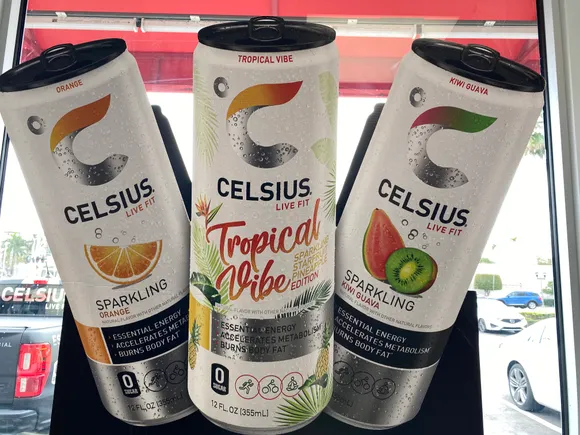
Meanwhile, Celsius builds its product portfolio around unique flavor combinations, such as Green Apple Cherry, Kiwi Guava, and Mango Passionfruit, which sets it apart from its peers.
Celsius has also demonstrated skill in marketing its beverages and expanding consumption occasions. The company frequently sponsors music festivals, motorsport teams, and college athletes, and relies on 2,000 brand-loving ambassadors to promote products through sampling and distributing Celsius merchandise. Unlike other energy drink brands that lean heavily toward male consumers, Celsius has a near-balanced consumption ratio between men and women, opening up a lucrative market.
"We're just getting started," Fieldly said. "The opportunity (for the Celsius brand) is enormous."
Over the past 20 years, "no other brand has stood out like Celsius," said Jefferies analyst Kaumil Gajrawala, regardless of the experience, financial resources, or distribution network strength those companies possessed.
"Celsius had the right product at the right time," Gajrawala said. "When the moment to break through came, they seized it. They got it right."
Celsius estimates it contributed one-third of the energy drink market's growth last year. In the final 12 weeks of 2023, nearly 80% of Celsius's dollar growth was incremental to the energy drink category—including both consumers new to the category and existing consumers who increased consumption due to purchasing Celsius. The brand is also attracting consumers from other beverages, such as coffee.
After U.S. retailers reset shelves in the first half of 2024, Celsius said its average SKU count increased by 7 compared to a year earlier. Currently, the company averages 20 SKUs across all measured channels, the highest level in company history.
Celsius has been "transformative" for the energy drink space, Fieldly said. "We're driving category growth. We're bringing innovation to the category."
William Blair analyst Jon Andersen, who covers Celsius, said he is optimistic the company still has room to grow into a "multi-billion-dollar" sales brand and believes its current market share could eventually double. The CPG analyst pointed to "compelling evidence points" suggesting Celsius's growth potential, including its market share of over 20% on Amazon and market share leadership in some regions where it prioritized early. As the brand enters more stores, expands internationally, and benefits from overall energy drink growth, sales and market share gains should follow.
"There are many levers Celsius can pull," Andersen said. "I'm very bullish because these evidence points seem to be leading indicators that the brand is still in a fairly early stage of category penetration."
The company's success has not gone unnoticed. CPG giant PepsiCo, which owns its own energy drink brand Rockstar, in 2022signed a distribution agreement with Celsius and acquired an 8.5% stake. Analysts speculate that PepsiCo may eventually decide to acquire the remaining stake in Celsius.

Building brand visibility
Celsius's roots trace back to fitness trainers and sports enthusiasts in gyms and health clubs. But over time, it has evolved into a lifestyle brand with the motto "Live Fit."
The beverage maker's main product lines include: the core product with fruit-forward flavors; the Vibe line, featuring enhanced flavors, limited editions, and Instagram-worthy packaging; and the Essentials line, in larger 16-ounce cans with added amino acids and flavors closer to traditional energy drinks. Additionally, the company offers On The Go energy powder in many of the same flavors as its ready-to-drink beverages.
A large part of its future growth depends on getting consumers to drink Celsius in more consumption occasions.
"Getting brand visibility in every corner of people's daily lives is a huge marketing opportunity," said Kyle Watson, Celsius's Chief Marketing Officer. "We really have a lot going on, and we haven't even scratched the surface."
Last year, Celsius signed on as a sponsor of Major League Soccer (MLS), a partnership that boosts the brand's relevance among younger and Hispanic consumers—the latter group tends to buy more energy drinks per capita than other demographics.
Following the soccer partnership, the company in February struck a deal with a Formula 1 racing team, capitalizing on the sport's growing popularity in the U.S. and establishing a presence on a premium, global marketing platform that Celsius plans to leverage as it expands internationally. Celsius reported record international sales in the second quarter and plans to enter Australia, New Zealand, and France later this year.
Celsius is also expanding beyond its energy drink roots, promoting its versatility as a mixer for non-alcoholic cocktails and as an alcohol alternative for "sober-curious" consumers. Some concert venues offer the product to music fans who want a drink but not alcohol, or who want to drink less. These channels are less about generating significant sales for Celsius and more about building brand awareness.
However, a lucrative growth opportunity lies in positioning Celsius as a mealtime beverage, replacing morning coffee or as part of a lunch ritual.
Jersey Mike's sandwich shops, with over 2,000 locations, sell Celsius in orange, tropical, and peach flavors, which the beverage company says pair well with sandwiches. Celsius recently launched a Cherry Cola-flavored energy drink that complements savory and indulgent foods like burgers and pizza.
At a 7-Eleven store in Boca Raton, just a few miles from Celsius's Florida headquarters, a barrel cooler near the register is filled with ice and Celsius products. It is strategically placed next to a refrigerated display case stocked with pasta salads, grapes, egg croissants, cookies, and sandwiches for shoppers to grab on their way out.
This display not only helps drive impulse purchases and food associations, but also helps drive trial; next time, consumers might decide to buy a multi-pack of Celsius. Just steps away from the single cans, the same store prominently displays multi-packs near a window by the parking lot, which has Celsius stickers on it. Celsius can also be found elsewhere in this 7-Eleven: nearly two dozen single cans are stored in a cooler, displayed alongside other energy drinks, water, tea, soda, and coffee.

Consumers and slowing innovation test Celsius
Even while seeking growth opportunities, Celsius remains firmly focused on its core energy drink business. Fieldly said that while Celsius has looked at "adjacent categories" like food or hydration, it would take years for the company to seriously consider those areas. Celsius still has ample opportunity to expand its presence in convenience stores, boost energy powder sales, grow internationally, and innovate through its existing beverage portfolio.
Jefferies analyst Gajrawala emphasized the importance of Celsius keeping a close eye on its core U.S. energy drink business while exploring other growth channels. This is because Celsius, after rapid expansion over the past five years, is facing evolving challenges in how it markets and innovates.
"So far, we haven't seen too many examples of them making mistakes, but it's hard," Gajrawala said. "You have to add hundreds of millions of dollars to grow, which is very different from when you're on a much smaller revenue base."
Recent data suggests Celsius may be losing some consumer favor. In last week's second-quarter earnings report, Celsius posted record revenue but also noted it lost market share in July.
Consumer feedback collected by data analytics firm HundredX from 8,000 responses shows Celsius's purchase intent has declined 14% over the past few months, a steeper drop than other major energy drink and soda brands. While consumers like Celsius's "healthiness" relative to competitors, more are beginning to question its ingredients, particularly the high caffeine content and artificial ingredients.
Meanwhile, the entire energy drink industry is seeing growth slow as consumers cut spending. Celsius is among the hardest-hit brands.
In a research note, BofA Securities analyst Jonathan Keypour said Celsius's demographic appeal and its positioning for new consumption occasions "have led to an outsized exposure to the category's overall slowdown, threatening its market share." He also questioned the company's "unproven innovation capability"—citing the limited base flavor pool used in Celsius products and its Essentials line's "tepid performance"—which could pose a risk to "meaningful shelf expansion" in 2025.
"With U.S. distribution now complete through the Pepsi partnership, CELH will need to find growth in shelf expansion, despite slowing velocity and increasing competition," Keypour said. "We still see strong sales and (EBITDA) potential, but need to see stronger velocity to signal a resumption of market share growth momentum."
William Blair's Andersen said Celsius has so far avoided any major missteps during its rise. The biggest challenge facing the company will be maintaining and eventually expanding the shelf space it has secured from retailers. This will put further pressure on Celsius to launch innovations that resonate with consumers while continuing to successfully market the brand to encourage trial and boost consumer awareness.
Tony Guilfoyle, Celsius's Chief Commercial Officer, said some beverage brands "try to be everything to everyone," putting themselves at a disadvantage. Such decisions can dilute a brand, either by confusing consumers about what the product stands for or by forcing employees to shift focus away from the core strengths that made it successful.
"We've done a good job of staying close to our existing products, driving responsible, steady, evidence-based growth, and focusing on what truly works for us," Guilfoyle said. "If you expand too fast, you dilute the brand and its credibility. We've never lost focus on the brand's core DNA."