
Under inflationary pressure, food and beverage manufacturers pass cost increases on to consumers
Under inflationary pressure, food and beverage manufacturers are passing on rising costs in packaging, transportation, and raw materials to consumers, with several major companies having announced price hikes or signaled future increases.
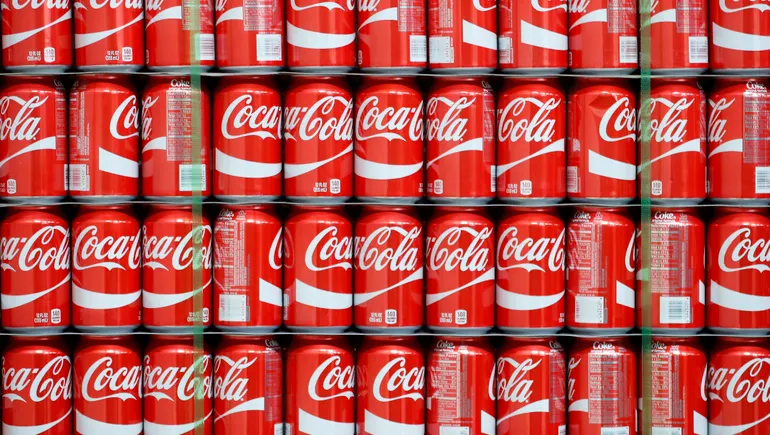
Food and beverage manufacturers are facing rising costs across their entire businesses, causing the prices consumers pay for items like peanut butter and turkey to jump, a trend that could spread to more categories this year.
Cost pressures come from multiple fronts. Beverage makers face higher costs for packaging materials like aluminum; meat prices are rising due to higher costs for feed grains such as corn for turkeys and hogs; surging freight, transportation, and manufacturing costs, as well as pandemic-related expenses, are also weighing on producers. Additionally, investments by consumer packaged goods (CPG) companies to follow consumer trends, strengthen e-commerce presence, and reduce environmental footprint add further burden.
"In the past, we might have seen price increases due to a certain raw material or animal feed going up, but we've never seen this 'perfect storm' hitting packaging, transportation, commodity costs, and everything else all at once, while the industry also deals with macro issues like sustainability. It's really a mess, so the money has to come from somewhere," said Phil Lempert, food industry analyst and editor of SupermarketGuru.com.

Executives at companies such as Coca-Cola, Unilever, Nestle, Mondelez International, and General Mills have announced price increases in recent weeks or signaled to Wall Street that they will raise prices later in 2021 to offset higher costs.
"We are now seeing broad inflation across commodities, packaging materials, and transportation costs," Nestle CEO Mark Schneider told analysts last month. "Not everything can be hedged, and our hedging coverage on various commodities will run out over time. We are raising prices where appropriate."
Federal Reserve Chairman Jerome Powell said in March that as the economy continues to reopen, if spending rebounds quickly, the U.S. economy could face further upward price pressures, "particularly if supply bottlenecks limit how fast production can respond in the near term."
Any further price increases in food and beverages would add to pressures the industry is already absorbing. According to the Labor Department's recent Consumer Price Index report, prices for food at home rose only 0.1% month over month in March, but had increased 3.3% over the previous 12 months. All six major grocery categories the department measures rose over the past year, ranging from a 1.6% increase in dairy and related products to a 5.4% jump in meats, poultry, fish, and eggs.
The surge in costs is prompting food and beverage manufacturers to evaluate every aspect of their business to squeeze out costs, including product mix, supply chain, and promotions.
According to data from NielsenIQ, industry promotions in March increased 0.3% year over year. But even with the slight increase, only 28.6% of items were sold on promotion, compared with the typical 33% before the pandemic. As a result, the analytics firm estimates that consumers are paying slightly more overall for food and beverages than before the pandemic.
Widespread industry impact
Inflation and corresponding price increases have become a frequent topic on recent earnings calls in the food and beverage industry.
Dairy giant Danone predicted in its first-quarter earnings report in April "broad-based inflation acceleration in milk, raw materials, packaging, and logistics." On its third-quarter earnings call, J.M. Smucker told analysts that the company had implemented "pricing actions in response to cost inflation and competitive supply disruptions," including a price increase on its Jif peanut butter, which competitors quickly followed.

Coca-Cola CEO James Quincey noted in a CNBC interview that while the world's largest nonalcoholic beverage maker is well hedged this year, "2022 will build pressure" and will require some price increases. "We intend to manage that intelligently, thinking about how we use packaging sizes and really optimizing the price points for consumers," Quincey said.
Hormel Foods has implemented a series of price increases on products such as Skippy peanut butter, Columbus Craft Meats, Spam, deli meats, and Jennie-O, whose turkey products have been hit hard by soaring grain prices. "While I am confident in our pricing power and expect margins to stabilize in the second half of the year, continued increases in grain prices will require additional actions," Hormel President and CEO Jim Snee said in February.
Snee also noted that Hormel is facing higher freight costs because it has been unable to improve truckload efficiency during the pandemic. Although the company is budgeting for higher freight rates, it expects these efficiencies to return, helping offset some of the increased transportation costs.
"In the past, we might have seen price increases due to a certain raw material or animal feed going up, but we've never seen this 'perfect storm' hitting packaging, transportation, commodity costs... It's really a mess, so the money has to come from somewhere."

Phil Lempert
Food industry analyst and editor of SupermarketGuru.com
John Boylan, senior equity analyst at Edward Jones, said inflation is affecting many companies across the food and beverage industry rather than a single category, which increases the likelihood that retailers will accept price increases and pass them on to consumers.
Conagra Foods Chief Financial Officer David Marberger emphasized this point on its third-quarter earnings call in April: "History shows that when there is broad-based industry-wide input cost inflation, price adjustments are more likely to be accepted in the market, and that is the environment we are in right now." The snack and frozen meal maker has already passed through some price increases, with the rest to be implemented over time.
Winning retailer support
Analysts point out that beyond costs like ingredients and transportation, retailers also understand that their CPG suppliers are investing more in strengthening e-commerce and innovating products to adapt to current food trends. Price increases can provide more funding for these areas.
"When input costs hit the entire industry, since everyone wants the category to remain healthy and growing, we think these discussions may be more easily accepted than at other times," Boylan said. "If it were just one or two companies, it would be a tougher conversation."
Smucker President and CEO Mark Smucker told The Wall Street Journal that the jam, pet food, and coffee maker "works with retailers to ensure that price increases are justified and that we are moving in sync."
Lempert said retailers, operating in a highly competitive industry with profit margins of only about 2%, are naturally reluctant to raise prices.
Store executives are already facing their own margin pressures and need to maintain or advance pandemic-related measures such as sanitizing shopping carts, wiping down conveyor belts, or installing plexiglass barriers at checkout.

Lempert noted that retailers are also aware that during the pandemic, consumers spent more on food, either switching brands when their preferred products were out of stock or paying for home delivery. As dine-in restrictions lift, sales that might have gone to supermarkets are now being used by consumers for eating out, further eroding the significant profits retailers gained during the pandemic.
Albertsons President and CEO Vivek Sankaran told analysts last week that the grocery giant is currently tracking household food inflation at 3% to 4%. He said that demand currently exceeds supply in many categories and that consumers' financial health is generally sound, indicating they are willing to accept at least some price increases. He said if inflation exceeds current levels, Albertsons would need to have tough negotiations with its CPG suppliers.
"We will have tough conversations about how much we can absorb, because we won't pass everything through, and we will have tough conversations up and down the supply chain," Sankaran said.
However, Lempert said that since retailers have little choice but to pass on costs, reluctant consumers will be more inclined to shop around.
"I think retailers are going to have to pass these costs on," he said. "It's going to be a very difficult time for retailers to accept CPG price increases while consumers resist prices. So, I think consumers will shop around and look for better deals," through channels like dollar stores, Amazon Fresh, Aldi, and Lidl.
Pricing wisely
The price increases come as many cash-strapped consumers are still dealing with job losses or other economic hardships caused by the pandemic.
Despite the seemingly favorable environment for price increases, food and beverage manufacturers need to closely monitor the increasingly volatile market to gauge acceptance of price hikes, said Krishnakumar Davey, president of strategic analytics at IRI.
Davey said that as the economy reopens, demand for at-home consumption products is expected to weaken compared with a year ago. Consumers are more price-sensitive than they were a few months ago. IRI data shows that during the pandemic, for every 10% increase in price of edible products, volume decreased by 16.3%; more recently, it would lead to a volume decrease of nearly 17%. These are all lower than pre-pandemic levels, when a 10% price increase reduced volume by about 19%.
Now, manufacturers need to carefully monitor acceptance of price increases across channels, including dollar stores, traditional supermarkets, club stores, or e-commerce.
They must also closely monitor data to determine whether there is still room for price increases in specific product categories, brands, package sizes, and channels, or whether market changes require them to pull back the costs they just passed on to consumers. According to IRI, if prices change for frozen dinners, soup, and cheese, consumers are more likely to change their buying habits, while volume for beverages and alcohol is less affected.
"You have to raise prices—commodity inflation is very severe. But you need to use other tools that impact costs to price wisely. You can't try to raise prices across the board," Davey said.