
Meat processors in the US face labor shortage challenges as economy reopens
US meat processors are encountering labor shortages amid the post-pandemic economic reopening. Some Tyson Foods plants are understaffed, with the company piloting new shift schedules and enhancing benefits; companies like Sanderson Farms acknowledge hiring difficulties. The industry faces approximately 93,000 job vacancies overall, and while companies alleviate pressure through pay raises and automation, challenges remain severe.
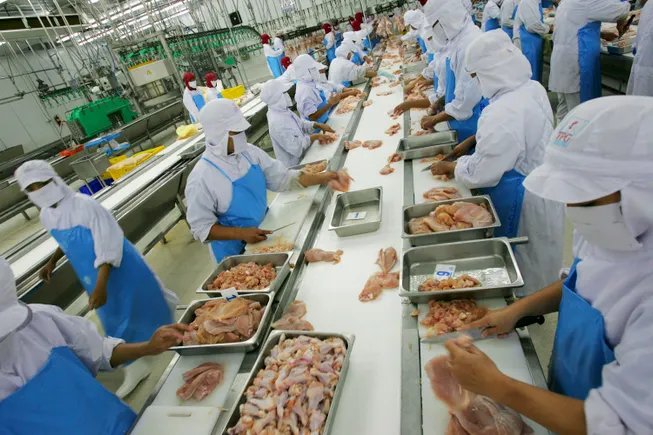
With the summer grilling season approaching and consumers returning to restaurants, Tyson Foods, the beef, pork, and poultry processing giant, is preparing for strong demand for its high-protein products. However, at some of its 140 plants, certain processing lines are understaffed due to difficulties in hiring and retaining workers, reflecting a persistent labor shortage across the U.S. food industry and the broader economy.
Hector Gonzalez, senior vice president of human resources at Tyson Foods, said, "We definitely have some plants that have more difficulty than others in finding enough workers. If workers aren't there, the plant can't run, so the applicant flow needed to fill positions today is more challenging."
To reduce disruptions, Tyson has identified measures to stabilize its workforce and improve retention, some of which are already being piloted. At least four plants are testing new schedules that reduce the number of workdays but extend daily hours, giving employees more time at home, or offering 36 hours of work paid for 40 hours. Tyson also plans to shift more shifts to daytime or weekdays rather than Saturday and Sunday nights, to accommodate employee preferences.
Over the past six months, Tyson has opened six hiring centers and has seven health clinics at or near its plants, where employees and their families can access basic medical services. Over the past five years, Tyson's average hourly pay for frontline workers, including benefits, has steadily risen to $22. Gonzalez said these incentives, along with chatbots and employee referral bonuses, have increased the number of applicants to Tyson.
He said, "These all help create an employee experience that we think differentiates us from competitors, and really reduce the need for us to spend energy backfilling attrition."
Spokespeople for JBS USA and Foster Farms declined to comment. Smithfield Foods and Sanderson Farms did not respond to multiple interview requests.
Joe Sanderson, CEO of Sanderson Farms, told analysts last month that he is optimistic labor conditions will improve in the coming months, but some regions still face difficulty finding enough workers. He said, "Our labor force is tight, no question. We have higher absenteeism, and we could hire a bunch of people right now."
Pandemic Exacerbates Worker Shortage
U.S. meat and poultry processors are just one of many industries nationwide facing labor shortages. Restaurants, retail, construction, and manufacturing are among the hardest-hit sectors. Food companies like Kraft Heinz and Post Holdings have also highlighted their own staffing challenges.
According to data from the U.S. Department of Labor, job openings in the U.S. surged by nearly one million in April (the latest month for which data is available), reaching 9.3 million at the end of the month, the highest monthly record since the report began in 2000. Voluntary quits also hit a new high of 4 million in April, indicating workers are optimistic about finding other jobs.
In most cases, worker shortages vary by plant or region rather than being a widespread problem across all plants of a processor, and meat and poultry processors are no exception. Tyson, the largest U.S. chicken processor, estimates that on some days, 15% to 20% of its 120,000 employees are absent for various reasons, including illness, dental appointments, or parent-teacher conferences.
Chad Hart, an agricultural economist at Iowa State University, said, "The industry faced a limited labor pool before the pandemic, and now it's arguably smaller. The long-term problem of finding workers has existed for some time. The pandemic didn't create the problem; it just exacerbated it."
Meat and poultry processing is demanding and physically intensive work. Hart said workers sometimes repeat the same task or operate machinery, both of which can be dangerous. Plants are often located in rural areas near livestock production, making it harder for companies to attract and retain workers.
Surge in Meat and Poultry Demand
At a time when beef, pork, and poultry plants are struggling to maintain full staffing, consumers are seeking protein sources, restaurants are welcoming more customers, and the popularity of chicken sandwiches is further stimulating demand. The summer grilling season has also begun, with warmer weather prompting more Americans to spend time outdoors.
Despite the surge in plant-based consumption, meat demand is still rising. In May, the U.S. Department of Agriculture estimated that Americans would consume an average of 223.9 pounds of red meat and poultry in 2021, up from 204.6 pounds a decade earlier.
According to the North American Meat Institute, citing Labor Department data, the animal slaughtering and processing industry employs more than 515,000 people, with over 330,000 in production occupations such as line supervisors and operators, food processing workers, butchers, and meat cutters. The Labor Department estimated last month that nearly 78,000 people work in slaughtering and meat packing.
The North American Meat Institute, which represents meat companies of all sizes, says labor is the top concern for all its members. Sarah Little, vice president of communications for the institute, said, "The pandemic proved how dependent our companies are on their workforce. This isn't just talk; without them, production stops."
The meat industry has been proactive in retaining and attracting workers, including raising wages, bonuses, and other benefits. Some companies even pay college tuition for employees' children.
Recent fiscal stimulus and the ongoing pandemic have made it harder for many businesses to find and attract people willing to work. Many potential workers are hesitant to enter the labor market due to fear of contracting or spreading COVID-19. Some economists say stimulus checks, tax rebates, and unemployment benefits have also reduced people's motivation to seek work.
Little cited an example in Kansas, where unemployed individuals can receive about $788 per week in unemployment and federal benefits, while entry-level workers at meatpacking plants earn $630 per week. The Wall Street Journal cited a University of Chicago study showing that 42% of benefit recipients received more than they earned in their previous jobs, and the amount is even higher when including temporary health insurance provided by the relief bill.
B.J. Motley, president of United Food and Commercial Workers International Union Local 304A in South Dakota, said the challenges of meatpacking work mean companies need to make jobs more attractive to attract and retain workers. He said, "If a meat plant only pays $17 and McDonald's or Wendy's pays the same, where would you go? You'd go to the less stressful, easier job."
Fabio Sandri, CEO of Pilgrim's Pride, told analysts in late April that the labor market appears tighter than before the pandemic, when the economy was considered at full employment. He said, "Our staffing levels are even lower than before the pandemic. We continue to consider all options and are responding actively."
Motley believes that even with higher wages and improved conditions, meat processors are still not doing enough to attract and retain workers. The union leader said companies praised workers as "essential" and "heroes" during the peak of the pandemic, but as conditions improved, many companies "turned their backs" on these people.
UFCW Local 304A is in intense negotiations over a new contract, seeking higher wages and benefits for 3,500 workers at the Smithfield Foods plant in Sioux Falls, South Dakota. That plant was hit hardest by the pandemic last year, with 1,300 people infected with COVID-19, and it accounts for about 5% of U.S. pork production.
Motley said, "We're not being unreasonable. We're just letting the company know that if they want to remain competitive and continue operating, they need to make jobs more attractive and take care of the workers they have. We don't understand why Smithfield is being so unreasonable, especially now when they can't retain workers."
Automation Becomes More Attractive
The worker shortage is making automation—a trend already widely adopted before the pandemic—more attractive to many meat and poultry companies. Sandri said that although Pilgrim's Pride (the second-largest U.S. poultry producer) spent over $40 million in 2020 on wage increases to retain and attract new employees, automation remains one of the primary tools to mitigate staffing challenges.
The Colorado-based company, owned by Brazilian meat giant JBS, plans to invest over $100 million in automation over the next year. To date, the chicken processor has cut 2,200 positions through automation and plans to potentially cut thousands more in the future.
Tyson has increased its use of automation to improve efficiency and worker safety. Gonzalez said Tyson has invested over $500 million in new technology and automation over the past three years and views it as "one of our solutions to the current situation."
Although more plants are using automation, technology often cannot replace human labor. Little said automation works well for turkey, chicken, and pork processing because animals are more uniform in size and health, while cattle are less standardized.
With worker shortages affecting operations, some meat and poultry companies have had to cut production to maximize efficiency without sacrificing quality or safety. Meanwhile, companies like Perdue Farms are promoting their competitive pay and benefits compared to peers and other industries such as manufacturing, food service, and retail.
Diana Souder, director of corporate communications and brand PR at Perdue, said in an email, "Facing national labor challenges in the industry and broader sector, we have made adjustments in some areas, such as streamlining our product portfolio, to ensure safe plant operations." These adjustments have reportedly led Perdue to focus on producing its best-selling products in some cases.
Hart of Iowa State University said it's uncertain whether measures by companies like Tyson to find workers are sufficient, or whether businesses need to be more creative. He said, "Looking at the aftermath of the pandemic crisis, many people exited the employment cycle, and now we're trying to bring them back. It's hard to find an industry that isn't struggling with hiring right now. It's hard to say whether the meat industry's efforts are successful because other industries are struggling with similar issues."


