
How Impossible Foods Inspires Gen Z's Interest in Plant-Based Meat
Impossible Foods founder Pat Brown has been committed to educating children about the environmental value of plant-based foods since 2014. Recently, the company systematically introduced its products into campus dining by obtaining the USDA child nutrition label, launching climate conversation guides for young people, and publishing related research reports, while leveraging educational content to spark younger generations' interest in sustainable diets. These initiatives aim to lower the barriers for schools to adopt plant-based meat while cultivating Gen Z's awareness of climate impact.
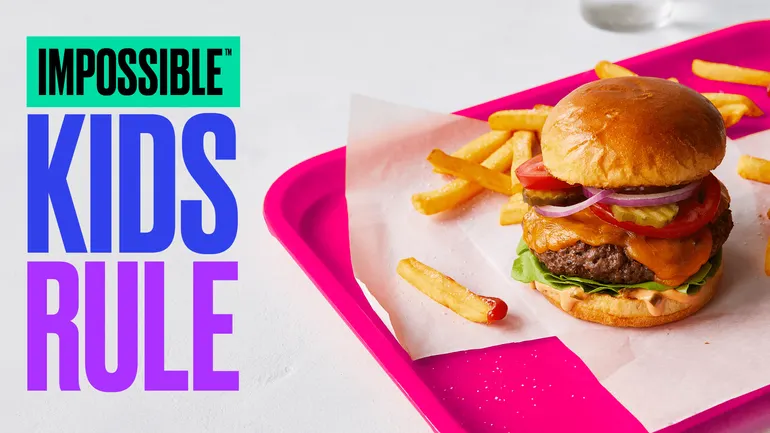
Impossible Foods founder and CEO Pat Brown was already exploring how to get his company's products in front of children and help them understand what they mean as early as 2014. Brown was a respected scientist when he founded the plant-based food company a decade ago, having started his career as a pediatrician. Through Impossible Foods, he hoped to combine his passion for using science to create animal-free agricultural food with teaching children to connect what's on their plates to environmental change. Over the years, he has discussed this vision with Jessica Appelgren, vice president of communications at Impossible Foods.
"A person's impact on the planet is profound, you know," Appelgren said. "It's something every kid can have direct control over, right? They can't control energy systems, but they can control how their diet impacts the climate — and what that in turn could mean for their peers, parents, and grandparents."
Impossible Foods has recently taken a series of steps to engage with young people and make them more aware of the ecological impact of consuming animal-derived products. To celebrate Earth Day, the company released an online guide called "The Birds and the Trees," suggesting how teenagers can talk to their parents about the impact of conventional meat on climate change. Weeks later, Impossible Foods released a report on children's awareness of global warming and the actions they can take.
Last month, the Impossible Burger received a Child Nutrition Label from the U.S. Department of Agriculture. Last week, the company's Impossible Sausage also received the label. This means these products have gone through a rigorous process to standardize their nutritional value, making it easier for public school districts to use them in menu planning for breakfast and lunch in cafeterias.
Although the Child Nutrition Label essentially opens up another market for Impossible Foods, Appelgren said this new initiative is not about making more money for the company. She said the financial gains from entering school cafeterias are less significant than in other areas, and it's not a marketing campaign. "I think it's more about the company's mission and finding a way for younger people to be educated and engaged in that mission earlier," she said.
Getting onto school lunch trays
Brown has publicly stated that his entire reason for founding Impossible Foods was to make animal agriculture obsolete by 2035. Since the plant-based company was founded in 2011, this goal has been central to many of its decisions. Appelgren said this has also driven the company's efforts to enter schools. She said the company has been inspired by some school programs where students or local operators grow the food served in cafeterias. However, these programs require massive systemic shifts — creating garden spaces, changing curricula for growing and harvesting food, adjusting menus to align with school-grown produce, and potentially changing how cafeterias store, display, and sell products.
Appelgren said introducing plant-based meats into school cafeterias is an easier step for schools and students to take environmentally. Without the need for large-scale procedural changes, plant-based meats can easily replace the animal-derived versions they are already serving.
"It's something every kid can have direct control over, right? They can't control energy systems, but they can control how their diet impacts the climate — and what that in turn could mean for their peers, parents, and grandparents."
— Jessica Appelgren, Vice President of Communications at Impossible Foods
Last year, a study released by the sustainability nonprofit Forum for the Future highlighted the importance of increasing and improving plant-based options in public schools. The National School Lunch Program served more than 4.8 billion lunches in 2019, the last full year schools were not disrupted by the pandemic. According to statistics cited in the report, the program covers 100,000 schools and institutions nationwide and can serve about 30 million students annually. Barriers to schools adopting more plant-based options noted in the report include an overall lack of adaptable choices, as well as differences in school management culture and education about why changes should be made.
Appelgren said such research, combined with Impossible Foods' current manufacturing capacity, makes now the right time for the Impossible Burger and Sausage to be supplied to schools. She said Impossible's manufacturing partnership with OSI Group, along with its own plants, enables the company to meet any demand that K-12 schools might generate.
Appelgren said Impossible Foods has been receiving feedback from school districts interested in supplying its products. While continuing to apply for the Child Nutrition Label, the company developed pilot programs for four school districts — Palo Alto Unified in Palo Alto, California; Aberdeen in Aberdeen, Washington; Deer Creek Public in Edmond, Oklahoma; and Union Public in Tulsa, Oklahoma. Appelgren said Impossible has taken a hands-off approach to how these districts use and promote plant-based meat options. She made clear that the company does not want to use this as a marketing opportunity.
"Our intention is to make the product available wherever meat is served, and the National School Lunch Program serves a lot of meat," Appelgren said. "Let's offer the option, just like in foodservice and retail — if people want it, they'll buy it."
For school lunches, Impossible is trying its best to price its plant-based meat on par with traditional ground beef, similar to its efforts in foodservice and retail, Appelgren said. While it may not be exactly the same right now, she said, "the gap is not too large." School districts offering Impossible products do need to be motivated, but the price won't be so high as to be unaffordable.
Impossible Foods' sustainability factor relative to the animal meat industry appears to be a motivating factor. In a press release about the Child Nutrition Label, Michael Morris, senior culinary implementation manager at Sodexo, said adding the Impossible Burger to the foodservice operator's menu would help the company achieve its goal of reducing carbon emissions by one-third by 2025.
"The Impossible Burger is a product we think teenagers will be excited about," Morris said in the press release. "We're interested in how the popularity of this low-carbon food can help effectively reduce the carbon footprint across the district, while getting students to think more actively about their connection to the planet."
In an email, Appelgren said the Child Nutrition Label for the Impossible Sausage is especially exciting because it can bring plant-based meat options to school breakfasts. In 2019, K-12 schools served more than 2.4 billion breakfasts. "We're excited to play a small part in starting the school day in a nourishing and sustainable way," she said in the email.
Appelgren said Impossible Foods will not push school districts to overuse branding on cafeteria offerings, although it will try to get them to advertise that dishes use plant-based meat, because that's important for dietary needs. The company will prepare resources for school districts, including recipes and case studies, Appelgren said. Impossible Foods wants to find a balance between being a helpful and informative resource and marketing.
"I think it really depends on each school district, principal, and superintendent to make the right choice for their community, but it's certainly not initiated by us," she said. "I think we can provide materials, and they can use them as needed."
Appelgren said schools serving Impossible products could also give children who might otherwise not afford it access to plant-based meat. According to preliminary USDA statistics, of all school lunches served in 2020, 76.9% went to low-income students eligible for free and reduced-price meals. According to the USDA, as of press time, no other plant-based meat company has received the Child Nutrition Label.
How to talk to parents about climate change
Offering plant-based options in schools is only part of Impossible's youth outreach. The company also wants kids to understand why they are better alternatives. This Earth Day, Impossible Foods created a colorful online report called "The Birds and the Trees," with chapter titles that wryly reference the awkward titles of sex education classes for teens. The report addresses an even hotter topic: climate change.
"The idea was actually, how do we provide a resource for teenagers who care about climate change to talk to their parents from an informed perspective — sharing data, answering typical arguments, and so on," Appelgren said. "It's a conversation guide."
The report examines the link between climate change and animal agriculture, bringing together charts, satellite imagery, and statistics. The data is compelling and easy to read, but links to additional information — including TED talks, scientific journal articles, and video explainers — allow users to dive deeper. Only a few sections near the end contain language promoting the Impossible Burger as a substitute for ground beef.
Appelgren again said the report is not intended as a marketing tool. She said other plant-based companies have told Impossible they are glad it shared sustainability messaging suitable for children and are interested in collaborating to create similar reports and messages. "It's certainly a space for collaboration first," she said. "I'm willing to share everything I and our team have learned along the way, and any company is welcome to invite us for a conversation."
Impossible Foods' research suggests that educating young people about the link between meat consumption and climate change could be effective in prompting Generation Z to change their diets. In 2019, Impossible Foods' "Kids in the Kitchen" report summarized the attitudes of 1,000 U.S. consumers — from baby boomers to Gen Z — toward plant-based meat. Last month, the company released the "Kids Rule" report, surveying 1,200 young people aged 5 to 18 about their knowledge of climate change and its impact from animal agriculture.
Both reports point to the same top-level finding: younger consumers are more likely to eat plant-based foods and to reduce meat consumption to save the environment. In the 2019 report, more than half of Gen Z and about half of millennials said they eat plant-based meat at least once a month. Millennials with their own children are more likely to eat plant-based meat more frequently and are more likely than Gen X and boomer millennial parents to try to teach their kids about sustainability and how food choices affect the environment.
The report released last month found that nearly eight in ten children know at least something about climate change, and 87% said it's important to take steps to stop or reduce climate change. Children are optimistic about their potential to help stop global warming, with 73% saying they can have at least some impact through their personal choices.
But the report shows many don't know about animal agriculture's contribution to global warming. More than four in five said cutting down trees, transportation, energy production, and waste play a role in climate change, but only 54% said raising cows for meat and dairy does too. After reading a statement about animal agriculture's impact on climate change, 78% said it's important to take steps to reduce using cows for food.
Survey participants also read a statement describing the Impossible Burger that touted the company's key marketing points about taste, appearance, sustainability, and nutritional value. The largest share — 29% — said they were most interested in its sustainability aspects.
Appelgren said this research is the foundation for the Child Nutrition Label and the educational website. "We hypothesized that people don't have much awareness or understanding of animal agriculture's role in climate change ... but we definitely wanted to test that," she said.
These conclusions have been confirmed by independent research, including a survey conducted last year by Mattson and cited by the Plant Based Foods Association, in which 100% of Gen Z respondents cited environmental concerns as a reason for eating plant-based foods.
"It's actually Gen Z leading the charge here"
Although today's young people are extremely savvy about big brands' marketing efforts, experts in messaging to children believe they will be receptive to Impossible's message.
Rob Lough, co-founder and chief brand officer of KidsKnowBest, a digital media company for children, said young people are already immersed in messages about sustainability and climate change. His company talks with about 200 children aged 5 to 18 each month, either in person or via video chat. Lough said they let kids talk about topics they're interested in without asking leading questions. He said about 15% of these children tend to bring up sustainability-related topics.
"Five-year-olds now are talking about this — talking about plastic, saving the planet, recycling at home," Lough said. "I guess even 10 years ago you wouldn't have seen that. These probably wouldn't have been topics."
Emma Chiu, global director of Wunderman Thompson Intelligence, an international insights and trends company, said Gen Z is both acutely aware of climate change and willing to make changes for environmental benefit. In a survey of 3,000 people in the U.S., UK, and China earlier this year, 71% of Gen Z said they were willing to eat more alternative proteins to help the environment.
"It's actually Gen Z leading the charge here, not millennials, though millennials are close behind," Chiu said.
While there's no data to support that kids will actively seek out foods also served in school cafeterias, Impossible Foods appearing on menus sends a message to kids and parents, Lough said. If branded — for example, if cafeterias label meals as "Impossible sloppy Joes" — the product name enters students' vocabulary. If students know even at a basic level that they're eating something non-meat, it's something they'll talk to their parents about, he said. Either way, in schools, the widespread display of the brand name and product will bring Impossible a lot of attention, he said.
Lough said parents are more likely to be influenced by the brand. They'll see the Impossible name on cafeteria menus. If kids like the school lunch, that could convince parents to try plant-based products at home — especially since kids often avoid vegetables. "I think as long as there's an option on the menu and you see the veggie burger is Impossible, there's no downside," Lough said. "Honestly, I think it's a genius move."
Chiu noted that since many young people support plant-based diets, if their school decides to serve the Impossible Burger, they might see it as a "badge of honor." She said children and teens are more likely to feel proud that their school is doing something tangible to protect the environment.
While today's young people can see through advertising at a glance, Chiu said they will spend money. If they see a company upholding values similar to theirs, they're more likely to support it. "What we've learned, especially about Gen Z, is that they're committed to reforming and changing outdated norms, truly trying to pave the way for a better, more positive future: one that protects both society and community, as well as the planet," Chiu said. "If the message or education can further reinforce that belief, it's certainly beneficial for them, because they're not just learning for themselves — they also want to educate their peers, family, and friends."


