
Cage-Free Egg Commitments Face Dual Challenges of Cost and Avian Flu
Multiple U.S. states and large retailers originally planned to fully transition egg production to cage-free systems by 2026, but industry surveys show that renovation costs exceed $40 per hen, with total costs surpassing $10 billion. Combined with avian flu driving up egg prices, some companies like Walmart and Kroger have abandoned their 2025 commitments. Experts predict that achieving 100% cage-free production will be difficult even by 2040.
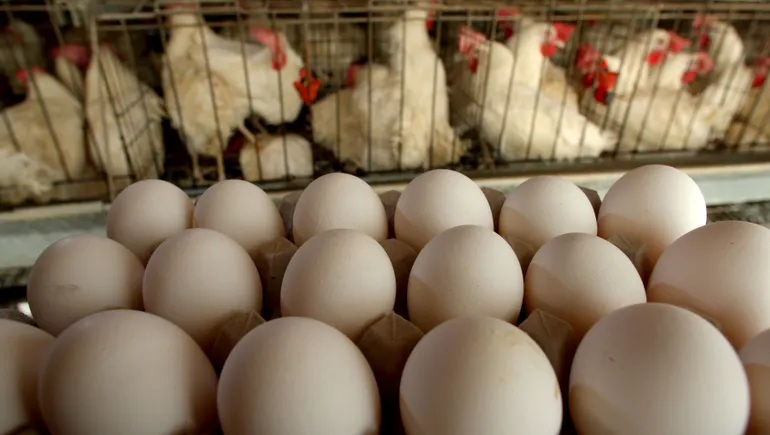
Multiple U.S. states and large retailers have set 2026 as the deadline for egg producers to fully transition to cage-free systems, a move once widely seen as aligning with consumer wishes. However, egg farmers say they need more time.
A study released in February by the FMI Foundation and United Egg Producers noted that the high cost of upgrading facilities for cage-free production is hindering the transition. Cage-free equipment, especially aviary systems that allow for more movement, can cost more than $40 per hen to retrofit.
"Because of the enormous capital investment required to shift to this model, the transition is not progressing quickly," said Kenneth Anderson, professor of commercial layer and small flock management at North Carolina State University's Prestage Department of Poultry Science.
Anderson said that when the cage-free transition truly began in 2014, experts estimated the industry would need to spend about $10 billion, and current actual costs have already exceeded that figure.
Animal welfare activists have long advocated for cage-free farming, and food companies such as Nestlé and Conagra, as well as retailers like Whole Foods and McDonald's, made commitments about a decade ago, when a nationwide cage-free egg production system seemed imminent.
From California to Massachusetts and Utah, at least nine states have passed laws requiring all laying hens to be housed in cage-free environments by 2024 and 2026. California's Proposition 12 ban, passed in 2018, took effect last year.
After California's Proposition 12 took effect, egg prices in the state rose sharply. According to The Wall Street Journal, a dozen eggs in California sold for $5.62 in early February, while non-cage-free eggs in the Midwest were $3.05. Research published in the American Journal of Agricultural Economics predicts the law will cost California consumers $23 million annually.
Meanwhile, highly pathogenic avian influenza (HPAI) has broken out again, causing egg prices to soar over the past year and focusing national discussions on eggs around cost. Consumer advocacy groups accuse some companies of using the avian flu as an excuse to inflate prices, questioning the motives behind the increases.
According to the latest Consumer Price Index from the U.S. Bureau of Labor Statistics, grocery store egg prices rose 70.1% year-over-year in January. According to USDA data, a dozen extra-large brown cage-free eggs cost $4.79 on February 1, compared to $2.66 a year earlier.

Can the cage-free transition be completed on schedule?
In the FMI study, egg producers said the biggest limiting factor for adopting cage-free production is capital. The overall cost of cage-free production is 8% to 19% higher than non-cage systems, which also includes additional labor costs.
FMI and United Egg Producers found that although many states have set deadlines for 2026, nationwide full adoption may take longer. The study authors noted that extending deadlines with government assistance could give the industry more time to build needed facilities and procure necessary operational equipment.
Large retailers such as Walmart and Kroger have abandoned their commitments to supply 100% cage-free eggs by 2025.
Currently, cage-free eggs account for 34.6% of the total U.S. laying hen flock, according to WATT Poultry. Producers surveyed by the industry media predict that by 2025, half of U.S. hens will still be in cages, and achieving 100% cage-free by 2040 is unlikely.
Anderson said some companies are delaying cage-free adoption because many consumers are unwilling to pay a premium for such eggs. "Consumers vote with their wallets," Anderson said. "Their wallets are telling us they don't need that many cage-free eggs."

Pork case may affect egg industry
A controversial federal court case could also affect the pace at which the industry advances its cage-free goals. Last fall, the U.S. Supreme Court heard oral arguments on a challenge to California's Proposition 12.
Pork industry leaders argue that California's ban on selling pork products from states that do not meet its standards is an overreach. California argues the law is valid because 63% of California voters supported it in 2018. The Supreme Court is reviewing the case and is expected to rule soon.
Although the case centers on the pork industry, the court's ruling could have ripple effects on the egg industry. Anderson said if the court rules in favor of the pork industry, the egg industry could follow suit and legally challenge states that ban the sale of cage eggs. "The logical progression is that the egg industry will follow in the footsteps of the pork industry," Anderson said. "This means California consumers will have more choices when purchasing products."
Public opinion is divided on high egg prices, but the vast majority support cage-free eggs. Kate Brindle, a public policy expert at the Humane Society, cited a Data For Progress 2022 poll showing that 80% of surveyed consumers oppose keeping hens in cages. "The few companies that are breaking their promises are hurting egg farmers who have invested heavily in transitioning to cage-free systems," Brindle said.
Other industry figures suggest that adopting aviary systems, the most common cage-free alternative, may pose animal health and environmental risks. A 2016 Sustainable Egg Supply Coalition report noted that mortality rates for hens in cage-free environments are higher than in conventional cages because pathogens spread more easily—a particular concern during avian flu outbreaks. The report also stated that hens in cage-free environments are more aggressive, sometimes even cannibalistic, which could increase health risks for farmers.
However, skeptics point out that the study may be flawed because it only tracked one facility with no prior cage-free experience. A different study published in Scientific Reports in 2021 found no difference in hen mortality between cage and cage-free systems.
"Because of the enormous capital investment required to shift to cage-free eggs, the transition is not progressing quickly."
— Dr. Kenneth Anderson, Professor of Commercial Layer and Small Flock Management, Prestage Department of Poultry Science, North Carolina State University
Consumers have the final say
According to a WATT Poultry survey, more than half (62.5%) of egg producers said legislation would be the main reason for adopting cage-free housing.
"What we producers failed to realize early on is that the people funding animal rights activist groups are our customers. Ultimately, we have to listen to our customers," Marcus Rust, CEO of Rose Acre Farms, the second-largest egg producer in the U.S., told PBS.
Companies that have committed to cage-free production are facing headwinds, such as Vital Farms, which sells pasture-raised eggs. In a January interview with Yahoo Finance, Vital Farms CEO Russell Diez-Canseco called the price increases "puzzling" but said the company would not significantly raise costs for consumers. Some consumer advocacy groups accuse large egg producers like Cal-Maine of artificially inflating prices.
"The reality is we're building a long-term brand, and our supply has grown year over year for 15 years," Diez-Canseco said. "We don't view short-term supply-demand shocks as an opportunity to raise margins; that's not how we operate."