
WK Kellogg to Remove Artificial Colors from Froot Loops and Other Cereals a Year Ahead of Schedule
WK Kellogg will complete the removal of artificial colors from its cereal products nearly a year ahead of schedule, covering categories such as Froot Loops and Apple Jacks, which account for approximately 15% of its product portfolio. The company has tested hundreds of alternatives and selected natural color sources such as turmeric and annatto, with shipments to retailers expected to begin by the end of the year. This move is seen as a significant step in response to declining cereal sales and regulatory pressure.
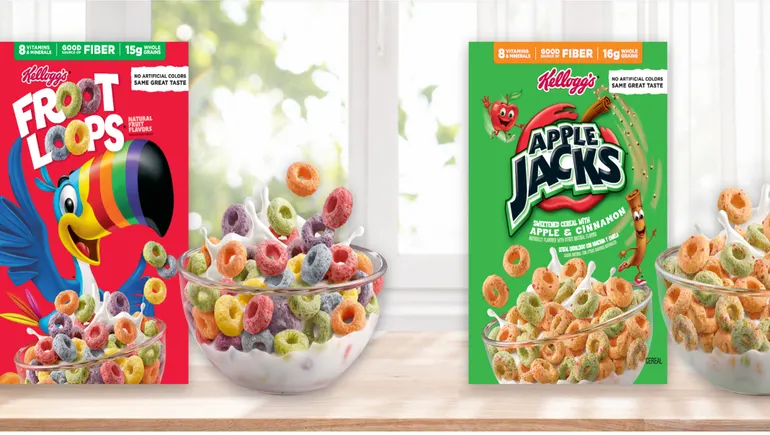
WK Kellogg will completely remove artificial colors from Froot Loops and other cereal products later this year, nearly 12 months ahead of its original schedule. The company hopes this move will inject much-needed growth momentum into the cereal category, which has been under pressure for the past decade.
The Michigan-based food manufacturer had already removed synthetic colors from most of its cereal products, but they were still used in Froot Loops, Apple Jacks, and a few limited-time offerings, which together account for about 15% of its product portfolio. The company pledged last year to completely phase out these controversial ingredients by the end of 2027.
WK Kellogg will switch to six natural colors derived from fruit and vegetable juices and other plant-based ingredients. For example, turmeric will be used for yellow, and annatto extract for orange. The company tested hundreds of different alternative ingredients.
Cereal products with the new formula will begin production in the coming months, with shipments to retailers expected to be completed by the end of the year.
Doug VanDeVelde, chief growth officer at WK Kellogg, said the transition to natural colors is a complex and challenging process that requires extensive work in research and development, production, and resource allocation. The company must ensure an adequate supply of each natural color while maintaining the same appearance, taste, texture, and aroma as the original products consumers are familiar with.
"We tested with thousands of consumers, including parents, children, teens, and different generations, to ensure the experience we deliver meets their expectations and needs," VanDeVelde said.
WK Kellogg's competitor, General Mills, the largest cereal maker in the U.S., also announced last summer that it would remove artificial colors from its U.S. retail product portfolio by the end of 2027. The company behind Cheerios had tried removing artificial colors from Trix in 2016, but restored synthetic colors about a year later after consumers complained the product looked dull.
Natural colors present challenges that some artificial colors do not. Unlike synthetic ingredients, natural colors typically require refrigerated storage, which requires WK Kellogg to make "significant investments" in production facilities to support the transition, VanDeVelde said.
In recent years, cereal sales have continued to decline as many consumers shift toward more convenient foods or those they perceive as fresher and healthier. Over the past year, WK Kellogg has actively promoted the benefits of its cereals, including redesigning the back of packaging to highlight nutrients such as protein and fiber.
VanDeVelde said the transition to removing artificial colors will bring a "positive halo effect" to cereal and "help people feel good about something they already love, which is a great bowl of cereal."
WK Kellogg has become a focal point for critics pressuring food companies to remove synthetic dyes from their products. In 2024, protesters gathered at WK Kellogg's headquarters, urging the company to fulfill its promise to remove artificial colors made nearly a decade earlier.
A month after recommitting in July 2025 to removing synthetic colors, WK Kellogg signed a legal agreement with the Texas Attorney General's Office, pledging to remove artificial dyes from Froot Loops and other cereals by the end of 2027. According to the state, this marked the first time a food company went beyond verbal commitments to sign a legally binding agreement to remove petroleum-based colors.
U.S. Secretary of Health and Human Services Robert Kennedy Jr. has also repeatedly named Froot Loops as an example of products containing synthetic dyes and other chemicals not used in other countries.
WK Kellogg spokesperson Stacy Flathau said the U.S. Food and Drug Administration (FDA) is "very aware of our progress." She said the company has been in frequent contact with the agency throughout the process, and the FDA "has been a good partner on this issue."
"We're really looking forward to communicating with them because we're able to move this announcement up a full year," Flathau said. "We think they're going to be really excited about it and help us celebrate the news."
Shortly after taking office in 2025, Kennedy asked the food industry to voluntarily remove synthetic dyes by the end of next year. Nearly all major food companies have committed to following through, including Kraft Heinz, General Mills, and The Campbell's Company.
However, the industry-wide transition may be more difficult for sectors such as beverages and candy, which rely more heavily on artificial colors. A report by the National Confectionery Association found that supply issues and rising prices will make it difficult for the industry to quickly move away from certified colors.