
"Beans Are Elegant Too": How Jelly Belly Positions Itself as a Premium Candy
Jelly Belly's owner Ferrara is repositioning the brand as a premium candy by launching curated collections and optimizing packaging and advertising campaigns to attract consumers to purchase in more occasions beyond Easter. Early data shows a significant increase in brand loyalty.
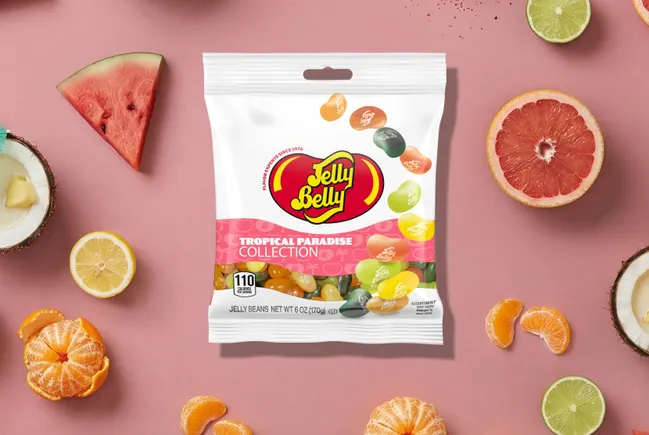
Jelly Belly is doubling down on its artisanal image, with its owner Ferrara positioning the jelly bean as a premium choice in the $23 billion non-chocolate candy market.
After years of expanding flavors, from chocolate pudding to stinky socks, Jelly Belly is now focusing on curated selections and highlighting jelly beans as a gourmet tasting experience for consumers.
"(Premiumization) is a thought-provoking idea, and we think it could present a truly interesting opportunity for us," said Katie Duffy, vice president of global brands at Ferrara. "This brand has a lot of possibilities to do something different."
This repositioning is a return to roots for Jelly Belly. The brand was launched in 1976 by candy maker Herman Goelitz Candy and was sold only in specialty shops for years. It gained fame for being the first jelly bean to infuse flavor into the center of the candy, not just the shell.
Today, Jelly Belly is far from the only jelly bean on the market. In recent years, the category has become increasingly crowded as major candy makers, including Hershey's Jolly Rancher, Mars' Starburst, and Mondelēz's Sour Patch Kids, have brought multiple of their best-selling brands into the space.

The premium positioning could help Jelly Belly compete and narrow the gap between sugar candy and chocolate, a category dominated by premium brands like Godiva and Ghirardelli. According to the National Confectioners Association, chocolate sales currently outpace sugar candy by $6 billion.
To emphasize its premium status, Ferrara has launched the Jelly Belly Signature Collection, featuring 10 or 20 flavors that represent "the best of the brand." The company has also introduced six-flavor packs tied to specific times, places, or seasons of the year, such as autumn or tropical paradise.
The company is cutting high-count mixes, including the 49-flavor mix, because consumers said they felt overwhelmed and inevitably would not eat some flavors they did not like. Jelly Belly will continue to offer combinations of its full 100 flavors through single-flavor packs, licensed collections, and other formats.
Additionally, the company is placing more emphasis on positioning Jelly Belly as a gift option, using special containers, much like a box of chocolates.
"There is still a lot of room for this brand to grow," Duffy said. "When you think about different experiences, flavor is very powerful."
Ferrara's overhaul also includes adjusting packaging to stand out and launching the brand's first advertising campaign, with the premium-leaning tagline "Bean Appétit." Executives hope to boost Jelly Belly's appeal beyond the core Easter season, deepen the candy's association with the premium category, and help attract the attention of retailers and consumers.
So far, early results are encouraging. Jelly Belly is experiencing "strong loyalty growth," with buyers purchasing the brand nearly 10% more frequently year over year.
"We really looked at every part of the portfolio and said this makes sense, that doesn't," Duffy said. "We are still on a journey of exploring what Jelly Belly should look like in the future, but the portfolio optimization we have today is a huge step."