
Kraft Heinz Focuses on Innovation to Address Consumers' 'Unmet' Dietary Needs
Facing consumers' growing interest in health, clean labels, and functional foods, Kraft Heinz is accelerating its core brand innovation strategy. The company recently launched several new products targeting specific dietary needs, including lactose-free Philadelphia cream cheese, gluten-free Velveeta, and plant-based Kraft macaroni and cheese. Company executives stated that they will actively respond to market trends and fill consumers' unmet needs. Despite challenges from declining organic sales, the company plans to increase investment with the aim of restoring growth by 2027.
Kraft Heinz is working to innovate its core brands to win over consumers who have been "shut out" of traditional products due to dietary restrictions or preferences.
Recently, the company launched a lactose-free version of Philadelphia cream cheese, and years earlier it introduced a plant-based spread for vegans. Additionally, the company has launcheda gluten-free version of Velveeta Shells & Cheese, anda plant-based version of Kraft Mac & Cheese。
These innovation efforts come as Kraft Heinz and other food giants respond to growing consumer interest in healthier ingredients, trending components, and less processed foods.
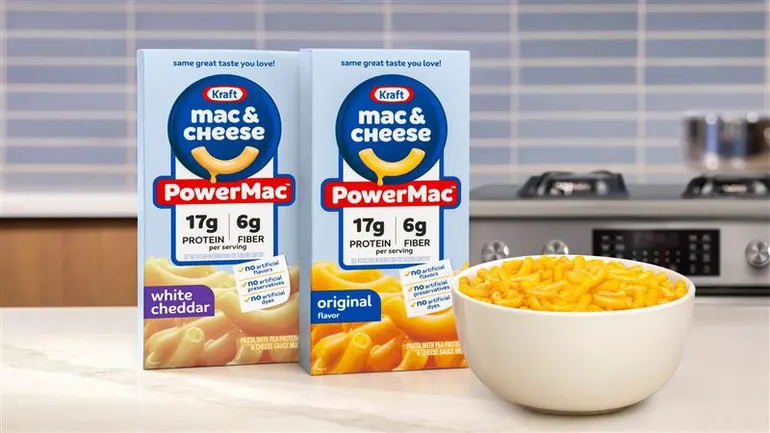
Kraft Heinz has also launched products addressing other food consumption trends. For example, it offersJell-O without artificial colors and sweeteners、Kraft Mac & Cheese with added protein, and Heinz Simply ketchup, which uses familiar ingredients and promotes a clean label. More related products are in development.
"We will actively respond to these trends to ensure we provide the right products for unmet needs," said Jerome Drolet, Kraft Heinz's new president of the "Taste Elevation" business.
Drolet did not quantify the potential sales scale, but he said these opportunities are "significant" for Kraft Heinz. The companyhad net sales of $25 billion last year。
Like competitors, Kraft Heinz's business faces pressure as consumers buy fewer highly processed foods and shift toward healthier options. Inflation has further intensified the challenge, causing shoppers to cut back on spending.
Over the past two years, its organic net sales have continued to decline,falling 3.4% in 2025 alone. However, Kraft Heinz has shown signs of improvement,with organic sales down 1.3% in the second quarter ending June 27。
The launch of lactose-free Philadelphia cream cheeseis the latest example of how Kraft Heinz is innovating its core brands, a key pillar of the company's growth strategy.
According to Kraft Heinz, up to 50 million consumers in the U.S. are affected by lactose intolerance, a digestive issue. The company found that no other brand in the market could meet the needs of lactose-intolerant consumers on a sufficiently broad scale, creating an opportunity for its best-selling Philadelphia cream cheese.
The product is the company's largest investment in brand innovation in three years, immediately exposing the Philadelphia brand to millions of consumers who might not otherwise have purchased the product (for use in frosting, spreading on bagels, or other foods).
Drolet said Kraft Heinz is not launching entirely new brands but rather focusing more effort on innovating existing products that have built trust and recognition among consumers and retailers.

Before entering a specific segment, Kraft Heinz must determine whether the trend is sustainable, which of its brands are best suited to benefit, and whether the new innovation can reach enough consumers to justify the time and money spent on development and marketing.
"Ultimately, we need to deliver returns for the business," Drolet commented. "We don't want... consumers to have to compromise on price or taste."
Although Kraft Heinz prioritizes rapid innovation, it is not worried about competitors entering the market first.
The company noted that when it launched gluten-free macaroni and cheese in 2020, it was one of the later entrants in the field because it was focused on perfecting the product to ensure its taste matched the traditional version. Today, its macaroni and cheese is the number one gluten-free brand in the category.
This innovation announcement comes as Kraft Heinz's new CEO, Steve Cahillane, earlier this month announced plans toincrease spending to $700 million, up from the previous $600 million. This investment will be used to strengthen marketing, sales, and R&D to enhance "product superiority," with the expectation of driving the company back to growth.
So far, the focus on innovation appears to be paying off.
"We see that when we invest in brands, they respond well," Cahillane said in a statement. "By accelerating these investments, we will build a stronger business foundation heading into 2027."
Before this consumer goods veteran took over in January, Kraft Heinz had set a goal of achieving $2 billion in incremental net sales through portfolio innovation by 2027. But Cahillane said product innovation had previously stalled and lacked the necessary resources.
Erin Lash, senior director of consumer equity research at Morningstar, said leveraging familiar brands is a smart strategy as food companies work to ensure their products meet consumer needs.
Other food manufacturers have adopted similar approaches, includingMondelēz's sugar-free Oreo、Campbell's gluten-free soups, and PepsiCo's Cheetos and Doritos without artificial colors and flavors.
"These brands are widely known, trusted, and familiar in the market, so adjusting their products to address this concern is a smart move," Lash said.
Nevertheless, merely leveraging existing brand equity or slapping labels like "gluten-free" on products is not enough. Lash noted that food manufacturers need to carefully tailor their marketing strategies to ensure they reach the right consumers and successfully convince them that the new products are better choices.