
The Battle Over Transparency of Health Impacts of Sugary Drinks: Harrington Investments' Proxy Contest with PepsiCo and Coca-Cola Signals More to Come
Harrington Investments, a small California-based investment firm, is engaged in a proxy contest with PepsiCo and Coca-Cola over transparency regarding the health impacts of sugary drinks. The firm is demanding that both giants disclose relevant information through independent reports, focusing on beverages marketed to children and young consumers. Votes will take place in April and May, and while support is low, it is trending upward, reflecting heightened attention to ESG issues among shareholders.
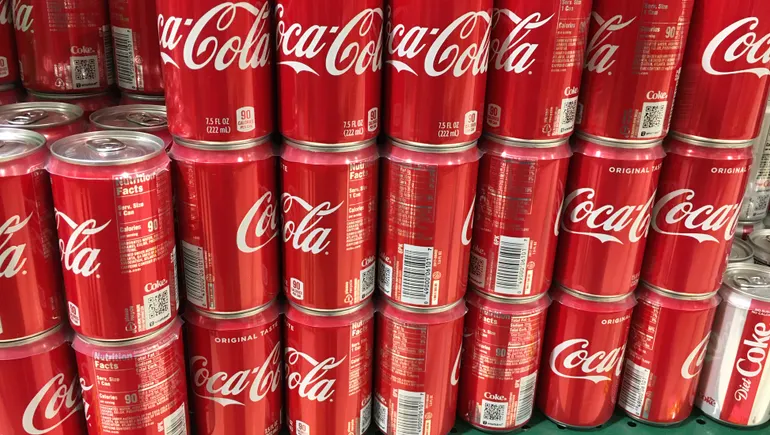
Harrington Investments is waging a proxy fight with PepsiCo and Coca-Cola, demanding that the two beverage giants more transparently disclose the impact of their sugary products on public health. Now, this small California investment firm needs to hope that enough shareholders support its proposal.
The company is asking shareholders to vote on a proposal requiring PepsiCo and Coca-Cola to provide such information through independent reports, focusing on beverages marketed to children and young consumers.
"We have to keep the pressure on, make incremental breakthroughs, and show that we will not back down. This issue is not going away," said Brianna Harrington, research analyst and shareholder advocacy coordinator at Harrington Investments. "It's only going to become more important and more serious."
The ongoing confrontation with PepsiCo and Coca-Cola could foreshadow more such battles in the future: shareholders attempting to exert greater influence over American corporations on issues such as politics, diversity, health, and the environment.
In the past, investor successes were mainly limited to topics such as board composition or executive compensation. But there are already signs that environmental and social issues are gaining more attention during the annual proxy voting season, and the momentum could eventually lead more such proposals to win majority shareholder support.

Harrington Investments, which focuses on socially responsible investing and shareholder rights, first filed a sugar and public health proposal in Coca-Cola's annual proxy filing in 2019. Encouraged by what it considered success, the company filed similar resolutions at PepsiCo and McDonald's a year later. In 2020, 7% of Coca-Cola shareholders voted in favor of the measure, up from 4.9% in 2019. The PepsiCo resolution received support from 11% of shareholders in 2020.
"Raising the voting threshold is crucial; it shows that support for the issue is growing and that shareholders are increasingly concerned, especially during the pandemic," she said.
Howard Berkenblit, a corporate and securities lawyer who leads the capital markets team at Sullivan & Worcester, noted that low support rates for many such shareholder proposals are not uncommon.
"That's why companies want to raise the threshold (for passing resolutions), because... for the company, it becomes an annoyance and a nuisance—having to include it in the proxy statement every year, count the votes, and explain it," he said.
Soda and other sugary drinks and snacks are under fire because excessive intake of sweeteners is linked to an increased risk of diseases such as obesity, heart disease, diabetes, and cancer. These diseases are also associated witha higher likelihood of severe COVID-19 complications.
According to the two companies' proxy filings, Harrington Investments holds small stakes in each beverage maker: 50 shares of PepsiCo and 100 shares of Coca-Cola. Based on last Friday's closing prices, these shares were worth $7,200 and $5,350, respectively. The company acknowledges the difficult challenge of persuading these reluctant companies to take action.
"Companies may be reluctant to act, but we believe it is crucial for shareholders to have the opportunity to vote on this," she said. "Shareholder pressure is essential."
Her company held talks with PepsiCo's legal counsel in January, but the New York-based company was not "very willing" to adopt the proposal, Harrington said. "They just wanted to discuss the 'good things' they've done and reiterate that they see no need for such a report." The advisory firm has not yet had conversations with Coca-Cola this year regarding this resolution.
"Corporate trouble"
Both PepsiCo and Coca-Cola have recommended in their proxy filings that shareholders vote against Harrington's resolution. Coca-Cola shareholders are expected to vote on the measure at the online annual meeting on April 20, while PepsiCo's vote will take place during its meeting on May 5.
Spokespeople for both PepsiCo and Coca-Cola declined to comment beyond the positions stated in their recent shareholder proxy filings.
PepsiCo's board of directorsstated in its filing that the company remains "committed to responsibly marketing our foods and beverages, especially those aimed at children."

PepsiCo added that it has "set a robust and meaningful goal" to ensure that at least two-thirds of its global beverage portfolio will have no more than 100 calories from added sugar per 12 ounces by 2025. The snacks and beverages maker said it is working toward this goal by reformulating products to reduce added sugar, offering low- and no-sugar options, reducing portion sizes, and launching new products with no or less sweetener.
"Through our sugar reduction efforts, we believe we are not only addressing the concerns raised in the proposal but also creating new opportunities for competitive advantage and future market growth," PepsiCo said.
Coca-Cola's board of directorsstated in its proxy filingthat reports on sugar and public health already exist, and additional documents "would not provide added value or information to our stakeholders." The board added that the proposal implies Coca-Cola has not taken steps to help people moderate their sugar intake, a claim with which the company disagrees.
The maker of Diet Coke, Sprite, and Fanta noted that it has accelerated the shift of its beverage portfolio from sugary products to categories such as tea, dairy, water, and coffee. The Atlanta-based company has also taken steps to reduce added sugar in existing products. Coca-Cola said it has reduced sweetener usage in nearly 1,000 beverages, including about 600 combined in 2018 and 2019. In 2019 alone, the company claimed to have reduced sugar by 350,000 tons on an annualized basis.
"Companies may be reluctant to act, but we believe it is crucial for shareholders to have the opportunity to vote on this. Shareholder pressure is essential."
—Brianna Harrington, research analyst and shareholder advocacy coordinator at Harrington Investments
It's not hard to see why companies often oppose shareholder proposals. Beyond unwanted exposure, these proposals can be costly and time-consuming, as they require the involvement of executives, boards, and lawyers.
Rick Hansen, former corporate secretary and assistant general counsel at General Motors, said in a letter to the U.S. Securities and Exchange Commission (SEC) last year that the auto giant spends about 75 hours on each shareholder proposal it receives. While General Motors said it did not attempt to assign a dollar value to each proposal, it agreed with past estimates provided to SEC commentersranging from $87,000 to $150,000。
Rising shareholder support trend
There is growing evidence that so-called ESG resolutions (environmental, social, and governance) are gaining support among shareholders, who expect the companies they invest in to take positions on issues relevant to them as investors and consumers.
According to data from proxy advisory firm Glass Lewis, the number of shareholder proposals going to a vote increased from 426 in 2019 to 434 in 2020, the first increase in five years. The firm noted that while average support for shareholder resolutions fell from 32.9% in 2019 to 31.7% in 2020, the proportion of environmental and social shareholder proposals receiving majority support saw a "significant year-over-year increase."
"The ground appears to be shifting in how investors view shareholder proposals and broader ESG-related issues," Glass Lewis wrote in a report reviewing the 2020 proxy season. "These proposals will continue to play an increasingly critical role in investors engaging with companies on important environmental, social, and governance issues."
Meg Jones-Monteiro, director of the health equity program at the Interfaith Center on Corporate Responsibility, said consumer interest in health and attention to diet has forced companies to respond through their product portfolios—a shift that investors are watching closely because they could suffer losses if declining sales or slowing growth push stock prices down. She said this naturally opens the door for companies to engage more actively on environmental and social issues.
"The hope is that if (consumer and investor pressure) converge, you can push companies in the right direction," said Jones-Monteiro, whose coalition represents more than 300 global institutional investors. "Companies are also aware of this. They recognize there is consumer demand, so they have to make some changes."

Shareholders may soon find it more difficult to submit resolutions for a vote at annual meetings. The U.S. Securities and Exchange Commission last Septembernarrowly passed a rulerequiring shareholders to hold $25,000 worth of stock for at least one year (currently $2,000) to submit such proposals. For long-term investors, the threshold drops to $15,000 after two years and to $2,000 after three years. The rule is expected to take effect in the next proxy season.
The SEC also raisedthe support threshold each proposal must gather to qualify for resubmission: 5% in the first year, 15% in the second year, and 25% in the third year. Currently, the resubmission thresholds are 3%, 6%, and 10%.
Berkenblit said that while momentum is building, especially on environmental and social issues at annual proxies, proposals like "sugary drinks" "remain a lower priority among activist investors; they are not part of a larger movement."
He doubts Harrington will be able to secure a "significant" number of votes unless it invests more money or launches an active campaign. Berkenblit predicts it is more likely the resolution will receive support from 10% to 15% of shareholders.
Berkenblit said that in many cases, companies are reluctant to allow shareholder proposals, especially when they believe they understand an issue or industry better than outside shareholders.
"Companies want to manage their own affairs. If you don't like what they're doing, vote against the board or vote with your feet by selling the stock," he said, noting that this is the stance many companies take.
When shareholders request that a resolution be included in the annual meeting, companies have several options. They can include it in the proxy statement—the path of least resistance—or reach a compromise with shareholders to withdraw the proposal. If neither of these occurs, companies can apply to the SEC for an exemption or look for procedural obstacles to block it, such as the shareholder not holding stock long enough or the proposal not being submitted in a timely manner.
While many proposals never get approved, even unsuccessful ones can serve as a starting point, building momentum for future action, whether through other resolutions or company action itself. Harrington said her company hopes to gain enough support to remain on Coca-Cola's and PepsiCo's proxies for another year, but if it doesn't, it will "try different approaches," though the specifics have not yet been determined.
"For us, continuing to apply pressure is a victory," she said, noting that the sugar and public health resolution is even more relevant now than when Harrington Investments first filed it in 2019. "Unless they are under this kind of pressure, they may not make substantive changes or take any of the actions we are requesting in the resolution."