
Hard seltzer bubble bursting? Analysts and brewers say it's premature
Boston Beer Company warned last month that demand for its hard seltzer brand Truly was overestimated, sparking concerns about a category decline. But analysts point out that this is more a forecasting error than the end of the category, and hard seltzer still has long-term growth potential, despite intensifying competition and slowing growth.
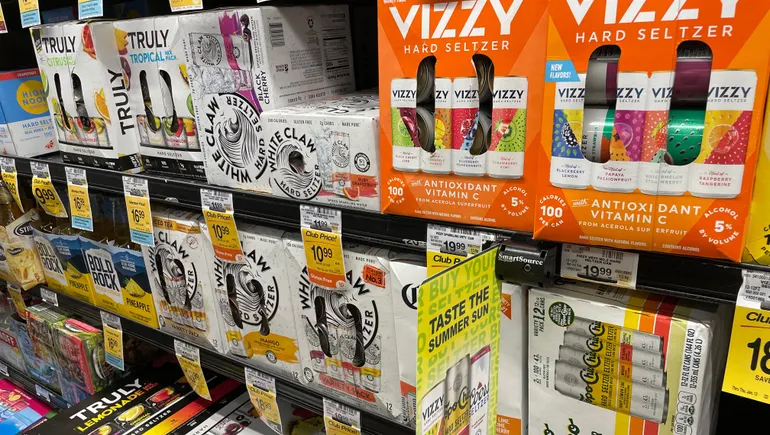
Boston Beer Company suddenly warned last month that demand for its popular hard seltzer brand Truly had been overestimated, a warning that sounded an alarm for the alcohol industry, indicating that the category's once triple-digit growth rates are a thing of the past.
The news seemed to confirm some people's suspicions: the demise of the hard seltzer category—a growth engine for beer makers amid declining sales of their core products—had finally arrived. Boston Beer consequently lowered its full-year guidance, and its stock price plummeted nearly 25% in a single day, erasing billions of dollars in market value.
But the market reaction may have been too intense. Analysts believe Boston Beer's misstep was more likely due to overly aggressive forecasting rather than a category decline. They point out that hard seltzer remains a long-term growth point for the alcohol industry, although the field is facing a shakeout—hundreds of similar brands are competing fiercely for limited shelf space.
"I don't see this as signaling the end of the hard seltzer industry. When people calm down, reassess the category's past achievements, and view the current situation against that backdrop, they will realize this is still a strong category."
— Nick Johnson, Beverage Analyst at Morningstar
Although some brands will inevitably follow the path of Coors Hard Seltzer—Molson Coors announced in July it would discontinue the product in the U.S. to focus on more promising offerings—the category is still expected to maintain steady growth for several years.
"I don't see this as signaling the end of the hard seltzer industry," said Nick Johnson, beverage analyst covering alcohol at Morningstar. "When people calm down, reassess the category's past achievements, and view the current situation against that backdrop, they will realize this is still a strong category."
The bandwagon effect
Currently, the industry is dominated by Truly and White Claw from Mark Anthony Brands, which together hold a 75% share of the category. Brands such as Bud Light Seltzer, Topo Chico Hard Seltzer, Vizzy, and Corona Hard Seltzer are also vying for market share. The makers of Bud Light and Corona leverage their well-known brand names to promote new products.
The hard seltzer category has been a boon for these and other beer makers. According to IWSR data, beer sales fell 2.8% last year, while total alcohol consumption climbed to its highest level in nearly two decades. Meanwhile, the data firm estimates that hard seltzer consumption grew by 130% in 2020.
The rush to capitalize on this growth has led to a flood of similar products on shelves, confusing consumers and overwhelming retailers. On Boston Beer's recent earnings call, President and CEO Dave Burwick cited IRI data indicating there are currently about 220 brands and 1,000 SKUs, roughly 50% higher than last year.
"There's been a proliferation of brands in this category, and there's a bandwagon mentality across the industry. I think people are trying to bring new brands to market, but these brands are highly similar and lack originality," he said. "As a result, some consumers' interest in such products has waned somewhat."
Market maturity and slowing growth
Morningstar's Johnson said that although they differ in flavors, packaging, or ingredient combinations, there are ultimately limited ways to make seltzer.
"The dimensions on which these new brands rely to differentiate, in my view, are not important to most consumers," Johnson said. "This is the root of the massive homogenization."
The sharp slowdown in hard seltzer growth is attributed to market maturity, volume shifting back to the on-premise channel where the category is less popular, more hard seltzer options, and high base effects from consumer stockpiling in the same period last year. According to NielsenIQ data, hard seltzer sales grew more than 51% in the 52 weeks ending July 10, 2021, but grew only 7.8% in the final 12 weeks of that period.
"Honestly, this caught us off guard," Burwick said on CNBC. "We will regain share. The question is the trajectory of the category. If someone can give a more accurate judgment, we're all ears, but we can't control it."
Another factor affecting hard seltzer is that the category, which traditionally attracts legal-drinking-age younger consumers, is now attracting more older millennials aged 35 to 44, noted Beth Bloom, Associate Director of U.S. Food & Drink at Mintel. Although this demographic expands the hard seltzer drinker base, older consumers tend to drink less.
Cannibalizing market leaders
Since Boston Beer's surprise, Wall Street analysts and executives at Molson Coors and Constellation Brands (maker of Corona) have predicted that the hard seltzer category will ultimately be dominated by a few major brands, just as Coors Light, Bud Light, and Miller Lite hold the majority share of the light beer market, or as Pepsi and Coca-Cola dominate the soda market.
According to industry insiders' forecasts, hard seltzer sales could grow at an annual rate of 20% to 40% over the next three to five years. Johnson said that a more moderate growth rate will deter many small players from investing time and money to enter the category, as the prospects for success are uncertain and established giants are already entrenched.
"This precisely illustrates that the beer market sometimes lacks flexibility, and also reflects people's expectations of permanent growth or an infinite blue ocean. No matter how many new categories emerge, there is always a cycle."
— Nathan Greene, Analyst at Beverage Marketing Corporation
Molson Coors CEO Gavin Hattersley told analysts last month that even if the category's growth rate falls from triple digits to the 10% to 40% range, no other product in the beer category can show such growth.
This is why Molson Coors is heavily investing in hard seltzer products like Vizzy and Topo Chico, and its efforts are already paying off. The company doubled its share of the U.S. hard seltzer market in the second quarter and is striving to control 10% of the U.S. market by the end of 2021.
"We will increase investment in our rapidly growing global hard seltzer portfolio," Hattersley said. "Our guidance also anticipates continued strength in the above-premium portfolio, especially hard seltzer."
Although late to enter the hard seltzer space, traditional beer makers such as Molson Coors, AB InBev, and Constellation Brands are taking market share from early winners.
According to Euromonitor International data, White Claw's U.S. market share fell from 56.5% in 2019 to 49.5% in 2020. The data shows that Truly's share of the U.S. hard seltzer and other hard alternative market has also been declining since 2018, when it accounted for about one-third of sales.
"This will continue to erode the leaders' share," said Mintel's Bloom. "Consumers today do like to try new things and enjoy variety, but they prefer innovation based on familiar things."
Beer makers are heavily investing in seltzer production capacity, believing that recent growth will continue. Molson Coors announced in December last year that it would increase production capacity for seltzer and popular innovative products by more than 400% to meet consumer demand.
Constellation CEO Bill Newlands told analysts in June that the company plans to double its seltzer production capacity this fiscal year, with a long-term goal of becoming a top-three player. AB InBev aims for its seltzer portfolio (including Bon & Viv) to grow at twice the rate of the overall seltzer market this year. So far, it is on track to exceed that target.
Hard seltzer is often compared to the growth slowdown craft beer experienced before the pandemic. Craft beer saw a decade of rapid growth, with large beer companies and countless new entrants flooding in. Sales grew at a compound annual rate of 20.2% from 2010 to 2015, then slowed to 1.8% from 2015 to 2020, according to Beverage Marketing Corporation.
Nathan Greene, analyst at Beverage Marketing Corporation, said that just as craft beer continued to innovate and introduce new flavors after its slowdown, hard seltzer makers need to do the same to remain relevant and meet consumers' endless demand for variety.
The hard seltzer category has also seen the emergence of products containing spirits, further pressuring Truly, White Claw, and products from major beer makers. The challenge for hard seltzer brands will be finding ways to differentiate, such as Molson Coors' Vizzy—which uses a superfruit with 30 times the vitamin C of an orange per serving—or Flying Embers, which contains antioxidants and live probiotics.
"Compared to craft, this precisely illustrates that the beer market sometimes lacks flexibility, and also reflects people's expectations of permanent growth or an infinite blue ocean," Greene said. "No matter how many new categories emerge, there is always a cycle."


