
Farther Farms' Mission: Advancing Sustainable Food Systems with French Fries
Mike Annunziata, co-founder and CEO of Farther Farms, believes that reducing refrigeration needs can alleviate global energy and environmental issues, and french fries are the entry point. The company, located at the former Kodak campus in Rochester, New York, uses supercritical carbon dioxide to process fresh-cut fries, allowing them to be preserved long-term without freezing. This article covers its technology principles, entrepreneurial journey, market strategy, and challenges faced.
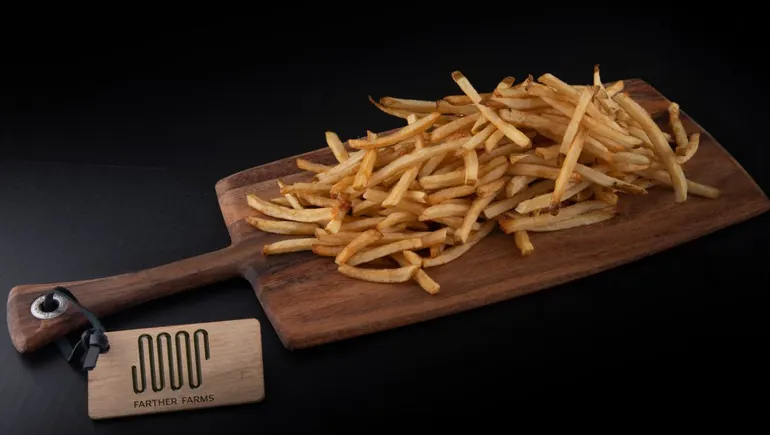
Mike Annunziata believes in two things: that reducing refrigeration can help solve many of the world's problems, and that french fries can help achieve that goal.
His concern about refrigeration stems mainly from the environment. Annunziata cites a 2010 study published in Food Research International, stating that refrigeration consumes about 15% of global energy. According to the UN Food and Agriculture Organization, the food sector accounts for about 30% of total global energy consumption and about 22% of greenhouse gas emissions. Statistics from the Global Cold Chain Alliance point out that when accounting for electricity used for refrigeration, equipment manufacturing, and greenhouse gases from refrigerant leaks, cold storage can account for up to 10% of a product's carbon footprint.
"Think about it, it's crazy," Annunziata says. "Every household has a refrigerator or freezer. Refrigerated and frozen trucks transport food around the world. Warehousing facilities keep things cold for freshness and convenience." He believes there are two solutions: improve refrigeration efficiency, or reduce the need for refrigeration. He chose the latter, using supercritical fluid technology through his company Farther Farms to turn foods that typically require freezing into shelf-stable products.
At the former Eastman Kodak campus in Rochester, New York, Farther Farms turns fresh potatoes into french fries, treats them with supercritical carbon dioxide, and packages them. These packages can be shipped without refrigeration, and the fries are ready to fry once opened.
Before touring Farther Farms' first facility of its kind in the world, co-founder and CEO Annunziata said the company's ultimate goal is to reduce the amount of food that needs to be refrigerated and frozen. This isn't about disrupting the french fry industry, but about changing how the world thinks about food. "This won't happen overnight, but it starts with a concept people can understand," Annunziata said. "Everyone knows frozen fries. Now, they'll get to know a fry that isn't frozen, and we can say through a product lens: 'This is a high-quality, shelf-stable fry.'"
The Weak Link in the Cold Chain
The cold chain comes with not only environmental costs, but also significant economic costs, something co-founder and Chief Technology Officer Vipul Saran knows well. Saran is from India, where his family is involved in agriculture and food processing. He says that on the Indian subcontinent, transporting products that need freezing or refrigeration faces major challenges due to logistics issues and cost constraints. So, he went to Cornell University to study food technology. "These fundamental challenges brought me to Cornell: to find a technology that could serve as a plug-and-play solution to somehow reduce reliance on refrigeration and freezing," Saran said.
While taking classes at Cornell's business school, Saran met Annunziata, who had worked in the investment world. Annunziata remembers Saran quantifying the problem he wanted to solve in class: in India, transporting one product requiring the cold chain costs $3,000, while a shelf-stable product costs only $90. This aspiration gave birth to the idea for Farther Farms, and the two founded the company at Cornell in 2016. The company started in Cornell's eLab student accelerator and later received local business grants. Annunziata says the company has raised about $10 million to date.
The company moved into its current location last year—a building of about 30,000 square feet where Kodak once manufactured touch technology. The industrial park already had much of the needed infrastructure, but significant work was still required to install appropriate equipment and comply with federal food safety regulations. Construction was completed in April 2020, on schedule despite shutdowns due to the pandemic, and the company shipped its first batch of fries in January.
Farther Farms is currently just getting started. Annunziata didn't disclose production volumes, but they produce a few pallets of product each week. There are a few existing foodservice clients; the company is scaling up slowly and carefully to ensure the technology is reliable and the product is high quality. Currently, the fries are only available at select locations in New York, but Annunziata says as the company grows, the product will travel farther.
The Key Technology: Supercritical Carbon Dioxide
The method Farther Farms uses to keep fries fresh and shelf-stable isn't new technology. The company uses supercritical carbon dioxide, obtained by pressurizing and heating the gas. When carbon dioxide reaches a supercritical state, it exists as both a liquid and a gas. Supercritical fluids have been known since 1822, and research on supercritical carbon dioxide has a 90-year history.
As far as Annunziata and Saran know, Farther Farms is currently the only company using supercritical carbon dioxide for food preservation. Saran stumbled upon its food applications while researching different preservation methods. Cornell provided him with expert resources and related research support. Supercritical carbon dioxide has a wide range of uses, including power generation, waterless dyeing, biomedical sterilization, and coffee decaffeination.
The biomedical applications caught Saran's attention because supercritical carbon dioxide can inactivate what he calls "pathogens of concern" and some undesirable natural enzymatic reactions. Apples or potatoes turn brown when cut due to natural chemistry, but potatoes treated with supercritical carbon dioxide do not.
"When we did early unit cost analysis and understood how this process scales compared to other technologies, we gradually realized that, A, it was more advanced in technical capability; and B, it had greater potential in scalability," Saran said.
Using supercritical carbon dioxide also has an important benefit: the structure of the fries remains intact. Many other shelf-stable preservation methods, such as canning and retort technologies, rely on high-temperature cooking or high pressure. While these methods preserve food, they cannot retain the fresh texture or cut structure of fries. Annunziata points out that if they used retort technology, Farther Farms could only make mashed potatoes.
At the Farther Farms facility, many work areas resemble a traditional fry plant, but are more compact due to the smaller scale; the process is essentially the same. Annunziata stands in front of a pile of russet potatoes that arrived the day before from a farm in Maine. Potatoes move up a conveyor belt as workers check quality, removing rotten ones or stones. The belt continues, and machines peel and cut them into strips, which then pass through a blancher, quickly cooking them in hot water to prevent browning.
After blanching, the potato strips enter an oven to dry. This is the first major difference between Farther Farms and a traditional fry plant—the latter would fry them at this point. Annunziata says that as a startup, they used equipment they could find to test feasibility. The drying oven he points to is a modified commercial pizza oven.
The fries undergo quality checks, are weighed, and packed into specially designed five-pound bags, which are sealed at the facility. The bags aren't opened until the fries reach their destination and are ready to be cooked. The bags are loaded onto custom carts and pushed into a large supercritical carbon dioxide vessel, supplied by a five-story-tall carbon dioxide tank outside. The fries are treated in the vessel for 30 to 60 minutes, then workers inspect and label them, and they're done.
Annunziata touches a package of fries in clear packaging: "Our goal is this semi-vacuum packaged product that looks like a regular fry. Open it, put it in the fryer, and enjoy."
A Story of Taste and Sustainability
Consumers can taste Farther Farms fries at Pomodori restaurant in the student union at SUNY Cortland. Jeff Scott, director of campus dining services, says he's always looking for locally made foods with a global flavor. Scott describes the product as a high-quality, natural-cut fry that's popular among students. Demand for fries at the Pomodori station, which serves Italian dishes and sandwiches, is up 20% compared to the same period in the 2019 school year.
This is even with most students not knowing the Farther Farms story. Scott says the university provides space for local food vendors to tell their stories—through displays in the student union or information on the website. In mid-September, representatives from Farther Farms came to campus to introduce their fries and their mission of sustainability and accessibility. Scott says this resonated with the university community, which is more focused on products that prioritize sustainability.
Scott says today's college students have eaten restaurant-quality food their whole lives, so dining halls need to meet high standards. "Ultimately, the product has to be top quality to succeed," Scott says. "...That's not to downplay the product's and company's sustainability mission. I think when the two come together, it's a great scenario."
Ghislaine Joly, vice president of product development and innovation at Farther Farms, joined in the summer. She previously served as principal development scientist at fry giant Lamb Weston, with over 25 years of experience with fries, and met the Farther Farms team through consulting work. Joly evaluates fries for appearance, color, texture, and crispness, and says Farther Farms performs well on these fronts. "It's almost unbelievable because usually consumers don't see as many differences as we do," she says. "...As scientists, we try to understand the production mechanism and how the process affects the product." Joly says the biggest issue facing Farther Farms fries is one all manufacturers deal with: how to maintain crispness and flavor after cooking.
Next Steps: Great Food, Anywhere
Farther Farms is working to build a CPG brand, but Annunziata says the company doesn't want to be known only for fries. Long-term plans include making shelf-stable fresh dips like salsa, and possibly even shelf-stable meat products. "At the end of the day, it's 'great food, anywhere,'" Annunziata repeats the company mission. "That's the goal, and getting out of the cold chain is almost a byproduct of achieving that."
For now, the focus is on improving the fries and introducing them more broadly into foodservice. Annunziata hopes to emulate Impossible Foods, which initially launched the Impossible Burger only in foodservice, gradually expanded to restaurants nationwide, and once it became a household name, easily entered grocery stores. If consumers can associate Farther Farms with quality food, they'll discover more of the story and become brand fans. Through the brand, the company will achieve value.
Annunziata says this philosophy is reflected in a quote on the office wall from Bobby Horowitz, the late former president of Lamb Weston who had been a Farther Farms advisor: "Strive not for success, but for value." If the brand succeeds, it will have value to consumers.
But there are still issues to resolve. First, the product price needs to be acceptable to consumers. Currently, Farther Farms fries are priced comparably to frozen fries, but the company wants to ensure it gets enough return to reflect the product's value. In the future, there may be a premium due to the process. Second, American consumers' obsession with refrigeration and freshness. In other countries, shelf-stable milk is common, especially in the plant-based sector. In the U.S., companies have had to produce refrigerated versions to win consumer trust. Annunziata believes consumers will eventually accept shelf-stable products. If they get to know Farther Farms in foodservice, they'll recognize the brand in the grocery store and pick up the package, even if it's not in the freezer.
Max Richman, vice president of business development, says the technology has real international potential. The market spans the globe, including regions where refrigeration isn't available due to remoteness or unreliable electricity. Annunziata says the key to long-term success is changing the conversation. No one talks about the sustainability challenges of the cold chain, but perhaps they should. Looking at the data, with supply chain disruptions in 2021, cold chain shipping costs rose about 20% year over year.
Large plant-based meat companies created good enough products that consumers didn't mind switching because they didn't feel they were sacrificing for a sustainable choice, Annunziata says. Once pioneers like Beyond Meat and Impossible Foods proved they could sustain consumer interest and attract followers, many companies followed suit. The same change can start with Farther Farms and more shelf-stable foods. "We're not the only company that needs to make this big change," Annunziata says. "But if we can catalyze change with our product and roll out a line of products... then I think we can lead this transformation because we're relying less and less on the cold chain, whereas the current default is that everyone wants to freeze food."


