
Food Giants' Sustainable Packaging Goals Meet Supply-Demand Realities
Over the past two years, food giants such as Keurig Dr Pepper, PepsiCo, and Mondelēz have set goals to cut virgin plastic packaging, but the pandemic, extreme weather, the Russia-Ukraine conflict, and structural deficiencies in the U.S. recycling system have led to insufficient supply of recycled materials and sharp price volatility. Experts point out that some commitments lack a foundation for realization and are difficult to fulfill in the short term. Alternative materials like paper also face rising costs, while high energy prices and decarbonization pressures are reshaping the industry landscape.
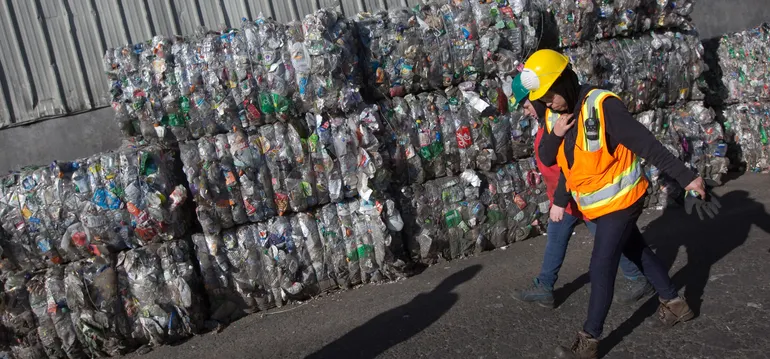
Over the past two years, several consumer packaged goods (CPG) giants have announced goals to reduce the use of virgin plastic in their packaging over the coming decades and shift to more environmentally friendly alternatives, including Keurig Dr Pepper, PepsiCo, and Mondelēz. Recycled plastic and paper have proven to be two of the more popular alternative choices. However, as price and supply volatility continue to impact the packaging industry, a key question keeps emerging: Is there a clear path to achieving these goals in the short term, or are they just castles in the air?
A series of factors are threatening CPG timelines, including the pandemic's disruption of consumer purchasing behavior and material supply chains, the limitations of the existing U.S. recycling system, and the latest developments such as the Russia-Ukraine conflict. At the same time, the industry faces increasing accountability pressure to take responsibility for the pollution caused by food and beverage packaging.
"There have been many commitments regarding recycled content and packaging, but these goals were not really set based on the means of achievement," said Robin Waters, Director of Plastic Planning and Analysis at IHS Markit, in an interview late last year.
To understand why fulfilling these commitments may be difficult, it is necessary to examine the price and supply fluctuations of virgin and recycled plastic resins over the past two years.
The story begins with virgin plastic—that is, resin newly made from petroleum or natural gas (mainly used in North America). Food manufacturers face pressure to reduce the use of virgin plastic in packaging, and for good reason. A 2018 study cited by the Association of Plastic Recyclers found that producing recycled plastic resin uses 79% to 88% less energy than virgin resin, depending on the type.
At various points over the past two years, the prices of virgin plastic resin have been significantly higher or lower than recycled plastic, as the pandemic put pressure on their respective supply chains. And with each shift in price trends, the timelines for reducing virgin plastic goals have also changed.
When the pandemic intensified in early 2020, the supply of virgin plastics such as polypropylene (a rigid, recyclable plastic used in packaging like yogurt cups) shifted to medical uses such as masks and protective equipment. "So, the plants producing these chemicals and polymers shifted capacity from one type to another, which also caused shortages and drove up prices," said Richard Freundlich, Senior Analyst for Plastic Supply Chain at RaboResearch (who has retired since the interview).
The Gulf Coast also experienced severe weather events, including Winter Storm Uri and Hurricanes Ida and Nicholas in 2021, which caused power outages and disrupted operations in Texas's natural gas industry and chemical plants. The disruption rippled down to the plastic packaging manufacturing sector.
"Suddenly we faced shortages, and in the packaging sector, due to food regulations, you can't easily substitute materials," Freundlich said, referring to FDA regulations that restrict which substances can come into contact with food. He added that replacing a chemical additive in plastic packaging requires FDA certification—a process that takes about a year.
Infrastructure disruptions led to packaging plant shutdowns and plastic shortages. Virgin plastic resin experienced historic price increases in the aftermath.
Freundlich noted that as virgin resin costs rose, food packaging costs naturally increased as well. To address these costs, CPG companies began downsizing packaging. This had an impact on supply, requiring packaging manufacturers to make equipment adjustments.
Recycled plastic also faced its own supply pressures. During the pandemic, labor shortages at times led to packaging plant shutdowns and disrupted recycling operations in the supply market.
"When you look at all these plastics being recycled, historically in the U.S. it's been done through mechanical sorting, which requires cheap labor," Freundlich said. "And they were the first to quit during the pandemic." More importantly, this also affected the collection of recycled materials. The result was material shortages and, of course, price increases.
"You know all those companies you read about—'We're going to use 25% or even 50% recycled plastic in our packaging,' right? That became a pipe dream," Freundlich said. "Not only because of procurement issues, but also because the price of manufacturing recycled plastic was significantly higher than the virgin material itself, sometimes double. So those commitments were never going to be fulfilled."
Although recycled plastic has recently become more price-competitive as the Ukraine war pushes up input costs for virgin plastic, the supply and demand ripple effects from the pandemic will persist and complicate CPG's transition to more sustainable materials.
Demand meets supply bottlenecks
Demand for rPET (recycled polyethylene terephthalate) also exceeds supply, while recycling rates lag. According to the National Association for PET Container Resources, end-use consumption of rPET in the U.S. and Canada grew by 10% in 2020, while U.S. collection fell by about 2.3%, with the recycling rate dropping to 26.6%. Coca-Cola announced in February that it would begin using 100% rPET in its bottles, and company spokesperson Bailey Rogers told Food Dive that they are working with local governments to develop recycling policies to ensure a supply of high-quality rPET.
Structural issues in the plastic recycling industry also complicate the transition away from virgin plastic. Most plastic in the U.S. is recycled mechanically, involving processes such as shredding, washing, separating, drying, repellettizing, and blending.
"The ability to supply enough mechanically recycled plastic to replace virgin plastic is limited for a variety of reasons," said Waters of IHS Markit. He said these reasons include the limited types of plastic that can be easily mechanically recycled—the process is best suited for rigid plastics and thick films—as well as issues with ensuring traceability of different plastics after processing.
"So we are seeing that as commitments are made, the premium for post-consumer recycled plastic is also rising," Waters said. According to Plastics Recycling Update, the national average price for post-consumer PET beverage bottles and containers in the U.S. rose 17% in April to 39.22 cents per pound, compared to just 12.03 cents a year earlier.
Bret Biggers, Senior Economist at the Institute of Scrap Recycling Industries, said the recycling industry is responding to growing demand by investing in new plants, equipment, and automation, particularly at the material recovery facility (MRF) level, which processes commodities after collection and supplies them to packaging manufacturers. Private equity has provided funding for some companies to expand and upgrade, and he expects this trend to continue over the next year.
Biggers noted that the labor shortage affecting the entire manufacturing sector is expected to ease in the second half of 2022. However, many of the issues that affected supply last year will persist in the coming months. "Supply chain disruptions will continue. There are forecasts that it won't start to ease until the second and third quarters," he said. "...Domestically, transportation costs and wages are rising... This means recyclers have to deal with a lot of rising costs."
Alternative materials to plastic have also experienced their own price fluctuations. Different types of paper—which have become a popular choice for CPG, from Bumble Bee's cardboard tuna can packaging to Diageo's paper whisky bottles—have also faced price increases, albeit relatively moderate.
"Paper packaging prices have risen about 26% to 44% over the past two years, depending on the paper grade you're looking at," said Xinnan Li, Food and Agribusiness Analyst at RaboResearch. "But this is indeed driven by higher consumer demand. Whether it's at the retail end, where consumers are buying more products on shelves, or in e-commerce, where more products need to be packed in corrugated boxes."
Li said the North American paper market is also fairly concentrated, dominated by a few major manufacturers with strong pricing power. Finally, the paper packaging industry also faces the same labor issues as other industries, so both virgin and recycled paper manufacturers have passed on higher related costs.
In the early days of the pandemic, some MRFs closed, causing demand and prices for old corrugated containers (OCC) to surge. The spike in online purchases during the early pandemic was also a major factor. Li said OCC prices have jumped from about $30 per ton to $120 now. "That's a huge increase... The industry has to absorb it in some way," she said. Pulp prices (the base material for virgin corrugated board) have risen about 50%, "purely driven by demand for wood pulp."
A year of inflation
Although price increases for some packaging materials had begun to stabilize by the end of 2021, the Ukraine conflict has introduced new uncertainties.
While Ukraine is not a major supplier of chemicals—Freundlich said it accounts for about 3% to 5% of the market—it does disrupt the balance of the plastic supply industry. Meanwhile, as some European countries boycott Russian gas, the U.S. has stepped in to supply liquefied natural gas. This diverted supply will come at the expense of industries such as plastic manufacturing.
"When you add it all up, it's inflation. Inflation will continue. Even before the Ukraine situation, due to natural gas, there would have been moderate increases in packaging resin prices over the next five to ten years," Freundlich said.
Freundlich said the rapidly changing situation makes it difficult to make predictions about virgin plastic pricing. "Plants are being canceled. Pipelines are being canceled," he said. "We don't know what the impact will be, how import-export relationships will change. All of this could have a significant impact on prices. So I would say 'buckle up.' Yes, prices won't come down. It's going to be an inflationary year."
Perhaps the biggest factor in material costs is energy. The Ukraine conflict pushed global benchmark Brent crude oil prices to $134 per barrel in March—the highest since 2008—and U.S. natural gas prices also rose to 13-year highs. Brent has since fallen back to around $110 per barrel, but demand is expected to remain high.
For recycled plastic, this provides an opportunity. At the Plastics Recycling Conference in March, analysts at IHS Markit noted that rising oil prices could pressure virgin resin prices, making recycled resin more competitive, as reported by Waste Dive.
Beyond being a key material for plastic, oil and natural gas also power much of global manufacturing. This has implications for the economics of different packaging types.
"Energy costs—if you look at glass—wow. Aluminum—ouch. I mean, these are all very, very energy-intensive," Freundlich said of other virgin alternatives to plastic. "It's a terrible situation. But the good news is that a lot of new capacity is coming online, which can offset some of these costs."
Paper prices are also under pressure from the war. "Even before the Russia-Ukraine (conflict), we had already predicted double-digit growth," Li said. Since paper processing is energy-intensive, the war will only push prices higher in the short term.
In the long term, Li said the outlook for paper prices is much better, with several new corrugated board plants set to come online, and capacity expansion will increase supply. Combined with paper's more moderate price fluctuations, this could give the material an advantage as more manufacturers shift to packaging alternatives.
"Given the price levels of traditional plastics, this could become a greater incentive for companies to shift to more sustainable alternatives. Because traditionally, sustainable materials are more expensive," Li said.
Meanwhile, another buzzword is emerging that will impact the food and packaging industry in the coming years. "For the past three or four years, including everyone in packaging, everyone has been obsessed with the word 'sustainability,'" Freundlich said. "This year and in the coming years, that word will become 'decarbonization.'"
To advance the Paris Climate Agreement, the United Nations is challenging every country, city, company, and financial institution to achieve carbon neutrality by 2050. Food companies such as Nestlé, Mars, and Unilever have set goals to achieve net-zero emissions by 2050 or earlier. Packaging is one of the pathways to achieving these goals.
"There isn't a company that doesn't have a team seriously considering what they can do," Freundlich said. "This will have a huge impact on inflation and, unfortunately, also on costs."


