
Will More FMCG Companies Embrace Innovation as the Key to Growth in 2024?
In 2024, large food and beverage manufacturers face challenges such as inflation and consumer fatigue, making innovation key to attracting and retaining consumers. However, the industry's conservative culture, cost pressures, and risk-averse attitudes hinder the pace of innovation. Experts point out that areas such as healthy snacks and convenience foods have great innovation potential, and some companies like Nestlé, Hershey, and Mars have already accelerated their innovation efforts.
Editor's note:This article is part of a series of reports on food and beverage industry trends in 2024.
In 2024, many large food and beverage manufacturers will have to pay double attention to a often overlooked part of their business—innovation.
This year is expected to be challenging: inflation, consumer fatigue over price increases, and other factors put pressure on companies, forcing producers to think outside the box. Experts say that although breaking with tradition is not easy for some companies, it could be the key to their success this year.
Analysts tracking the industry told Food Dive that innovation is more important than ever in the current environment, as companies need to attract and retain consumers who are cutting spending, seeking products that better meet their needs, and struggling to choose in a crowded market.
However, for many long-established companies, increasing focus on innovation and investing extra funds means disrupting their inherently conservative, long-term risk-averse culture.
Mikael Bengtsson, director of food and beverage industry and solution strategy at Infor, said that for many food companies that have existed for over a century, sticking to old practices "no longer works."
"If they don't change, I think they are doomed. They must embrace innovation, or they will lose competitiveness," said Bengtsson, whose company advises food and beverage companies. "Costs will be higher, efficiency will be lower, and they won't be profitable. The world is changing, and if they don't change with it, it will be hard to survive."

Pressure from private labels
Despite the growing importance of innovation, food and beverage companies still face obstacles in the market that reduce the appeal of approving high-risk projects that may take years to pay off (or even fail), because these projects generate minimal sales in the short term.
Executives not only face pressure from Wall Street to increase revenue, but also to maintain and expand profit margins, while companies face rising costs for ingredients, transportation, and labor, making these goals difficult to achieve. Additionally, companies of all sizes face higher borrowing costs, with interest rates at multi-year highs, dampening their willingness to use capital to invest in uncertain projects.
"They now have to be more risk-averse," said Brian Choi, CEO of The Food Institute, a food industry media and market research company. "Investors and boards judge companies based on how they perform compared to competitors, not on innovation."
Instead, executives tend to focus on maintaining sales of best-selling brands, which contribute the majority of a company's volume and revenue.
Putting some innovation on hold now may bring short-term returns, but analysts warn it could lead to a stale product portfolio and reduced competitiveness, dragging down medium- and long-term growth.
"I genuinely believe that in the U.S., many consumer packaged goods companies are not good at innovation. They are not good at driving product advancement. They are lazy."
—Neil Saunders, Managing Director at Global Data
Some companies' insufficient pace of innovation has already caused them to fall behind, and some have turned to mergers and acquisitions to fill gaps in their product portfolios.
Last year, jam and peanut butter giant J.M. Smucker spent nearly $6 billion to acquire Hostess Brands, deepening its presence in indulgence categories and convenience consumption occasions. Meanwhile, Campbell Soup, which owns the Prego brand, announced in August its $2.7 billion acquisition of Sovos Brands (parent of premium pasta sauce brand Rao's), with the deal expected to close later this year.
"I genuinely believe that in the U.S., many consumer packaged goods companies are not good at innovation. They are not good at driving product advancement," said Neil Saunders, Managing Director at Global Data. "They are lazy."
This situation could change soon.
Retailers such as Target, Safeway, Kroger, and even Amazon are becoming increasingly savvy with private labels, which often match or exceed branded products in quality but at much lower prices.
At the same time, large food and beverage companies also face competition from more agile, innovative startups and similar large peers for cash-strapped consumers.

Saunders said he sees early signs that food companies are putting more resources into innovation, but so far, these innovations have not appeared on shelves in a way that significantly impacts their profits.
"Innovation is happening, but it takes time," he said. "Some big companies are at a disadvantage because they don't have the mechanisms to innovate in interesting ways. For them, it's very difficult."
Companies accelerating innovation
He noted that health and wellness, limited-time offerings, sustainable packaging, and snacks for on-the-go consumers are four areas particularly suited for innovation. In contrast, categories like pasta and soup, where consumers tend to be loyal to historical purchases and creating novel, unique products is especially difficult, are less suited for disruption.
"Innovation is really important in the current environment because it's one of the ways to defend against some unfavorable consumer trends in the market," Saunders said.
Switzerland-based Nestlé is stepping up its innovation efforts.
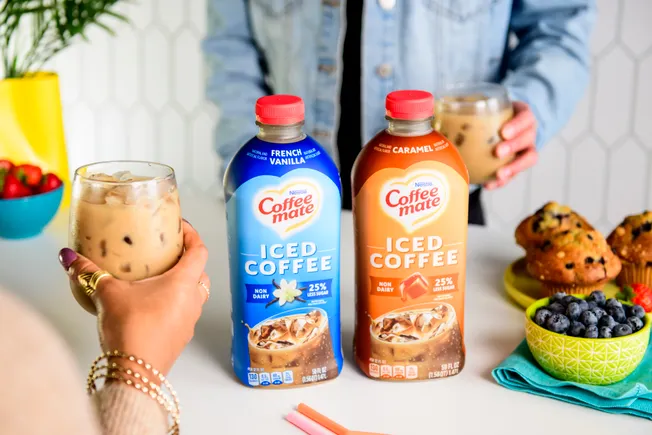
Mike Van Houten, head of consumer and market insights at Nestlé USA, said that during the pandemic and supply chain disruptions, Nestlé, like other companies, scaled back innovation to focus on supplying best-selling products to consumers and retailers. Last year, the company, which makes Lean Cuisine and Nescafe, increased its innovation project pipeline by nearly 45%, and expects to launch more innovations in 2024 in areas like coffee, creamers, convenient meals, and prepared dishes—areas Nestlé says it leads the market.
"Innovation is making a big comeback," Van Houten observed. "Within our own organization and among other companies we admire, you can see innovation becoming a top priority."
Hershey is one of the other companies "elevating" its innovation plans for 2024, as CEO Michele Buck recently told analysts.

Mars Wrigley (whose candy portfolio includes M&M's, Snickers, and Skittles) plans to launch fewer but more impactful innovations in 2024 through what it calls a "very disciplined approach," said Tim LeBel, president of U.S. sales at the company.
LeBel said products that fail to bring novelty to a category could cannibalize sales of existing products while failing to meet retailers' demand for products that drive incremental category growth. Consumers are often willing to pay higher prices for products that are different, have improved formulations, or have positive uniqueness.
For example, the Snickers high-protein product launched in 2022 brings the popular candy into the sports nutrition category, using the same ingredients as the classic candy but with 20 grams of protein and only 4 grams of sugar. LeBel said Mars Wrigley is seeking to launch similar products across its portfolio to invigorate a candy category that has been dominated by the same companies and brands for decades.
Just this year, Mars Wrigley plans to launch sweets and snacks such as Dove Milk Chocolate Tiramisu Caramel Promises inspired by Italian desserts, Ranch Dip-flavored Combos, and Dove bars made with 100% real ice cream and sustainably sourced vanilla.
"Innovation is critical to the category. We understand that," LeBel said. "But we want to make sure we bring the right innovation. It's not about launching 10 products to see which one succeeds."
Rafael Acevedo, president of Danone's yogurt business in North America, agrees. He said Danone's yogurt brands are typically tied to key attributes, such as protein in Oikos and low sugar in Two Good, and innovation needs to align with consumer perceptions of the brand and its distinctiveness. Straying too far could dilute brand equity and confuse consumers.
"Innovation must be built on what the brand stands for and its core essence, and that's very important," Acevedo said. Consumers "want to buy products they truly identify with and truly relate to. That's exactly the direction we want to continue developing."