
The Evolution of Keurig: From Single-Cup Coffee Upstart to Coffee Giant
Keurig started with single-cup coffee systems and now continues to grow in the competitive coffee market through innovations in cold drinks and smart technology, but faces challenges such as weak demand.
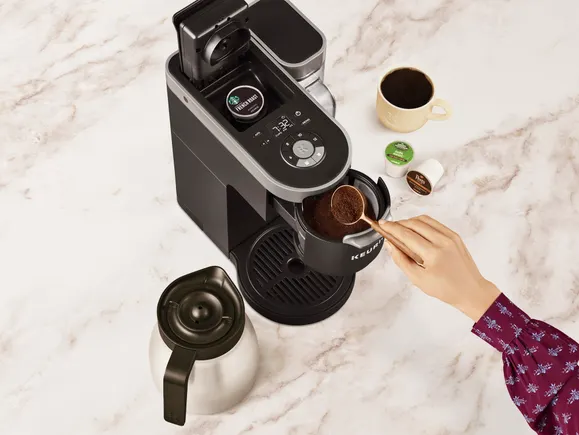
Keurig, which pioneered single-serve coffee capsules, is now focused on replicating cafe-style diverse drinks to satisfy increasingly discerning consumers, and its future growth increasingly depends on this capability.
"We are long past just making sure that you can faithfully recreate the flavor of your favorite brand in hot black coffee," said Patrick Minogue, president of Keurig Dr Pepper's U.S. coffee business, in an interview.
He added that consumers' demands and expectations of Keurig are higher than ever. "This pushes us to maintain integrity and continue innovating," Minogue said.
Keurig's origins date back thirty years, when two engineers approached Green Mountain Coffee Roasters with a proposal to develop a single-cup brewing system. They named their company 'Keurig,' derived from the Dutch word for 'excellence.' The first test brewer, Concept 1, was sold in 1995 for $15,000, and only three were made.

Today, Keurig, part of beverage giant Keurig Dr Pepper, has its coffee brewing systems in nearly 40 million households. Executives estimate that the Keurig platform has the potential to add more than 50 million households in the future.
Minogue said that as the brand matures, attracting new users to the Keurig platform has become a challenge, prompting the company to add new features beyond simply replicating single-cup coffee.
Facing competition from brands like Nestlé's Nespresso, as well as coffee chain giants like Starbucks and countless independent shops, Keurig executives know they cannot rest on their laurels.
Minogue noted that consumers want machines that can replicate the high-quality specialty coffee they buy outside the home, while offering more choices at affordable prices.
Over the past seven years, Keurig has incorporated into new products the ability to froth milk, brew both hot and cold drinks in the same machine, and replicate high-caffeine drinks like espresso.
Cold coffee market heats up
So far, Keurig's strategy seems to be working. According to parent company Keurig Dr Pepper, brand awareness exceeds 90%, and in 2023 it achieved its ninth consecutive year of market share growth. Currently, one-third of coffee makers sold in the U.S. are Keurig or Keurig-compatible models.
CFRA analyst Garrett Nelson said Keurig will continue to prioritize innovation and incorporate consumer-desired features into its systems. "This is a highly competitive space," Nelson said. "The key going forward is to keep launching better, more efficient products."
The coffee business has also been a boon for Keurig Dr Pepper, which, like PepsiCo and Coca-Cola, faces weak soft drink demand as consumers cut sugar intake. Nelson said Keurig provides "a degree of stability" for the beverage giant amid "significant headwinds" in its other businesses.

Although Keurig is most often associated with hot drinks, in recent years the company has gradually integrated cold brew features into its platform—features that are especially popular with younger consumers.
HSBC analyst Carlos Laboy noted in a December report that the consumer shift from cold to hot coffee "offers growth potential for this strong brand."
He said Keurig has high penetration in hot coffee households, with "unmatched" scale in coffee pod manufacturing and a strong brand portfolio. Additionally, Keurig has advantages in national sales and distribution networks for coffee makers and pods, and its approach to designing digitally connected brewers resonates with consumers.
"After changing the at-home hot coffee brewing habit, Keurig's next phase of disruptive growth is beginning as it adjusts its platform and launches new affordable coffee makers to address the at-home cold coffee occasion," Laboy noted.
The K-Iced model Keurig launched in 2023 features automatic brew temperature adjustment: it first extracts the full flavor of the coffee grounds at a higher temperature, then cools down to reduce ice melting.
The company has also developed K-Cup pods that better resist ice and prevent the coffee from tasting weak. These pods can be used in existing models, so consumers don't need to buy a new brewer.
Although cold drinks offer one of the biggest growth opportunities, it's not the only area of innovation for Keurig.
Five years ago, the coffee system introduced a machine called the Keurig Duo, which can make 2-ounce or 4-ounce single cups, as well as a 12-cup carafe. Keurig found that some consumers may not always need small cups, such as when they have many guests at home.
In 2022, Keurig launched the K-Café Smart, whose BrewID technology identifies the K-Cup pod in the brewer and filters through nearly 200 options. Through the companion mobile app, consumers can see different drink recipes suitable for that pod. For example, when selecting Cafe Bustelo, the app recommends options like iced coffee, café con leche, Mexican coffee, and mocha.
"Consumers are always changing, so yes, meeting all the needs of American consumers is almost an impossible task," Minogue said. "But that's what keeps us excited and interested in this space. It's never-ending; there's no final destination here."
Despite weak demand, 'green shoots are emerging'
That said, Keurig's nearly 30-year market journey has not been without its challenges.
Previously, Keurig attempted to launch countertop soda machines that let consumers make chilled Coca-Cola, Dr Pepper, and other carbonated drinks at home, as well as an alcoholic cocktail platform developed with beer giant Anheuser-Busch, but these attempts failed to gain market traction and were eventually discontinued.
Like other food and beverage brands, Keurig is facing headwinds from consumers cutting spending and the high base effects after the pandemic.
In the third quarter, Keurig Dr Pepper reported that coffee net sales fell 3.2% to $1.01 billion, compared with $1.05 billion in the same period last year, as price increases failed to offset declines in volume and mix. However, the decline improved from the 5.7% drop in the previous quarter.

Goldman Sachs analysts said in an October research note that despite weak at-home coffee demand, Keurig Dr Pepper's "segment is showing green shoots."
The firm highlighted that Keurig Dr Pepper's U.S. coffee business operating margin and operating profit grew year over year in the third quarter, proving that management "is doing a good job within its control."
CFRA's Nelson said that because many of Keurig's coffee brands are priced below premium offerings on platforms like Starbucks coffee or Nespresso, they successfully attracted price-sensitive consumers looking to trade down during the surge in inflation.
He noted that despite Keurig's price increases, the gap between its brands and other premium coffees has widened in recent years, making its products more attractive.
To better keep up with consumption trends and consumer evolution, Keurig is increasing its brand promotion on social media and engaging with online users to more precisely grasp demand. Recently, Keurig's heritage brand Green Mountain Coffee Roasters partnered with actor Kevin Costner to develop and promote a line of blended coffees.
Meanwhile, the coffee maker is relying more on data insights and paying closer attention to the dynamics of local coffee shops.
When asked whether Keurig would enter the ready-to-drink coffee space given the brand's broad recognition and the popularity of portable products, Minogue did not rule out the possibility.
"We are very focused on making our existing partnerships successful in the market, but we are always looking at and considering such opportunities," he said. "We are actively considering many different opportunities at any given time."