
Sustainability of Plant-Based Meat Questioned: Experts Call for Independent Data and Transparent Traceability
Plant-based meat giants Impossible Foods and Beyond Meat use sustainability as a core selling point, but their commissioned life cycle assessments (LCAs) have been questioned by experts due to a lack of independent verification and ingredient traceability information. Research shows these assessments may overlook indirect emissions from ingredients such as soy and cocoa butter, and industry-funded studies are difficult to replicate. Experts urge brands to disclose transparent data and have assessments conducted by independent institutions.
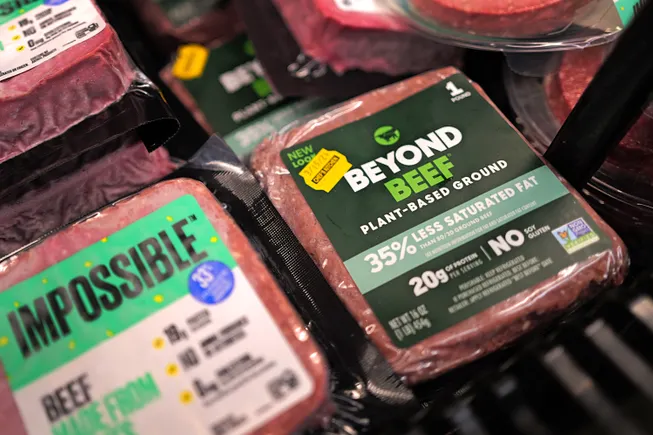
Sustainability has been central to the marketing strategies of Impossible Foods and Beyond Meat, with the plant-based meat giants claiming their products are more environmentally friendly than traditional meat. However, the evidence they use to support these claims is increasingly being questioned by investors and scientists, due to a lack of independent data and insufficient consideration of emissions from sourcing soybeans and other commodities used in plant-based burgers.
To bolster sustainability claims, companies typically cite commissioned life cycle assessments (LCAs), which calculate the environmental impact of a product from production to disposal. However, experts have difficulty reproducing the LCA results of Impossible and Beyond, raising concerns about the accuracy and validity of some claims.
Plant-based burgers, chicken nuggets, and other products are unlikely to be worse for the climate than traditional meat products. Nevertheless, accurately quantifying sustainability claims remains crucial, as corporate messaging can influence policy and investment decisions.
"Investors want to understand whether this relatively new industry has a lower environmental or social impact than animal-derived protein," said Abby Herd, senior analyst at the Farm Animal Investment Risk & Return (FAIRR) initiative, which works to raise awareness of ESG issues in the food industry.
Both Impossible Foods and Beyond Meat declined multiple interview requests.
Data gaps
Major plant-based companies rely on LCAs to determine the climate impact of their products, a practice that creates potential conflicts of interest, noted Ricardo San Martin, director of the Alt: Meat Lab at the University of California, Berkeley.
"Any plant-based company, or really anyone in the food industry, that commissions its own paid data will only publish what makes it look good," San Martin said. "If the results are negative, why would they publish them?"
Over the years, Beyond Meat and Impossible Foods have commissioned multiple LCAs to demonstrate the environmental impact of their plant-based products compared to traditional meat. One of the earliest reports came from the University of Michigan's School for Environment and Sustainability, published in 2018.
"Messages like 'eat our burger instead of driving an electric car' are not what we want to see." — Alex Ernstoff, Global Science Lead at Quantis
The study concluded that Beyond Meat's burger uses 99% less water, 93% less land, generates 90% fewer greenhouse gas emissions, and requires 46% less energy than a typical beef burger.
However, when Hannah Ritchie, a researcher at the University of Oxford, tried to gather relevant data, she found these claims difficult to verify.
"I thought it would be easy to find a clear answer," said Ritchie, who also serves as deputy editor of the nonprofit Our World in Data. "But I found few comparisons based on reliable data," noting that the vast majority of studies were industry-funded.
This could lead to exaggerated or misleading claims. Impossible Foods' website states that changing one's diet to include more plant-based foods is more effective than "installing solar panels, driving an electric car, or avoiding plastic straws."
"LCA communication and marketing must be based on scientific evidence and explain that evidence in a credible way," said Alexi Ernstoff, global science lead at sustainability consultancy Quantis, which conducts LCAs for clients. "Saying 'eat our burger instead of driving an electric car' is not the kind of statement we want to see."
Researchers involved in LCAs for plant-based companies have no issue with how companies present commissioned data. Greg Keoleian, director of the Center for Sustainable Systems at the University of Michigan, said there may be a lack of transparency in certain areas to avoid disclosing sensitive information.
"Companies may have confidential data they don't want to make public, such as ingredient formulations," said Keoleian, who co-authored Beyond Meat's 2018 LCA. "Life cycle analysts can access this data and aggregate it in public reports to avoid revealing proprietary information."
Sustainable sourcing concerns
Although beef is a major driver of emissions and land conversion, plant-based products also contribute to deforestation impacts in carbon-rich tropical regions, including key ingredients such as cocoa butter, soybeans, and coconut oil. Because Impossible and Beyond's LCAs lack sourcing traceability, these companies cannot fully account for the potential environmental and social impacts of their products.
The climate impact of these ingredients varies by origin. Some may come from certified sustainable farms, while others may come from recently deforested land in the Amazon, Africa, or Southeast Asia.
"If you look at where plant-based meat brands source from, it's likely that a large amount comes from the same group of large traders." — Sophia Carodenuto, Assistant Professor at the University of Victoria
However, neither Impossible Foods nor Beyond Meat has clearly stated which farms or lands their high-risk tropical ingredients come from. They have also not publicly disclosed plans to collaborate with large food companies or sourcing initiatives to expand traceability efforts.
This concerns Sophia Carodenuto, an interdisciplinary scientist focused on forest governance at the University of Victoria in British Columbia. She worries that the expansion of the plant-based food industry could be linked to deforestation in cocoa-growing regions.
"If you look at where plant-based meat brands source from, it's likely that a large amount comes from the same group of large traders," Carodenuto said. "So at the end of the day, the situation is the same, and they will face the same issues that companies like Hershey are dealing with."
The lack of sourcing information is part of the reason experts consider these reports mere "snapshots" based on several assumptions, making them "easy to question," Ritchie said.
"It shouldn't be this way," she said. "Every claim made by a brand should be supported by transparent, public data, and ideally, these analyses should be done by academics and independent evaluators."
Using science to push agendas can go both ways. Some of the harshest criticism of plant-based burgers and chicken nuggets comes from entities or individuals supported by the meat industry, and such criticism may also misuse data.
"It's complex, not black and white," San Martin said of corporate sustainability data. "It depends on your perspective or what you focus on."
