
2024 Election: Trump vs. Harris on Agricultural Policy Positions
In the 2024 election, agricultural policy has become a key battleground for both parties vying for swing states. Harris focuses on combating price gouging and expanding competition, while Trump advocates for tax cuts, deregulation, and strict immigration policies. This article compares their positions on issues such as food inflation, labor, climate, and trade.
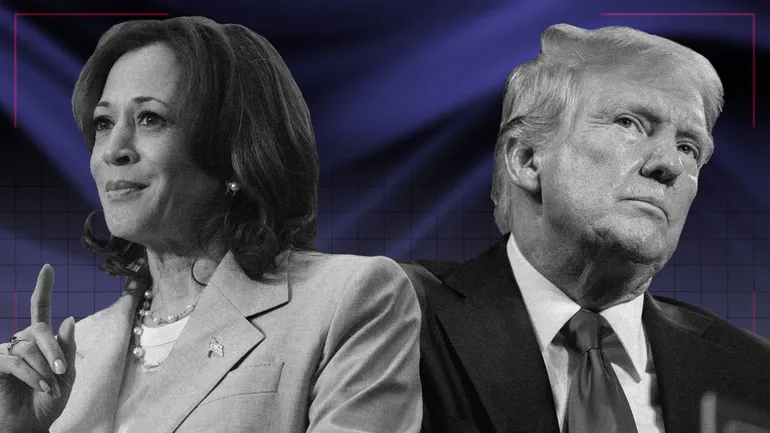
Food and agriculture issues have become central to both parties' platforms in the 2024 election. Amid a tight race, candidates are paying more attention to agricultural policy in an effort to win support in swing states and beyond.
Vice President Kamala Harris and former President Donald Trump have both become more publicly involved in agricultural policy, and their chosen running mates also help boost their appeal to farming and rural communities.
Although Harris previously served as California's attorney general—a state that is the largest agricultural state in the U.S.—her record on agricultural issues is sparse, and she has not taken a position on state policies such as Proposition 12, which was passed by voters shortly after she left office.
In contrast, Trump's agricultural record is more extensive and more controversial. During his tenure, he launched costly global trade wars, rolled back numerous environmental policies, and cracked down hard on illegal immigration, including in the poultry industry. If re-elected, Trump plans to build on his existing record, with a platform that includes expanding tariffs and comprehensive deregulation.
Based on party platforms, candidate questionnaires, and other materials, Agriculture Dive has conducted an in-depth analysis of the two candidates' positions on the most significant issues in agriculture.
Food price inflation
Harris
Addressing rising food prices is central to Harris's economic plan, with her proposal to ban price gouging in the meat industry becoming one of the first major public policies after she became the Democratic nominee. Harris has pledged to push for the first federal anti-price-gouging law, specifically targeting the grocery, meat, and poultry industries. She also hopes to address high prices by expanding competition in the food system, stating in her presidential questionnaire to the American Farm Bureau that she would "crack down on unfair mergers by large food companies to level the playing field."
Trump
Trump has promised to reduce agricultural production costs but has not provided specific details. He told the Farm Bureau he would "lower interest rates" and halve agricultural energy costs within the first year of his term. He also said he would repeal "every burdensome and costly Biden-Harris regulation that drives up supply costs," but without specifying which ones.
Input costs have fallen from their pandemic-induced price spike peaks but remain at historically high levels. In theory, lowering production costs could pass some savings on to consumers, but agricultural product prices account for only a small portion of food consumption costs.
Agricultural labor and immigration
Harris
During the Biden-Harris administration, H-2A visa applications surged as labor shortages forced farms to recruit workers from abroad. Large agricultural groups opposed the administration's efforts to strengthen farmworker rights and expand workplace protections, including heat safety. Harris said in her response to the Farm Bureau that her administration would focus on "improving the legal immigration system to better serve the economy, farmers, and workers," adding that any solution should include "strong border security and a path to citizenship."
Trump
During his tenure, Trump significantly increased workplace raids to detain and deport workers. In one of the largest raids of the past decade, immigration enforcement agents arrested more than 650 people at seven poultry plants in Mississippi. In the 2024 campaign cycle, Trump intensified his border security rhetoric, threatening "mass deportations" of millions of immigrants, including those who entered legally under two Biden administration programs. Trump did not mention the H-2A visa program in his response to the Farm Bureau, saying he would prioritize "merit-based immigration" and expand domestic agricultural support.
Climate-smart agriculture
Harris
The Biden-Harris administration expanded opportunities for farmers to transition to sustainable practices, allocating an additional $20 billion under the Inflation Reduction Act for climate-smart agriculture. The Democratic platform released in August pledges to make the U.S. agricultural sector the first in the world to achieve net-zero emissions by 2050 through accelerated adoption of climate-smart agricultural practices.
Trump
During his tenure, Trump rolled back more than 100 environmental regulations, some of which were reversed under Biden. He has vowed to dismantle Biden's climate policies in a next term, arguing they drive up energy costs. Trump told the Farm Bureau that climate action should take place in the free market, saying "innovation and economic growth will unlock technologies and processes that improve our environment while bringing production back home from foreign polluters."
Farm bill
Harris
Harris has not publicly stated a position on the farm bill, but her campaign said in response to the Farm Bureau that agricultural safety net programs such as crop insurance are crucial for "protecting farmers from unforeseen changes in circumstances." Harris's running mate, Minnesota Governor Tim Walz, served on the House Agriculture Committee for six terms and helped draft three farm bills. Rod Snyder, former senior agricultural adviser at the EPA, said during a Farm Foundation agricultural policy debate that Walz's congressional experience representing rural districts "is especially encouraging for agricultural stakeholders."
Democrats oppose House Republicans' farm bill plan, arguing it would reverse the 2021 funding formula changes that increased assistance levels for Supplemental Nutrition Assistance Program (SNAP) participants.
Trump
Trump's campaign told the Farm Bureau it supports improving reference prices, crop insurance, and dairy margin coverage. He also supports expanding specialty crop insurance and investing in technology to "stay ahead of China." Although Trump has not explicitly endorsed any version of the farm bill, the plan pushed by House Republicans aims to ease budget pressure by cutting $30 billion from SNAP and eliminating climate-smart agriculture funding protections, while increasing agricultural subsidies.
Trade and relations with China
Harris
The Biden-Harris administration largely retained Trump's Section 301 tariffs on China and recently raised tariffs on Chinese goods to protect U.S. manufacturing. Her campaign wrote in a letter to the Farm Bureau: "As president, she will not tolerate unfair trade practices by China or any competitor that harm American farmers and ranchers." As trade tensions prompted China to reduce purchases of U.S. agricultural products, the Biden-Harris administration encouraged producers to diversify exports to markets such as Europe and Africa. Despite targeted agreements lowering barriers for certain crops, agricultural groups are calling for more trade deals to offset losses to China.
Trump
During his tenure, Trump launched a trade war with China that caused agricultural exports to plummet and distributed billions of dollars in controversial bailouts to compensate for losses. He has promised to be tougher on China in a next term, proposing tariffs of over 60% on imported goods and planning a 10% universal tariff on all imports, which could disrupt relations with traditional partners and trigger a broader trade war. High tariffs could weaken farmers' market opportunities as they would need to compete with low-priced imported goods. To address potential export losses, Trump said at a Pennsylvania farm campaign event that he would enforce a trade agreement in which China purchases $50 million in agricultural products in exchange for some tariff reductions.
Ethanol and biofuels
Harris
The Biden-Harris administration expanded ethanol opportunities, allowing corn producers to benefit more from the renewable energy transition. Biden approved requests from eight major agricultural states to allow year-round sales of gasoline with higher ethanol blends starting in 2025. The administration also opened the door for ethanol producers to enter the lucrative sustainable aviation fuel market, but the agricultural requirements for accessing tax credits have drawn criticism. Harris told the Farm Bureau she wants to expand biofuel opportunities and rural infrastructure investments under the Inflation Reduction Act, pledging to "elevate high-quality jobs in rural areas and use agriculture as a key tool in addressing climate change."
Trump
Trump pushed in 2019 to fully lift restrictions on E15 gasoline sales, but the rule was overturned by a court two years later. In his response to the Farm Bureau, he said he is committed to lowering energy prices by reducing regulations and increasing domestic oil, natural gas, and coal production. He said: "We will not only increase domestic ethanol production, but we will make it a mission to export ethanol to the entire world."
Accelerating agricultural innovation
Harris
The Biden-Harris administration launched the nation's first plan in 2022 to expand biotechnology and biomanufacturing to meet growing demand for bio-based products and fuels. Earlier this year, the U.S. Department of Agriculture released a roadmap to increase processing capacity for feedstocks such as crop residues. The department invested $772 million in 2023 for research and development and scaling up biomanufacturing infrastructure. Harris highlighted investments during the Biden administration in her response to the Farm Bureau, such as increased funding for land-grant universities, but did not propose specific future initiatives.
Trump
Trump views regulations as obstacles to innovation and streamlined approval processes for agricultural biotechnology, including gene editing, during his tenure. This move raised concerns among some in the research community that it could make it harder to assess risks of new products. Trump has said he will continue cutting regulations in a next term, telling the Farm Bureau, "We will eliminate the regulations that hold back American agriculture and drive up costs."