
Cross-Category Expansion: Why Food and Beverage Giants Are Entering New Supermarket Aisles
As consumer habits evolve, food and beverage giants such as J.M. Smucker, Nestlé, and Kraft Heinz are extending established brands into new supermarket categories—from refrigerated coffee to shelf-stable mac and cheese. This article explores the drivers, success factors, and potential risks of brand extension, citing insights from several industry executives.
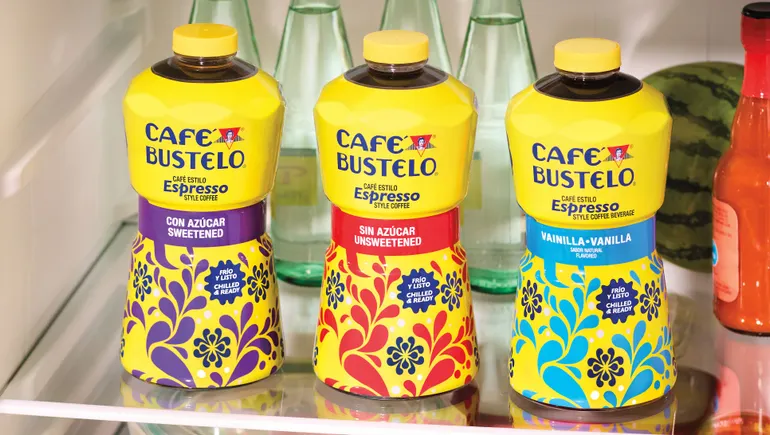
Just as sales of the century-old Café Bustelo were heating up, executives at J.M. Smucker worried that the fast-growing brand risked falling behind a major shift in consumer habits.
The CPG giant observed that more coffee drinkers were turning to the ready-to-drink iced coffee category when grabbing a caffeine fix on their way to the office, while running errands, or in the afternoon.
With cold brew growing in popularity among millennial and Gen Z consumers, Café Bustelo could not afford to miss this opportunity. The category is projectedto surpass $3 billion in market size by 2030。
Café Bustelo's net sales are expected to exceed $300 million in fiscal 2025, and it has posted growth for 22 consecutive quarters. The brand quickly launched iced coffee products in 2024.
The move took the popular coffee brand from its traditional shelf-stable aisle into the refrigerated section, opening up a new area of the retail landscape and increasing the chances of shoppers spotting Café Bustelo in stores.
"We stepped back and thought: 'Where is the opportunity?'" said Emily Lucci, vice president of coffee marketing at J.M. Smucker. "When we looked at our portfolio of brands, given where Café Bustelo is today... we saw a huge opportunity to take this brand and make it bigger."

Powerful brand extensions 'make you stop and look'
Given thatup to 90% of new food products fail within their first year on the market, companies that bring an existing brand into a new space have a natural advantage. It is also a smart financial decision, as the cost of marketing a brand extension is typically lower than building a new brand from scratch, leading to a higher return on investment.
"People still want to explore in food and beverage, so when you see a brand you love in an unexpected place, it really makes you stop and look," said Mike Van Houten, vice president of commercial excellence at Nestlé. "It's an unexpected break from the norm, and it's very, very powerful."
Brand recognition helps products stand out. Van Houten noted that 80% of consumers tell Nestlé that if they have used a trusted brand before, seeing it in a different part of the supermarket "makes them... take notice."
For example, Nestlé last year brought its 40-year-old coffee brewing platform Nespresso into theready-to-drink coffee spaceto cater to consumers' demand for portable beverages. The Swiss-based company also expanded itsCoffee mate brand into cold foam creamersto help consumers recreate the coffee shop experience at home.
One of Nestlé's biggest launches in 2024 was its frozen meal brand Stouffer's entering the shelf-stable space withmacaroni and cheese products. The product helped Nestlé compete in a segment with nearly $3 billion in sales and allowed it to tap into consumer interest in both shelf-stable and frozen formats.
"People still want to explore in food and beverage, so when you see a brand you love in an unexpected place, it really makes you stop and look."

Mike Van Housten
Vice President of Commercial Excellence at Nestlé
Before bringing a brand into a new category, companies must assess the health and performance of the core product, said Tiffany Grube, qualitative research director at Curion. A poorly performing brand is likely to face the same headwinds in a new space, with the added distraction of the new product.
Grube noted that companies also must understand why consumers love the brand, what they expect when purchasing it, and whether bringing it into a new category aligns with consumers' needs and desires. Additionally, companies need to identify which audiences they hope to attract and assess whether a brand's equity in one area of the supermarket can translate to another category with different consumers, trends, and shopping habits.
"The rewards of brand extension can be enormous. For some brands, it's the only way to grow," Grube said. "But you have to make sure you do it right. If you don't, you may not only fail to gain the target audience you wanted, but you could also make your core customers feel betrayed and lose their loyalty."

Choosing the right extension
The food industry is full of examples of brand extensions that failed to resonate with consumers.
Life Savers tried launching a soda in the 1980s, packaged in cylindrical bottles decorated with the same red, yellow, green, and orange stripes as its iconic candy wrappers. The product performed well intaste testsbut failed to win over consumers, who found it too sweet.
Women's lifestyle magazineCosmopolitan launched a yogurt line in 1999but discontinued it after 18 months. Baby food brand Gerber introducedGerber Singles, a line of pureed meals for adults, in the 1970s. Despite the convenience of single-serving containers, older consumers were turned off by eating what was essentially baby food, such as beef stew puree and blueberry delight flavors, and the extension ultimately failed.
"It's easy to think: 'I have a growing brand, I see other categories growing, can we quickly take the brand into that category?'" said Smucker's Lucci. "We're trying to be more strategic and focused in thinking: 'What are the right entry points?'"
Lucci added that entering a space that doesn't align with consumers' perception of the product could create confusion and harm the brand's overall health. Smucker carefully evaluates whether it makes sense for the brand to appear in a new category, how consumers might react, and whether the new product fits the company's long-term vision.
"We consistently evaluate through that filter," she said. "It's our way of ensuring we don't take brands into areas that don't make sense from a consumer perspective, or move too quickly and lose the opportunity to guide the consumer."
Kraft Heinz, which posted $26 billion in net sales in 2024, says it is always looking for new areas of brand extension. Product extensions that may not have worked years or decades ago can suddenly become profitable opportunities as consumer trends evolve.
Taking some of its brands—such asA.1. steak sauce into butter, or bringing Crystal Light drink mixinto ready-to-drink alcoholic beverages—is key to helping the food and beverage maker achieve $2 billion in incremental net sales by 2027.
Last year, after noticing that cream cheese flavors ranked among the top three most popular flavors in the U.S., Kraft Heinzlaunched Philadelphia cream cheese frosting. The insight was strongly supported by a market gap—at the time, there was no product on the market without artificial flavors and colors that also didn't require a multi-step homemade process. Philadelphia is almost synonymous with cream cheese, so launching a frosting version of the dairy product was a natural next step.
"Our goal is to grow with brand fans, bringing new and unique opportunities that help consumers keep our brands top of mind, which includes thinking beyond traditional product formats," a Kraft Heinz spokesperson said.