
Doritos Leverages F1 Partnership for Global Year-Round Coverage
Doritos is activating its official partnership with Formula 1 (F1), which runs through 2030, across more than 50 global markets. The new "The Crunch Prix" global campaign, crafted by Goodby Silverstein & Partners, focuses on fans watching from home. The brand also set up the "Doritos Thrill Zone" at the British Grand Prix and introduced a food truck collaboration with chef Gordon Ramsay. Executives from the PepsiCo-owned brand stated that F1's global calendar and evolving fan demographics offer a unique opportunity for large-scale marketing.
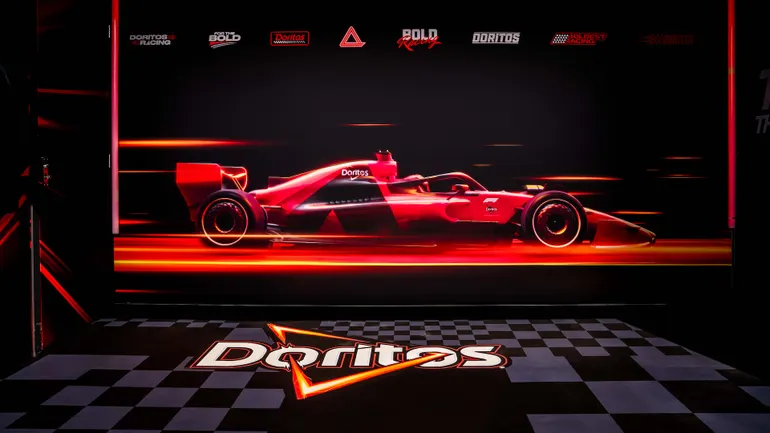
While global screens remain focused on the World Cup, football is not the only sport capturing consumers' attention. Doritos recently launched a new global marketing campaign and stepped up experiential marketing as part of the brand's official partnership with Formula 1. The strategy is fan-centric, targeting motorsport enthusiasts who watch races from home 99% of the time.
The core strategy for at-home viewers is embodied in the campaign titled "The Crunch Prix." Created by Goodby Silverstein & Partners, directed by Antoine Bardou-Jacquet, with visual effects by Untold Studios, a 60-second hero video shows that biting into a Doritos chip sends viewers' sofas, recliners, gaming chairs, and even bathtubs racing around the track. The campaign is part of the larger "Taste the Thrill" platform and will roll out across social media and out-of-home advertising.
Doritos and its parent company PepsiCo have signed a partnership with F1 through 2030. Kyle Gore, Doritos' global vice president of marketing, explained that the racing series offers three key advantages: global presence; an evolving fan base; and a race calendar spanning 10 months each year with events spread across different time points.
"F1 has consistently pushed us to bring more fun, excitement, and access to fans—honestly, that wasn't our initial expectation—and we've been pleasantly surprised by the support they've provided for the partnership," Gore said.
Beyond allowing the brand to activate in more than 50 markets, the sport also gives Doritos access to an attractive fan base. Netflix's documentary series "Formula 1: Drive to Survive" has attracted more women, younger consumers, and digital- and social-native audiences—key target demographics for the snack brand. Additionally, F1 hosts 22 races globally, providing a platform for the brand's food innovation and experiential marketing.

In addition to the "Crunch Prix" campaign, Doritos launched the "Doritos Thrill Zone" at the British Grand Prix in Silverstone, UK, last weekend. The experience zone includes immersive activities and fan experiences, such as virtual racing games and live interviews with F1 commentators and content creators.
Doritos also brought two food trucks to Silverstone as part of its "Doritos Loaded" program, which creates different meals using the brand's chips as a base. The menu features a recipe created by Chef Gordon Ramsay, recently announced as a brand partner, and consumers shopping at the trucks have the chance to win exclusive prizes.
"We're mobilizing local markets to truly bring this partnership to life in the Thrill Zone," Gore said. "These races are almost like music festivals: they last for days, span vast physical spaces, and the racing itself takes up a relatively small portion of the day. But people are there for 12, 13, even 14 hours, and they need a place to step away and take a break."
Lessons Learned
Doritos' F1 partnership draws on lessons from its parent company's sports marketing, such as how PepsiCo has extended its long-standing partnership with the NFL beyond the U.S., or how Lays is currently activating around the World Cup in host countries the U.S., Mexico, and Canada. But for marketers, the scale of F1 is unmatched.
"F1 provides a full calendar, which is very exciting and gives markets a sense of ownership," Gore said. "When an event is held in just one country or one market, it's a bit harder to operate."
While balancing the needs of different markets, Doritos is also working to define its role in the content ecosystem, striving to find the most relevant and tailored content for consumers—whether they are fans of Doritos, F1, Ramsay, partner team Mercedes-AMG Petronas, or drivers George Russell and Kimi Antonelli.
"It's a coordination effort to ensure the content we develop is, first, engaging for all fans, and second, protective of each individual brand," Gore said. "A lot of the activity is about making sure we have enough space for all of this to coexist."
F1's global nature also gives local teams the opportunity to learn how to market around races that don't take place in their own "backyard": a race in China or Australia is just as important to F1 fans in Brazil or the U.S. Based on this, Doritos is increasingly publishing content across all social channels within its ecosystem. Gore draws a parallel to his work a decade ago in the U.S. market around the biggest sporting event in advertising.
"In the past, there were war rooms during the Super Bowl, where everyone gathered for those eight hours, trying to stay highly relevant," Gore said. "Now it's evolved into a global stage. How do we do this across all markets worldwide? How do we coordinate, find effective content, and distribute it quickly?"