
How Beverage Manufacturers Turn Water Reuse into a Growth Strategy
For a growing number of beverage manufacturers, it is no longer market demand but water resources that limit output. This article analyzes how water reuse shifts from a sustainability measure to a growth strategy, and explores three key factors: water as a strategic production asset, food safety as a priority, and reuse planning that starts with business strategy rather than treatment technology. The article also mentions the Water Reuse Action Plan 2.0 (WRAP 2.0) released by the U.S. EPA on April 16, 2026.
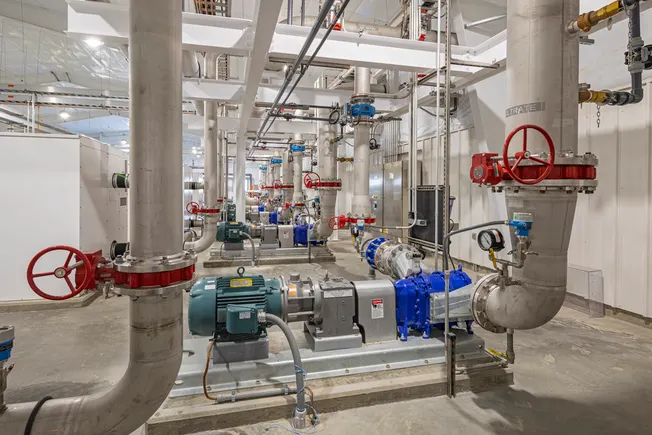
For a growing number of beverage manufacturers, the factor limiting production is no longer market demand, but water resources. As production scales expand and facilities pursue higher output, ensuring a reliable water supply is becoming one of the biggest challenges to growth.
Companies that are increasing production, adding packaging lines, and investing in automation are finding that water availability is increasingly a business constraint. Aging municipal infrastructure, rising utility costs, population growth, and growing societal scrutiny of industrial water use are changing how manufacturers think about the use and reuse of one of their most critical resources—water.
Water issues are so important that the U.S. Environmental Protection Agency (EPA) released the revised Water Reuse Action Plan (WRAP 2.0) on April 16, 2026. The core directive of this plan is to establish a Hazard Analysis and Critical Control Points (HACCP)-based decision framework for water reuse in food and beverage production facilities.
As water pressure on manufacturers continues to intensify, understanding the following three factors can help determine the feasibility and long-term value of water reuse strategies.
1. Water is no longer just a utility, but a strategic production asset
Although water reuse has historically been linked to sustainability, today's business drivers are broader. Manufacturers invest in water reuse to increase production capacity, reduce operational risk, enhance resilience during droughts or water restrictions, and support long-term growth without placing additional demands on freshwater supplies.
Before evaluating plant equipment, manufacturers should first answer several fundamental questions:
- Will water availability limit future production?
- Are water and wastewater treatment costs continuously rising?
- Does the municipality have additional capacity available for expansion?
- Can water reuse enhance resilience during droughts or supply disruptions?
- How can water reuse support both operational and sustainability goals?
The answers to these questions will determine the implementation path for water reuse projects.
U.S. industry spends billions of dollars annually on water acquisition, treatment, reuse, and discharge management, with the high-tech and energy sectors being major drivers of growth. As water resources become increasingly limited and precious, and as regulations evolve, manufacturers are increasingly evaluating water sources and usage patterns in the same way they assess other critical production assets.
A plant-wide water balance analysis is often the starting point. Understanding where water enters the plant, how it is used, and where it is discharged often reveals opportunities that are not apparent from water bills alone. In our experience, plant owners are often surprised by how much recoverable water already exists in their operations.
In water-stressed regions, including parts of the western United States, Texas, and northern Mexico, manufacturers have demonstrated how water reuse can remove barriers to growth. By recovering process water for utility purposes, several manufacturers have been able to expand production without increasing freshwater withdrawals or waiting for additional municipal capacity.
2. Food safety remains the top priority
Despite many misconceptions surrounding water reuse in manufacturing environments, one of the biggest is that every gallon of water must be treated to drinking water standards.
Instead, successful systems should follow the "fit-for-purpose" philosophy, matching water quality to the intended use. Product formulation and final rinsing require the highest level of treatment, while properly treated process water can support cooling towers, boiler makeup, equipment cleaning, and other utility purposes. This fit-for-purpose approach helps avoid unnecessary capital and operational costs while protecting product quality.
Modern reuse systems are designed around multiple layers of protection, including source water characterization, appropriate treatment, continuous monitoring, automatic diversion of non-conforming water, and routine verification. These risk-based strategies align closely with HACCP principles widely used in the food and beverage industry, helping manufacturers consistently reuse water to meet operational and regulatory requirements.
The business value of water reuse extends far beyond reducing water consumption. Today, manufacturers evaluate projects based on their ability to:
- Maintain production quality
- Increase production capacity
- Delay or avoid expensive infrastructure expansions
- Reduce potable water purchase and wastewater treatment costs
- Enhance resilience during water-scarce periods
- Support corporate sustainability commitments
3. Successful reuse begins with business strategy, not treatment technology
The most successful manufacturers begin planning for reuse before water becomes a constraint. They do not view reuse as an isolated utility project, but rather integrate it into plant master planning, wastewater pretreatment strategies, and long-term capital planning. This holistic approach typically reduces lifecycle costs while creating greater flexibility for future expansion.
Our experience shows that tremendous value comes from understanding the entire water cycle within the plant, not just identifying which water can be reused. Integrating water reuse with wastewater pretreatment, utility optimization, and future production planning often uncovers opportunities to simultaneously reduce sewer surcharges, improve operational efficiency, and eliminate production bottlenecks.
The discussion around water reuse is evolving as demand for water resources grows. For manufacturers, reuse is becoming a key tool for securing the water needed for expansion, enhancing resilience, and supporting long-term growth in an increasingly resource-constrained world. Ultimately, the question is no longer whether water reuse supports sustainability goals, but whether future food and beverage manufacturing growth is possible without it.