
PepsiCo expands use of autonomous trucks in supply chain
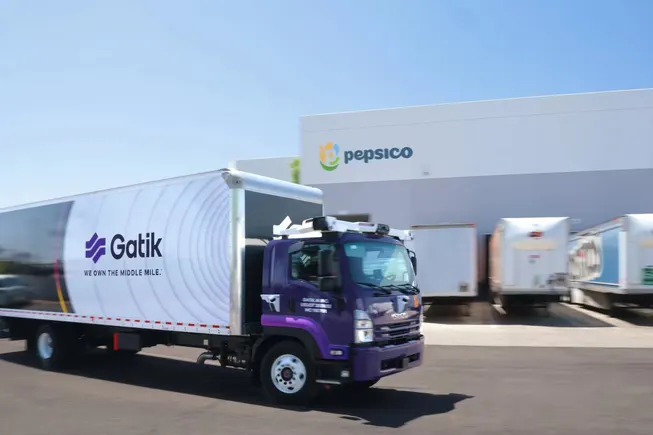
PepsiCo plans to expand the use of autonomous trucks in its North American supply chain through a multi-year partnership with Gatik, currently operating 41 autonomous trucks in Texas, Arizona, and Arkansas, aiming to optimize regional logistics networks and enhance service consistency.
News Summary
- PepsiCo plans to deploy more autonomous trucks in its North American supply chain through a multi-year agreement with Gatik, according to the food and beverage company'spress release.
- PepsiCo has worked with Gatik since 2022 and currently operates a fleet of 41 autonomous trucks in Texas, Arizona, and Arkansas, Gatik revealed in an email to Supply Chain Dive.
- "Autonomous trucks, especially on short-haul, repeatable routes, have the potential to support more consistent operations and reduce variability—helping us deliver a more reliable service experience," PepsiCo said in an email.
Deep Insight
Deploying autonomous trucks is part of PepsiCo's deliberate effort to modernize how products flow through its transportation network, PepsiCo said.
PepsiCo's agreement with Gatik focuses on adding capacity on demand, such as in high-demand regional networks that are "difficult to staff and critical to keeping shelves stocked," the press release said.
"It's conceivable that deploying driverless trucks in a supply chain as complex as PepsiCo's is a meticulous and carefully coordinated process," Gatik said. "Our North Star is safety, so we have taken the necessary time to complete extensive safety assessments and integrate into PepsiCo's supply chain in a reliable and safe manner."
Gatik's driverless trucks can be used for end-to-end deliveries on highways and surface streets. They can also reroute for complex regional logistics networks when needed and reach hundreds of pickup and delivery locations, according to the press release.
"This allows PepsiCo to modify route plans based on daily operational needs, including adding or removing stops, responding to demand changes, and adapting to activity levels at distribution centers," the press release said. This flexibility enables PepsiCo to improve on-time delivery performance and increase capacity without changing existing operations.
PepsiCo has been testing new fleet technologies to optimize its transportation operations. In addition to autonomous trucks, the company is also advancing the electrification of its fleet.
In 2024, the consumer goods manufacturer, along with Maersk and DB Schenker, announced plans to pilot a heavy-duty electric truck corridor, expected to beoperational in 2027. PepsiCo alsojoined shippers including IKEA and Microsoftto test electric trucks on the U.S. I-10 corridor between Los Angeles and El Paso, Texas.
Last year, the company said its electric semi-trucks would bring$1 million in fuel savings。